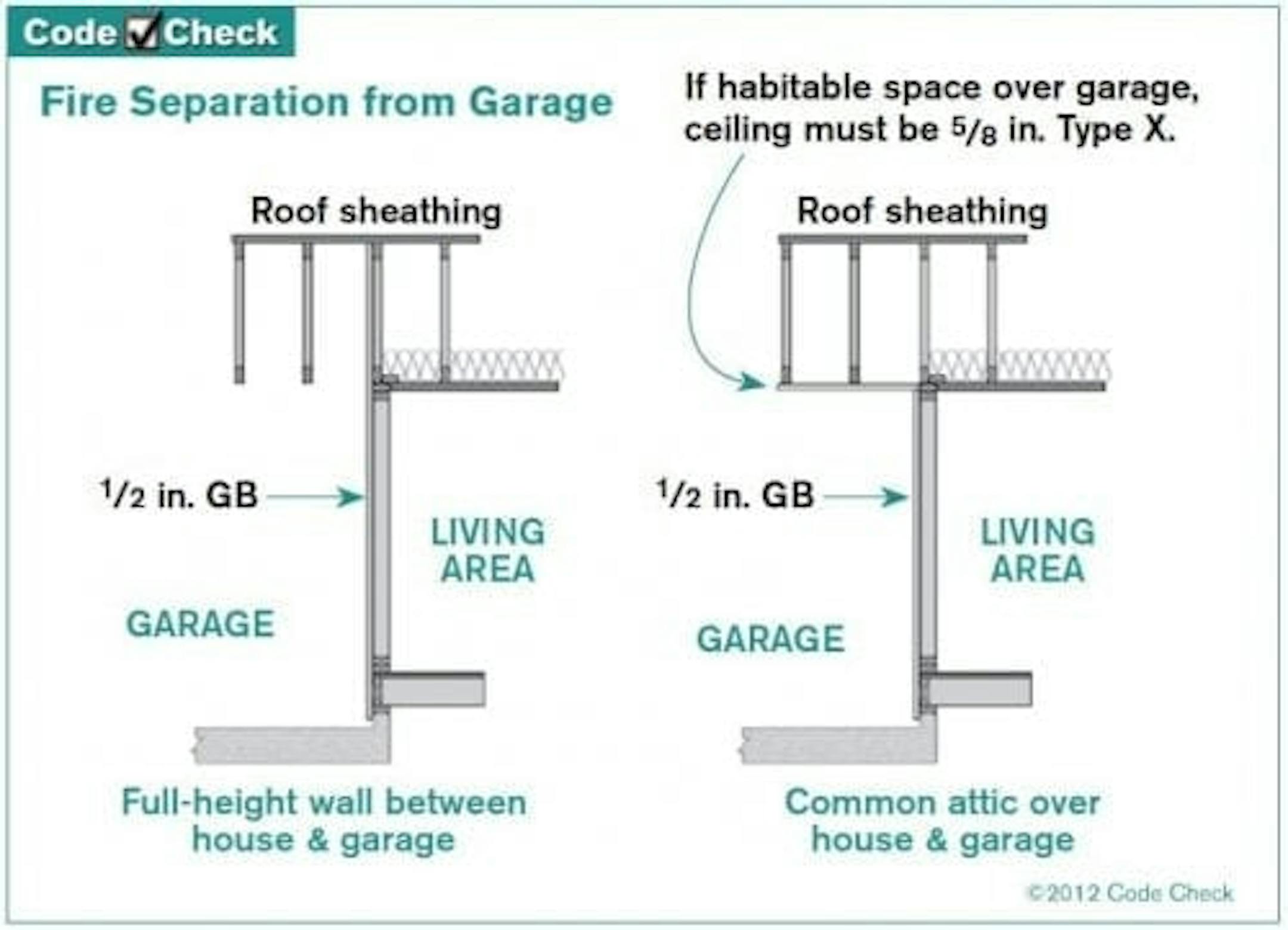
The separation between a garage and a house is commonly referred to as a firewall, but that's not accurate. I hear the term firewall thrown around a lot, and it's always used incorrectly when it comes to residential construction. If you turn to the Uniform Building Code, you can find the definition of a firewall (actually, it says 'fire wall'):
FIRE WALL. A fire-resistance-rated wall having protected openings, which restricts the spread of fire and extends continuously from the foundation to or through the roof, with sufficient structural stability under fire conditions to allow collapse of construction on either side without collapse of the wall.
Make sense? That means one side of a building can collapse while the other remains standing, thanks to the firewall. There is nothing like this in residential construction. The closest thing you'll find in residential construction is a one-hour fire-resistance-rated wall. This is needed between townhomes and two-family dwellings, with a lot of fine print and special requirements. There are also some special requirements when a home is within 5′ of a lot line. Check out section R302 of the MN State Building Code for details.
What about the wall between the house and garage?
The wall between the house and garage is not a firewall, nor is it a fire-resistance-rated wall. The wall between a house and an attached garage does have some special requirements, however. These are listed under section 302.5 of the current MN State Building Code. As always, turn to the code for the exact language and the full set of rules, but here are today's rules in my own words:
R302.5.1 Opening Protection: No doors allowed from a garage to a bedroom. Doors between a house and a garage can be one of three types, take your pick:
- Solid wood, at least 1-3/8″ thick
- Solid or honeycomb-core steel, at least 1-3/8″ thick
- 20-minute fire-rated
While the six-panel door shown below gets awfully thin at the panels, this is still a 20-minute fire-rated door, so there's nothing wrong with it being used between the house and garage.
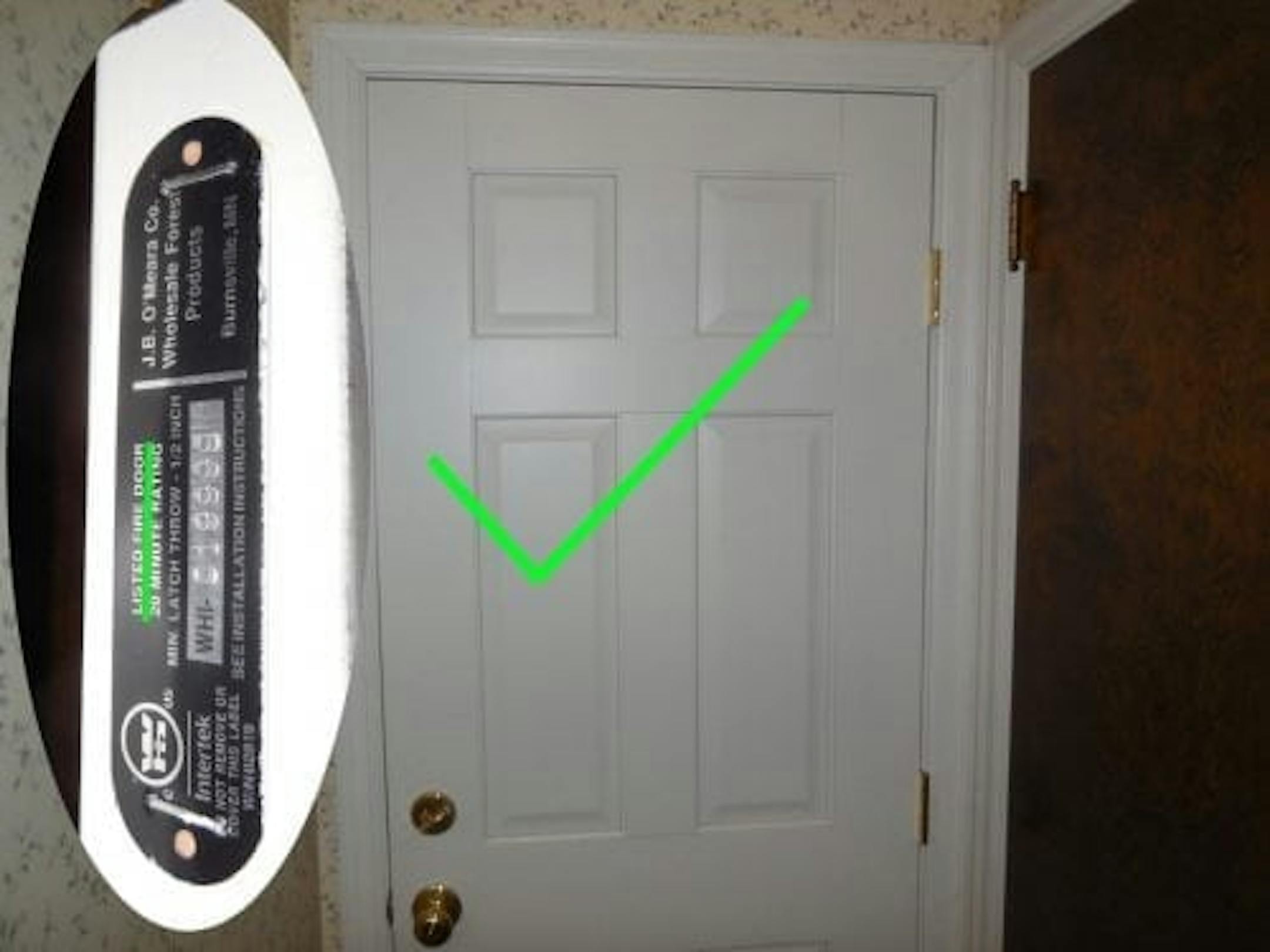
The International Residential Code (IRC) requires a self-closing device on this door, but we have no such requirement here in Minnesota. We used to, but we've since amended that requirement out of our code.
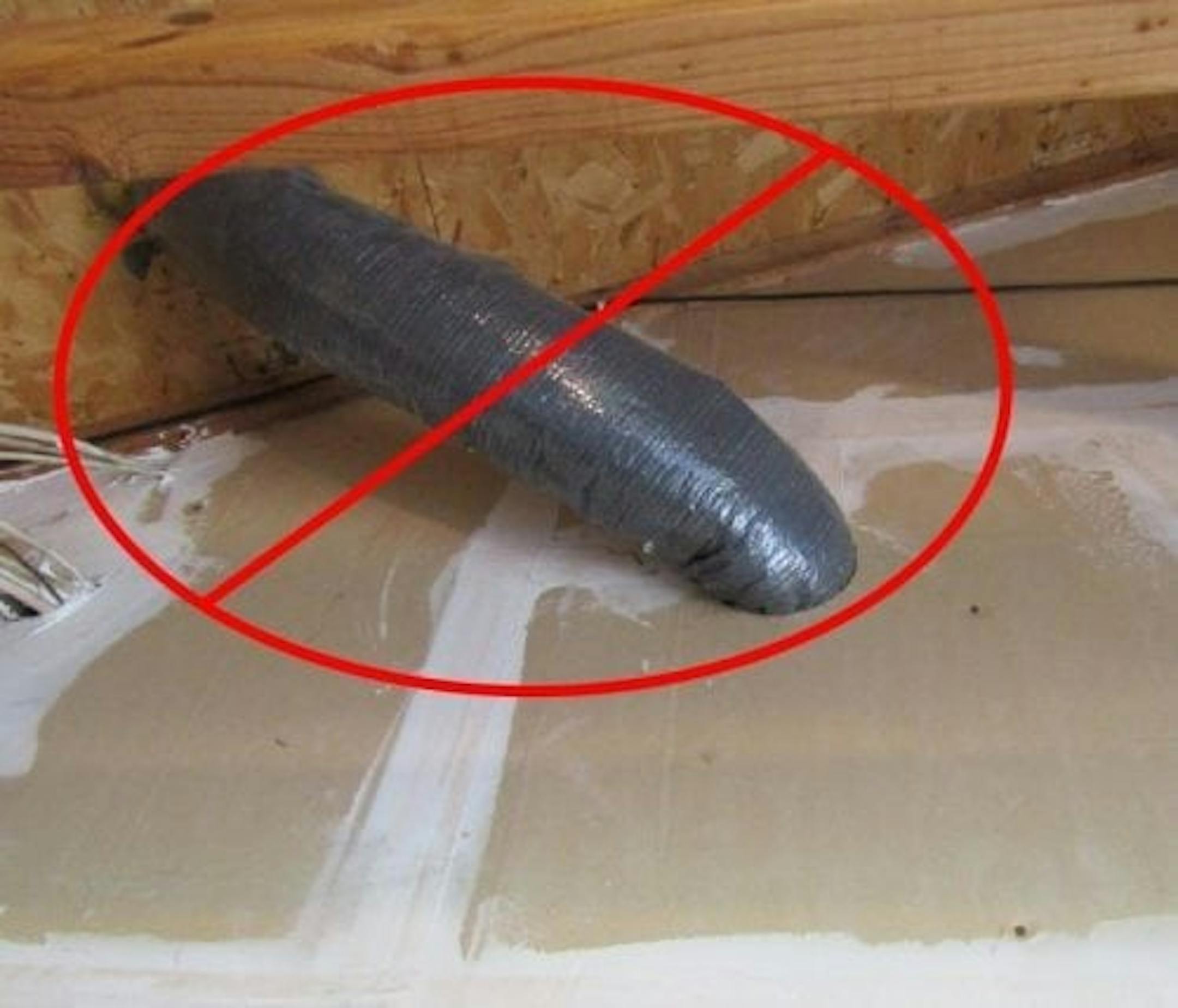
R302.5.2 Duct penetrations: Ducts running through the garage must be made of No. 26 gage sheet metal or another approved material. They also can't open to the garage.