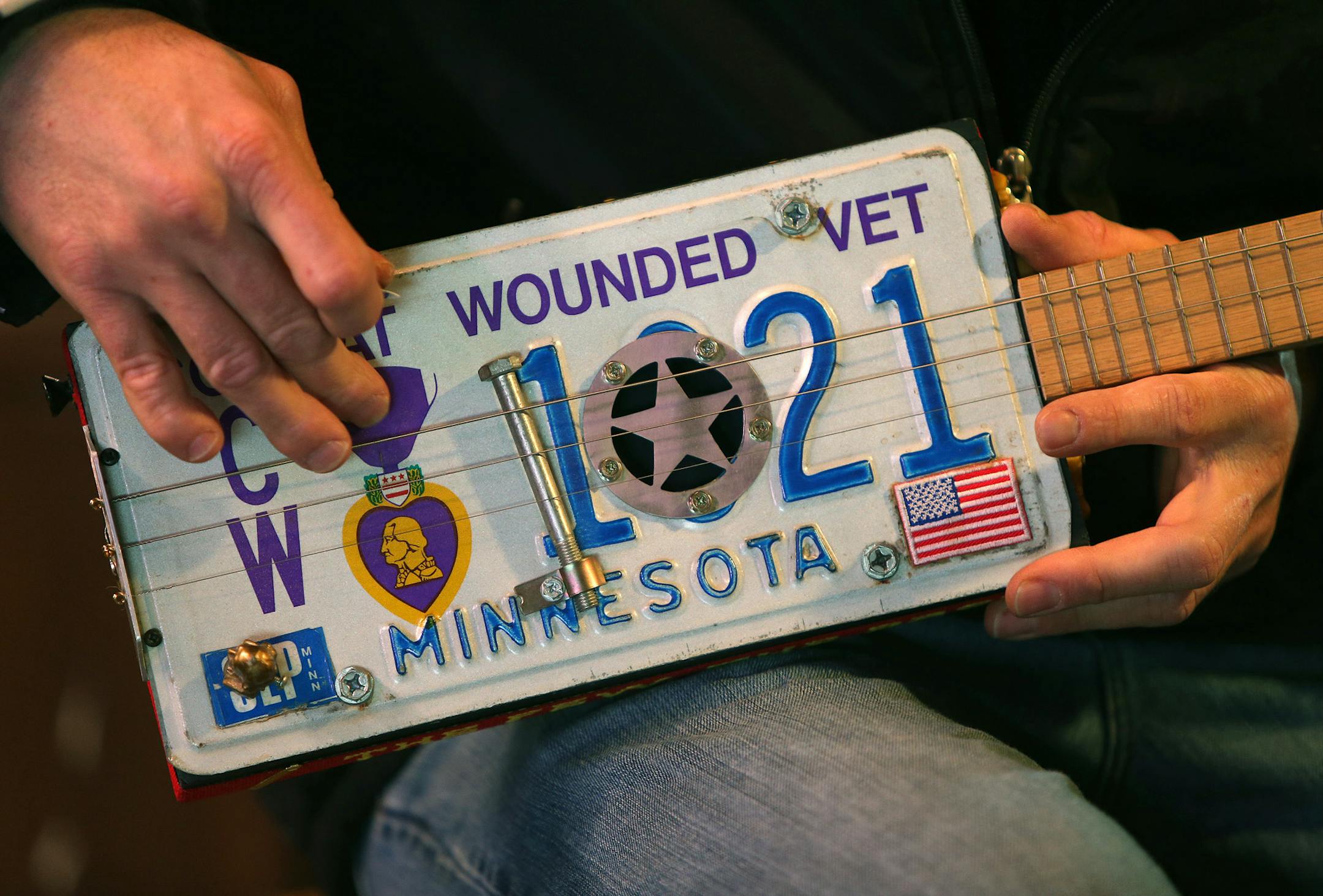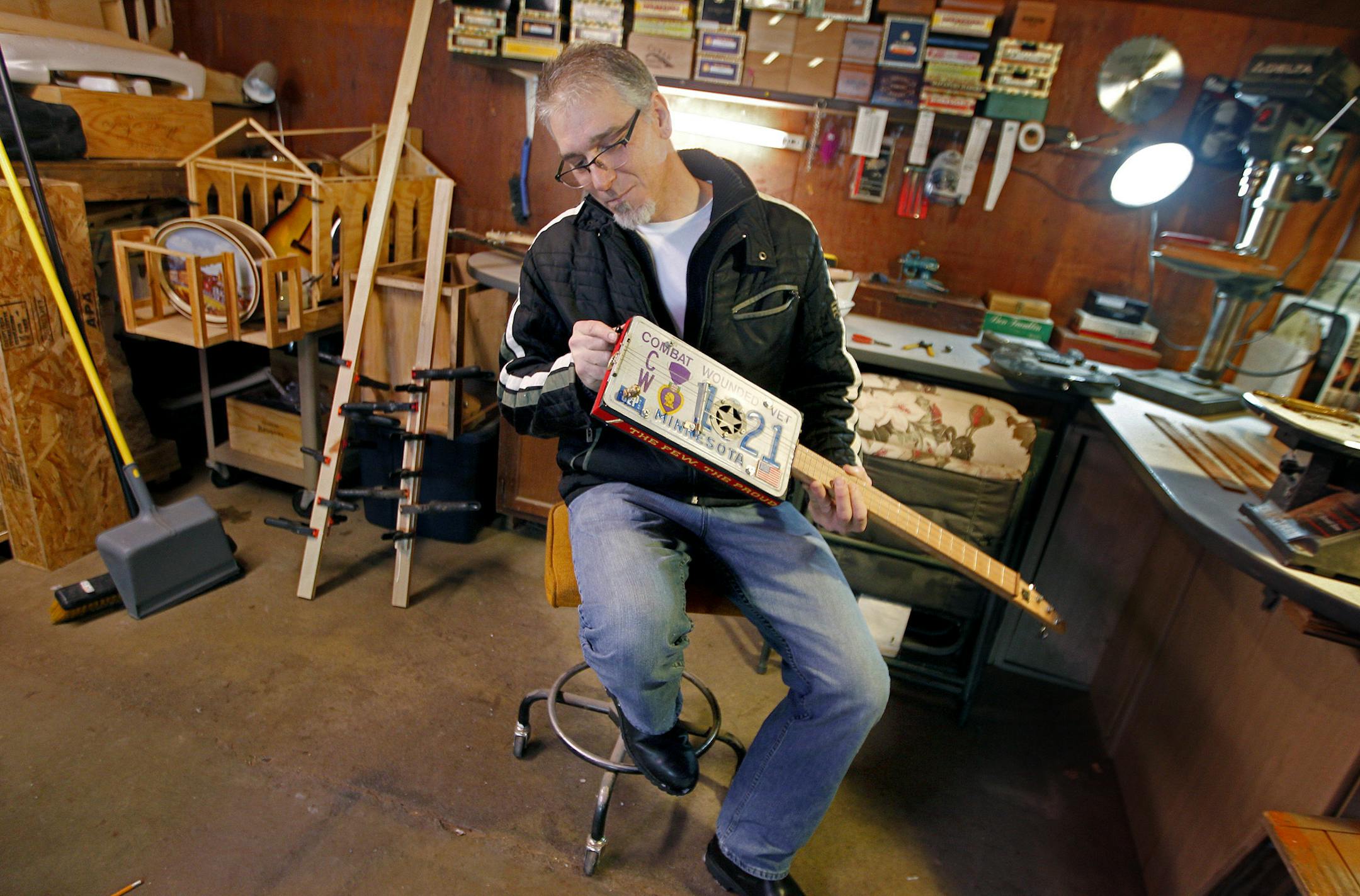
Roger Wold can make music out of the most meager of objects.
He collects old cigar boxes, discarded license plates, broken-down clocks, Ouija boards, even bedpans.
Wold holes up in his Anoka garage and transforms those lowly objects, often rescued from the trash, into treasured guitars.
The entire instrument is an exercise in ingenuity.
Dice are used as volume knobs, an antique skeleton key is the bridge and a bent spoon is fashioned into a whammy bar. It's as much art for the eyes as it is music to the ears.
If an item intrigues him, Wold finds a way to build it into one of his guitars.
"The best junk is usually in the garbage" or a found item, he says, pointing to a metal detector.
After taking up the avocation, Wold learned that humble guitars of this kind, fashioned out of everyday objects, played an instrumental role in America's blues and rock-n-roll history. Depression-era African-American musicians, unable to afford a "real" instrument, used these guitars — sometimes called jitterbugs and diddly bows down South — along with the washtub bass, jugs, washboards, and harmonicas to shape America's musical legacy. The cigar box guitar is enjoying a resurgence in popularity with the rise of websites such as www.cigarboxnation.com.