

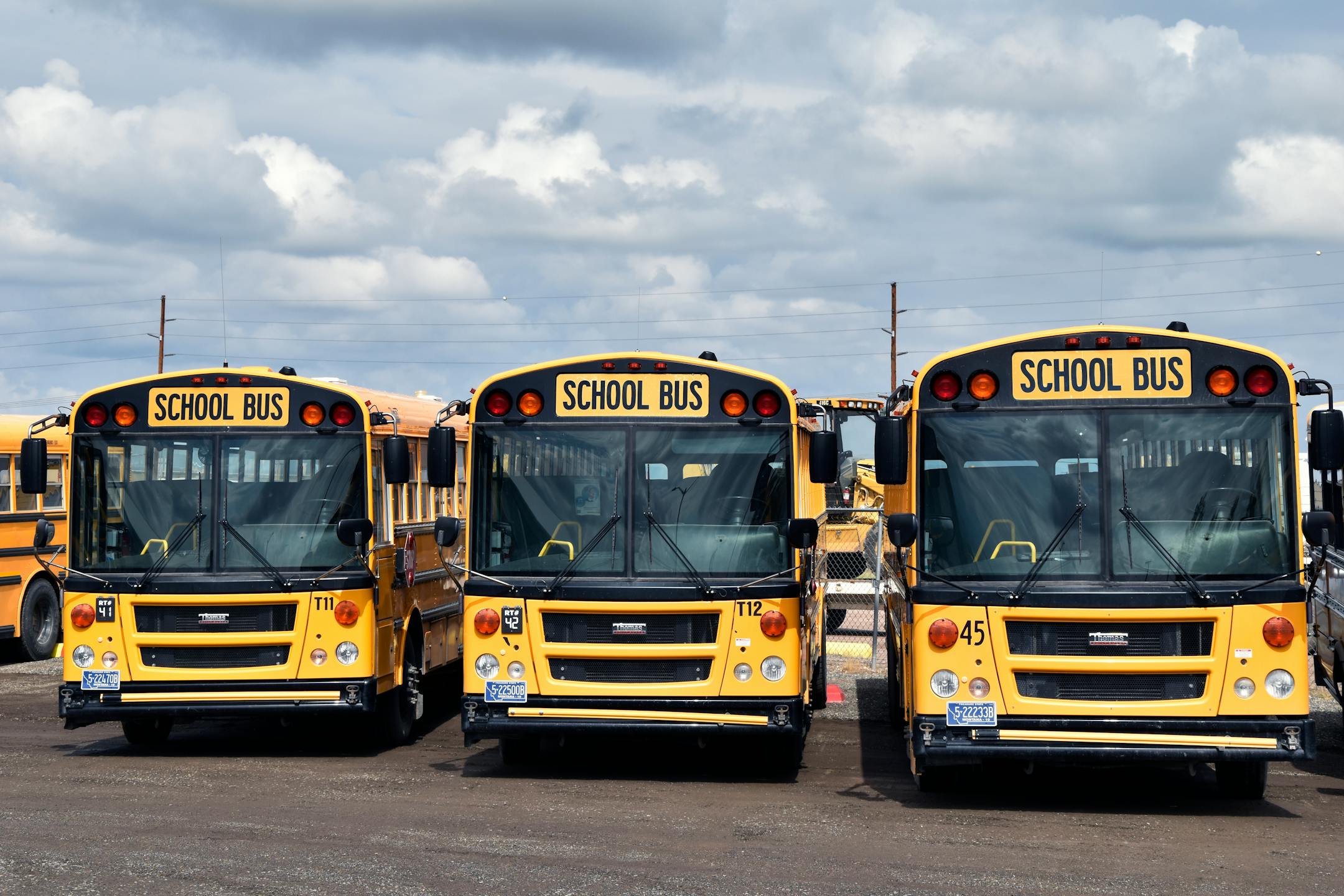
For too many Minnesota districts and students, there just aren't enough drivers these days to make the wheels of the needed number of school buses go round and round.
In Minneapolis, public school officials offered $3,000 hiring bonuses and higher wages to attract drivers. When school started earlier this month in St. Paul, about 10,000 students had their start times changed or lost bus service altogether because the district didn't have enough drivers.
Due to the shortages, other Minnesota districts have been forced to find alternatives to traditional busing. To make up for the dearth of drivers, they've required longer walks for kids, reimbursed parents for mileage or paid for other means of transportation. In Massachusetts this week, the governor called in the National Guard to help with school bus routes.
The COVID-19 pandemic clearly exacerbated already severe school bus driver shortages, but the problem existed well before the coronavirus hit in 2020. Without enough staff, bus transportation isn't sustainable the way it is currently organized. That means school districts and families must rethink a system that has become too reliant on an older, part-time workforce.
A recent survey confirmed that the driver shortage is a problem not only in Minnesota but throughout the country. Information gathered by the National School Transportation Association (NSTA) and two other trade associations found that the lack of both in-district and contract school bus operators is "unprecedented."
NSTA officials cite numerous reasons for the shortages, verified by their survey respondents' answers. Some drivers were furloughed during the COVID-19 school closures in 2020 and found other jobs or decided to retire. Bus drivers must have commercial driver's licenses, so they're often not easy to hire immediately. During the pandemic, departments of motor vehicles were closed or had limited operations, so potential drivers couldn't get road tests or update their qualifications.
Pay, hours and lack of benefits also were factors. Many drivers are older, part-time workers who worked morning and afternoon shifts with unpaid breaks in between. Kelly Gibbons, executive director of Service Employees International Union Local 284, said the driver shortage will get worse until pay and benefits improve.
During a news conference this week, Gibbons said drivers should be paid more, allowed to work more hours, and be eligible for unemployment benefits when schools are shut down for weeks or months at a time. According to salary.com, the median annual wage for a school bus driver in Minnesota is around $36,000 per year. But compensation isn't the whole story.


