

A lot went wrong for the Vikings offense to sputter into just 129 yards and three points during the nine meaningful drives in Chicago on Sunday night.
Immediately after the loss, three culprits were pinpointed: turnovers, a lack of a run game and red-zone inefficiency. A day later, head coach Mike Zimmer wondered aloud if the Vikings offense needs to simplify things with "too much volume" in the game plan against the Bears.
"Those same plays we called tonight are the same plays that have also worked well for us in the past," quarterback Kirk Cousins said after the game.
But they didn't work against a vaunted Bears defense that now, thanks in part to the Vikings, is the league's second best allowing a stingy average of 4.9 yards per play.
Why? Let's take a deeper look at a Vikings offense that has put up just 19 points per game in the last three contests (1-2).
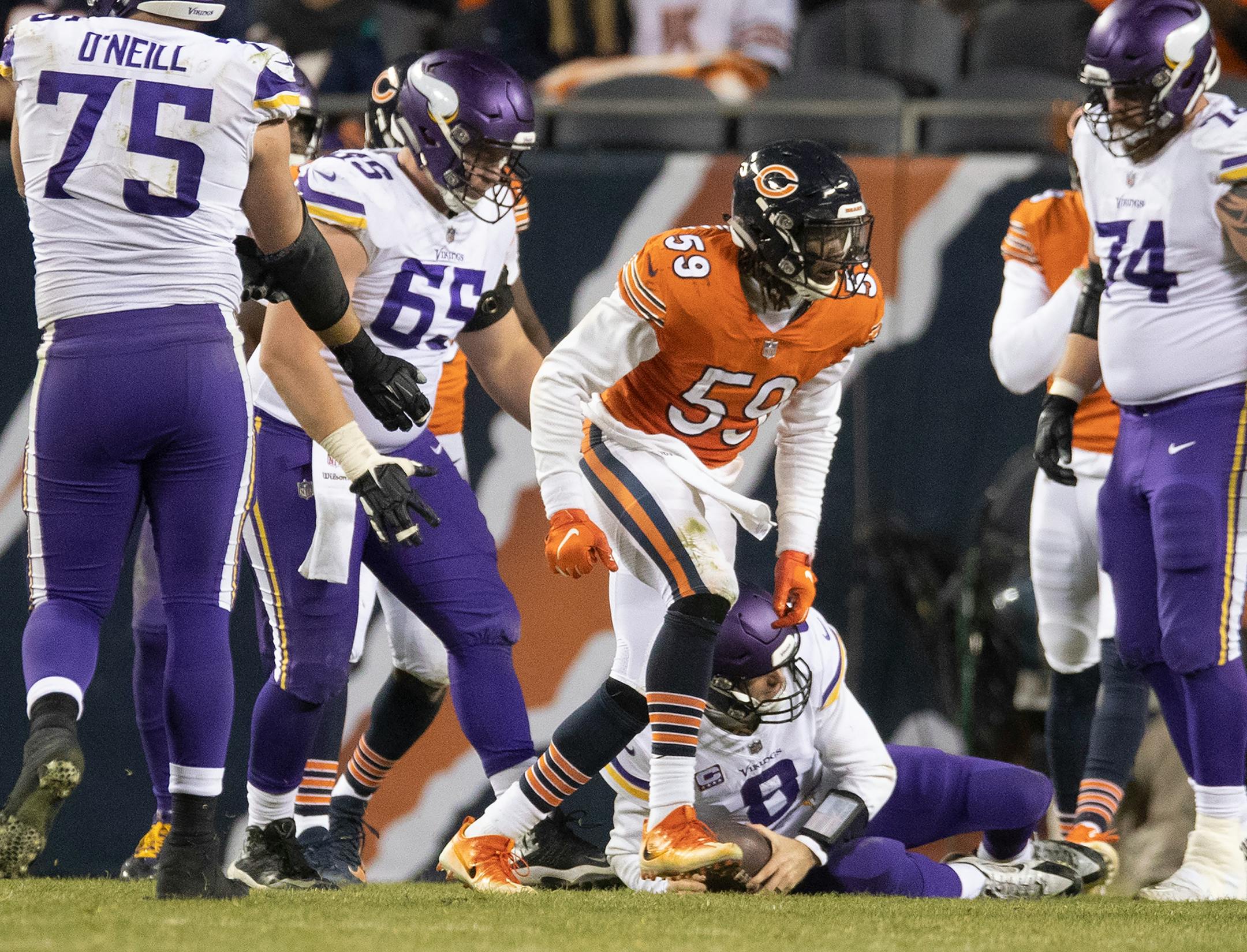
1. There were correctable flaws in the Vikings blocking. Miscommunication was a problem for the run and pass. In short, this offensive line simply isn't talented enough to hang with the Bears. That was obvious when Khalil Mack sped inside on a twist and derailed a Vikings drive in the red zone by sacking Cousins on first down. Left guard Tom Compton, admittedly not fully healthy with a sprained knee, barely got a hand on Mack, who also beat left tackle Riley Reiff with speed and power moves. The Vikings' matchup losses continued with Bears defensive tackle Akiem Hicks, who had five (!) of Chicago's nine tackles for losses while beating the entire interior offensive line including center Pat Elflein and right guard Mike Remmers.
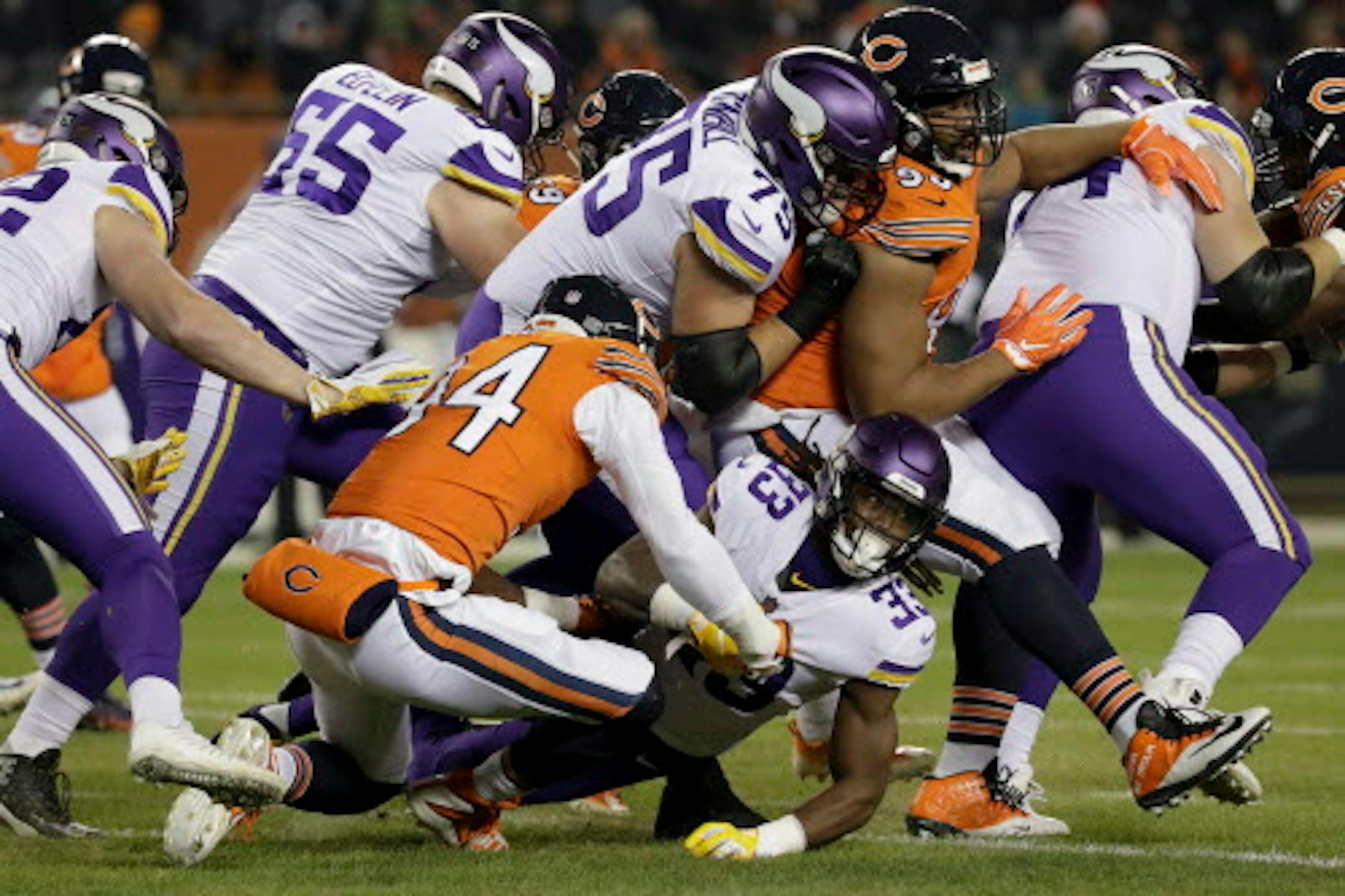
But there were inexcusable mental lapses that compounded their physical deficiencies. Rookie tackle Brian O'Neill, making his fifth NFL start, was in the middle of a couple apparent mix-ups in the run game that contributed to nearly half (6 of 13) of the carries going for negative yardage.
Below on this 1st-and-10 run, receiver Brandon Zylstra (#15) enters the game and likely signals to Bears corner Bryce Callahan (#37) that its going to be a run. Callahan responds with an aggressive alignment right behind Leonard Floyd (#94). This creates the problem as both O'Neill (#75) and Zylstra initially block Floyd, letting Callahan disrupt Dalvin Cook before he ever gets going. The result is a loss of one yard. Afterward, you can see O'Neill and Zylstra talking through the mishap.


