

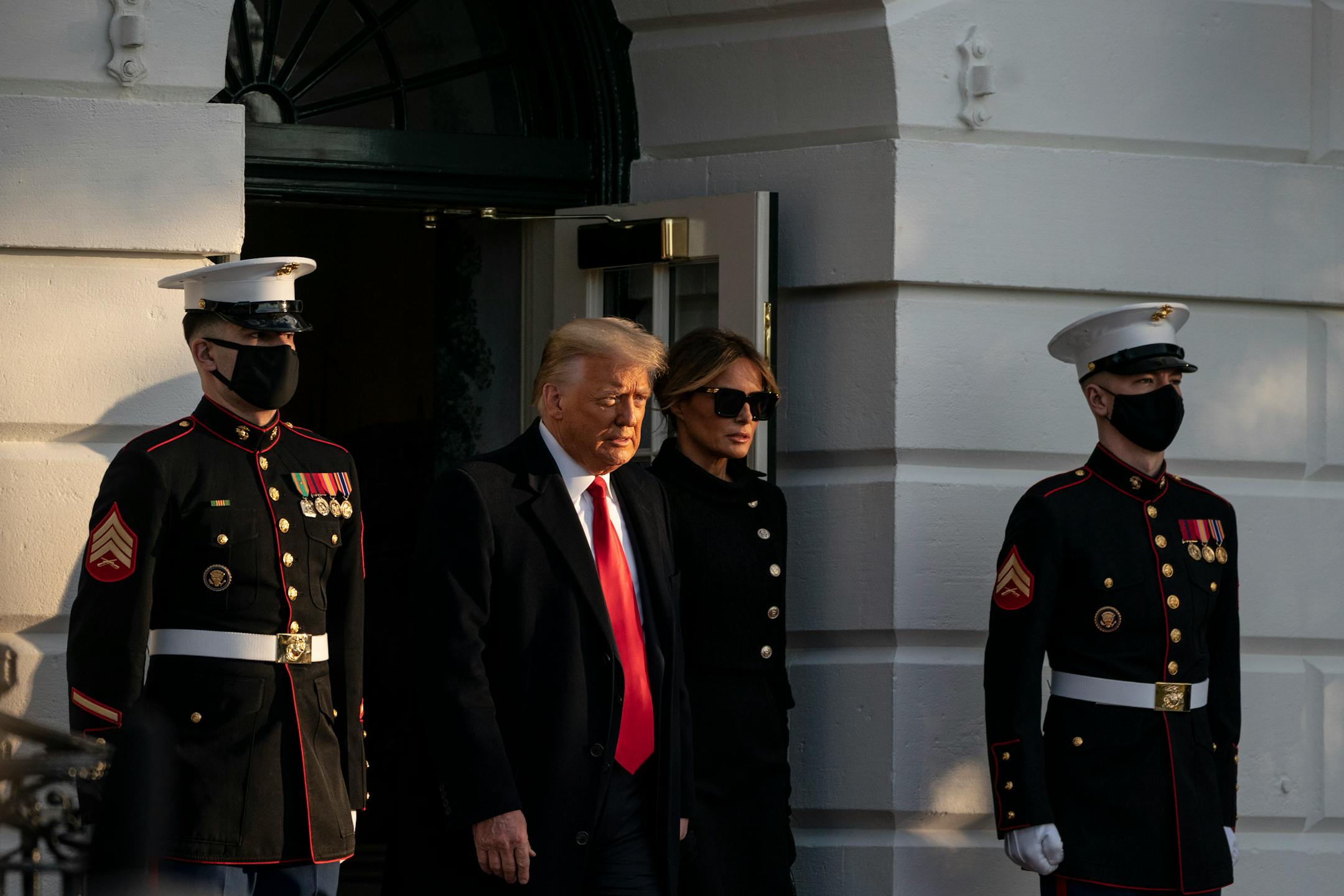
Four days before the end of the Trump presidency, a White House aide peered into the Oval Office and was startled, if not exactly surprised, to see all of the president's personal photos still arrayed behind the Resolute Desk as if nothing had changed — guaranteeing that the final hours would be a frantic dash mirroring the prior four years.
In the area known as the outer Oval Office, boxes had been brought in to pack up desks used by President Donald Trump's assistant and personal aides. But documents were strewed about, and the boxes stood nearly empty. The table in Trump's private dining room off the Oval Office was stacked high with papers until the end, as it had been for his entire term.
Upstairs in the White House residence, there were, however, a few signs that Trump had finally realized his time was up. Papers he had accumulated in his last several months in office had been dropped into boxes, roughly two dozen of them, and not sent to the National Archives. Aides had even retrieved letters from North Korean leader Kim Jong Un and given them to Trump in the final weeks, according to notes described to The New York Times.
Where all of that material ended up is not clear. What is plain, though, is that Trump's haphazard handling of government documents — a chronic problem — contributed to the chaos he created after he refused to accept his loss in November 2020, unleashed a mob on Congress and set the stage for his second impeachment. His unwillingness to let go of power, including refusing to return government documents collected while he was in office, has led to a potentially damaging, and entirely avoidable, legal battle that threatens to engulf the former president and some of his aides.
Although the White House counsel's office had told Mark Meadows, Trump's last chief of staff, that the roughly two dozen boxes' worth of material in the residence needed to be turned over to the archives, at least some of those boxes, including those with the Kim letters and some documents marked highly classified, were shipped to Florida. There they were stored at various points over the past 19 months in different locations inside Mar-a-Lago, Trump's members-only club, home and office, according to several people briefed on the events.
Those actions, along with Trump's protracted refusal to return the documents in Florida to the National Archives, prompted the Justice Department to review the matter early this year. This month, prosecutors obtained a warrant to search Mar-a-Lago for remaining materials, including some related to sensitive national security matters. The investigation is active and expanding, according to recent court filings, as prosecutors look into potentially serious violations of the Espionage Act and obstruction of justice.
Many questions about the mishandling of the documents lead to Trump, who often treated the presidency as a private business. But people in his orbit also highlight the role of Meadows, who oversaw what there was of a presidential transition. Meadows assured aides that the harried packing up of the White House would follow requirements about the preservation of documents, and he said he would make efforts to ensure that the administration complied with the Presidential Records Act, according to people familiar with those conversations.
But as the clock ticked down, Trump focused on pushing through last-minute pardons and largely ignored the transition he had tried to forestall.


