

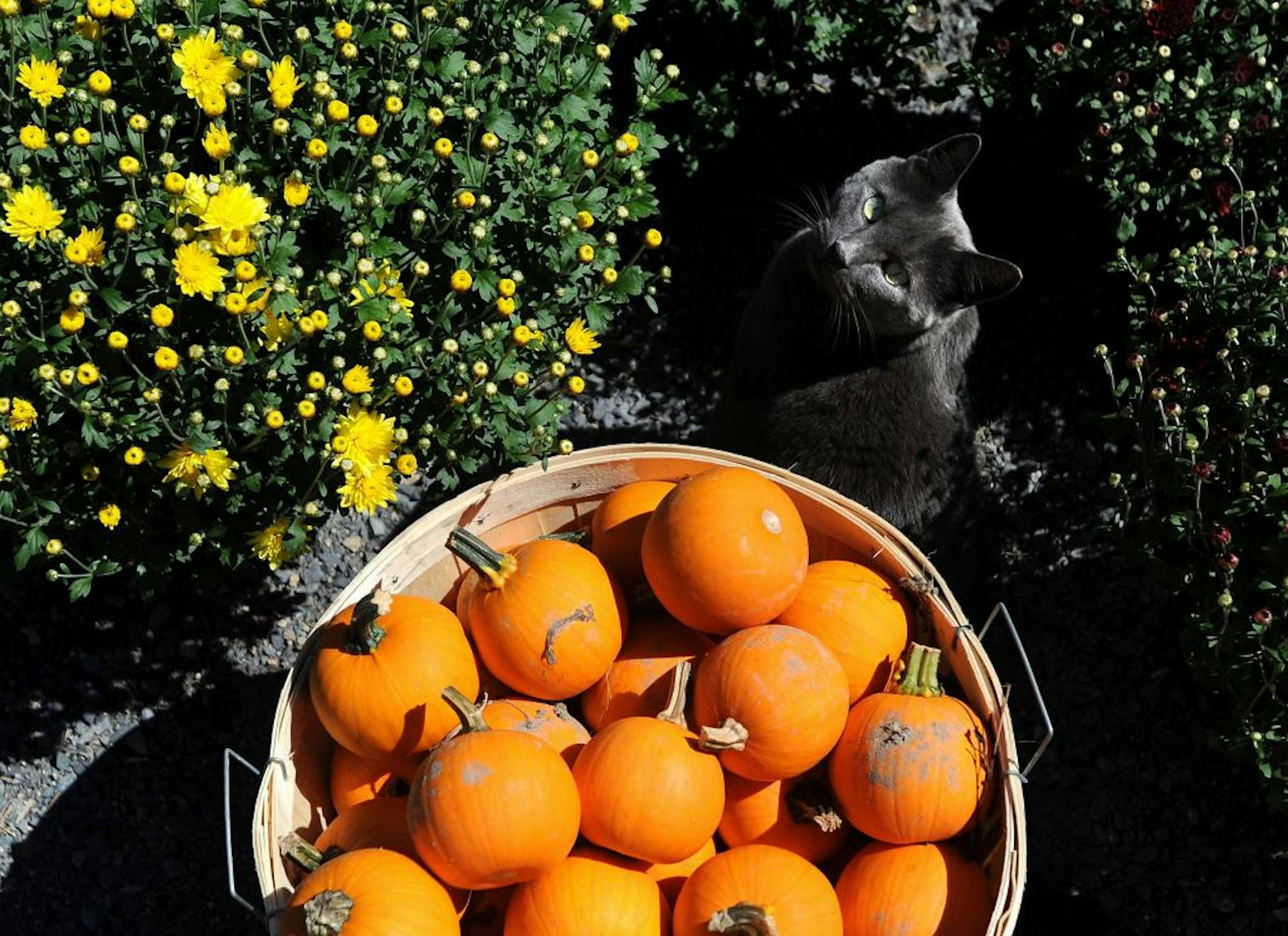
With pumpkin season upon us, it's tempting to experiment with the big orange jack that gives the front porch atmosphere for Halloween. What if you actually cooked one and ate it?
But cooking with pumpkin isn't as easy as yanking a would-be jack-o-lantern off the porch and into the kitchen. (The pilgrims ate a different type of pumpkin, but more on that later.)
No, those porch pumpkins, known as field pumpkins, are fine for carving into scary faces but are stringy and watery when cooked. Instead, you'll need a different sort of gourd for culinary purposes.
We'll get to that, but first a bit about pumpkins.
If pumpkins were spirits, they would be old souls. They're members of the cucurbita pepo species, a diverse group that includes the ubiquitous zucchini as well as the field pumpkin, according to the book "The Compleat Squash: A Passionate Grower's Guide to Pumpkins" by Amy Goldman.
Pumpkins, native to Mexico and the United States, are probably the oldest in the group, dating back thousands of years. The pilgrims were introduced to pumpkins by the American Indians, and soon they became a staple.
Today, there are more than 100 varieties -- many with intriguing and exotic names: Baby Boo (similar in size to the adorable Jack-Be-Little, but white in color); Full Moon (a big variety, also white, but not good for cooking), Jarrahdale (a slate blue variety native to Australia) and Halloween in Paris (a French pumpkin that's yellow and can be used for cooking).
Goldman likes to cook with pumpkin, and her all-time favorite is a variety called Winter Luxury Pie. "It makes a pumpkin pie that's like velvet," she says.


