

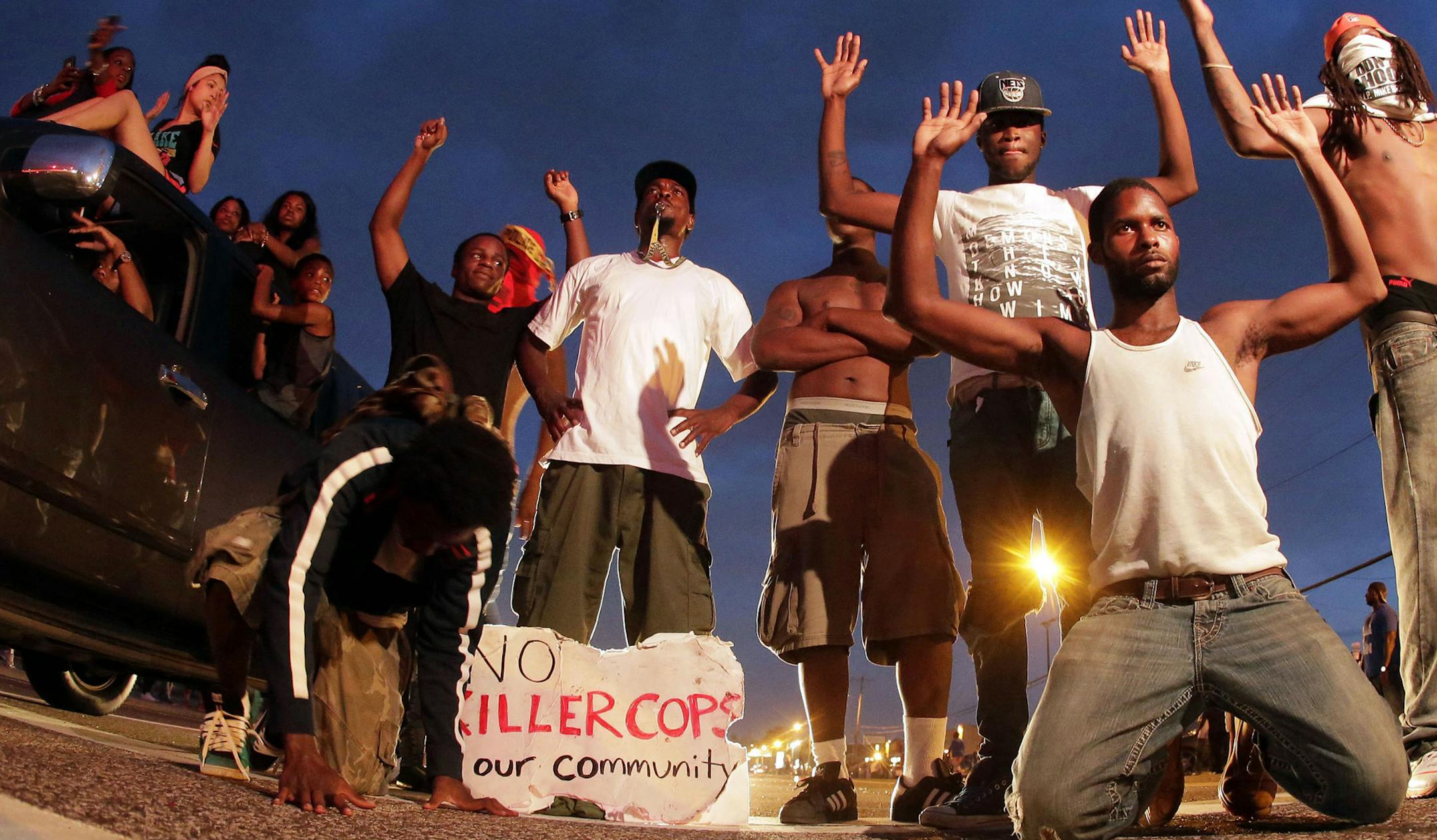
The racial crisis in Ferguson, Mo., has uncovered a divide within the black community — one based on generation, class and the cloudy political vision offered by African-American politics in the Obama age.
When asked who is the leader of the ongoing protests since the killing of Michael Brown — protests that have triggered Missouri's governor to declare a state of emergency and curfew and call in the National Guard — one young man from St. Louis answered, "Do we have a leader? No," and he went on to suggest that the martyred Brown, himself, offered the best example of leadership for Ferguson's angry and alienated young people.
As last week progressed, protests on the streets of that city operated on two separate tracks. Civil-rights leaders organized effective nonviolent marches even as young protesters, and some would-be outlaws, descended into violence and looting in parts of the city.
Leaders such as Jesse Jackson and Al Sharpton have visited Ferguson, but their pleas for calm have been ineffective.
Ironically, the black person who provided arguably the most visible leadership during the Ferguson events has been Missouri Highway Patrol Capt. Ron Johnson, whose forceful, yet compassionate, presence and policing tactics helped to temporarily defuse the escalating crisis.
That young people in Ferguson refused to heed calls for nonviolence should come as no surprise. Demonstrations at the height of the civil-rights era featured sporadic incidents of violence waged by angry black Americans outraged at racism and poverty but unwilling or unable to commit to the discipline of nonviolence. The Rev. Martin Luther King Jr. encountered these episodes in Birmingham and Memphis and was famously heckled when he visited Watts in the aftermath of the city's 1965 rebellion.
What makes the current situation different from the 1960s is that we have no Stokely Carmichael or Black Panthers who can properly relate to the young people in and outside of Ferguson, who have used the language of violence to convey rage and disappointment.
Make no mistake: Brown's killing is not the root cause of Ferguson's violence. It's merely the spark that triggered it. Poverty, segregation, unemployment and a climate of anti-black racism haunt tiny Ferguson and the wider St. Louis metropolitan area. Riots, King reminded us, are "the language of the unheard" and oppressed.


