Feral cats win a round at Minneapolis City Hall

September 12, 2013 at 2:44AM
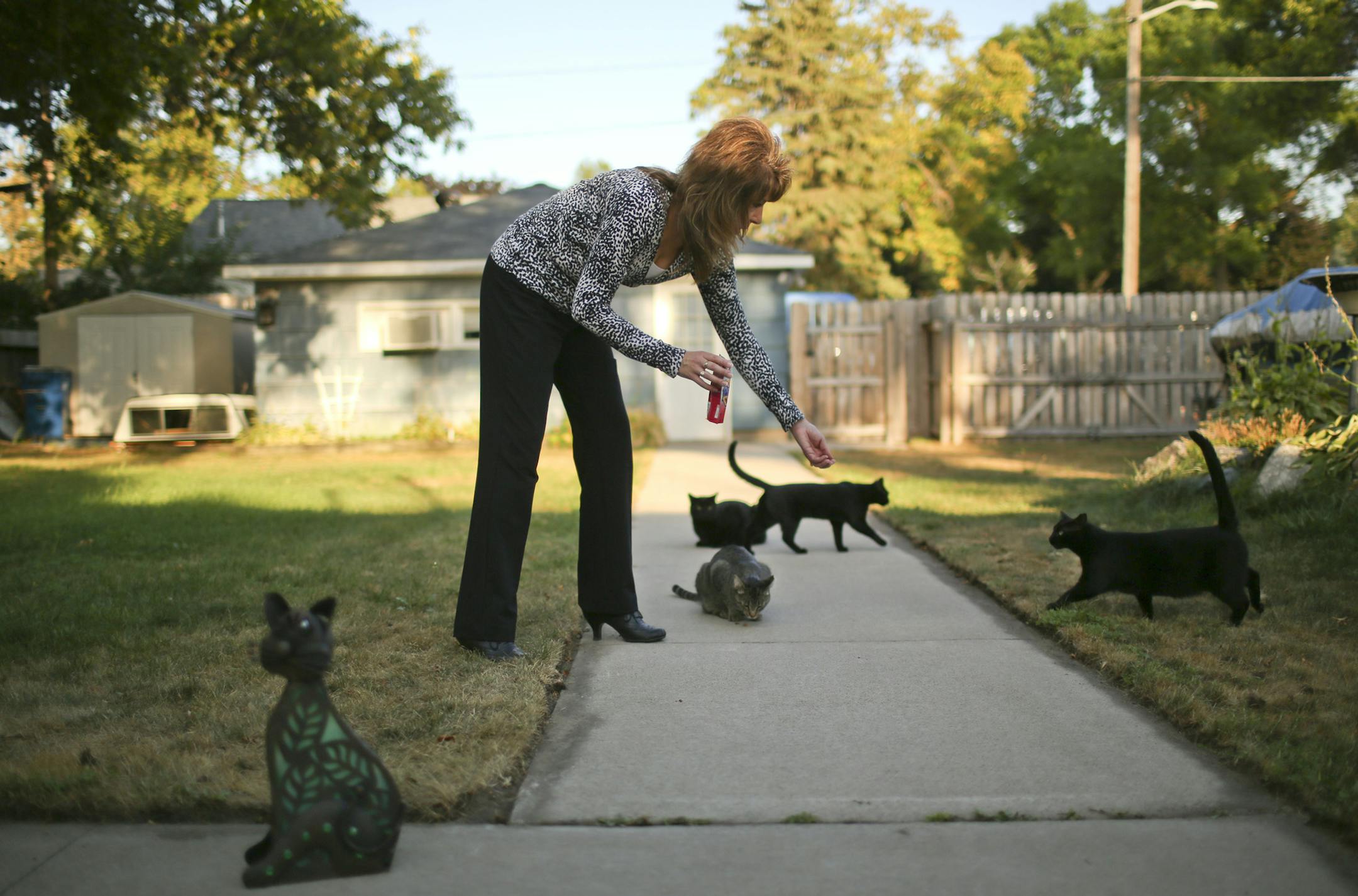
A committee of the Minneapolis City Council voted 5-0 Wednesday afternoon, September 11, 2013 to recommend a new law that in essence licenses the care and feeding of feral cats. Annette and Doug Edge of North St. Paul manage a feral cat colony of 14 felines in their backyard. They both offered testimony at the city council meeting in support of the measure. Annette Edge offered treats to a few of the cats that were hanging around her backyard Wednesday evening. She said they'll scatter after the
Annette Edge of North St. Paul, who testified Wednesday in Minneapolis, manages along with husband Doug a feral cat colony in their back yard. Annette Edge offered treats to a few of their 14 cats that were hanging around Wednesday night. She said they’ll scatter after the snack and return for breakfast. (The Minnesota Star Tribune)

Feral cats had a good day Wednesday at Minneapolis City Hall.

After a public hearing that drew animal lovers of all kinds, a City Council committee voted 5-0 to recommend a new law that in essence licenses the care and feeding of free-roaming cats as part of a larger effort to reduce their numbers. The issue goes next week to the full council, which usually adopts the recommendations of its committees.

The ordinance would allow Minneapolis residents to establish cat "colonies" where abandoned and wild cats can be fed but also vaccinated, neutered and identified in an effort to humanely cut their population and control disease. Nonprofit pet protection groups would manage the program and be responsible for ensuring that cat caretakers take the required steps.

The problem of free-roaming cats — and their predation on birds and other wildlife — is hotly contested in communities across the country, and it triggered a lively exchange in the hearing room. Several members of the Audubon Society said the plan fails to answer questions about how cats will be managed and what rights neighbors will have if the cats become a nuisance. The ordinance requires caretakers to "educate" people in their neighborhoods.

"But shouldn't neighbors have more influence than education?" said Jerry Bahls, president of the Minneapolis chapter of the Audubon Society.

Matthew Anderson, executive director of the chapter, said proponents of colonies are putting the interests of one invasive species — cats — over the hundreds of other native ones that are their prey.

But about two-thirds of the people speaking supported the new measure, including Dan Niziolek, director of Minneapolis Animal Care and Control. He said other cities with similar programs have seen a drop in cat complaints, costs and the number of cats that had to be euthanized. He also said the risk of rabies in the domestic pet population could be reduced.

Most importantly, he said after the hearing, is that it's a community problem being addressed by members of the community. "Does it solve it? No," he said. "But it's something in the right direction."

Council Member Betsy Hodges echoed the same sentiment as she voted in favor of the ordinance. She said she has a cat that stays indoors — unwillingly. And she has a North American bird book that has so far taught her how to recognize a sparrow. While the sanctioned "trap, neuter and release" program will not fix the problem of free-roaming cats, over time it should make things better.

"I understand the objection," she said. "But I don't want to do nothing."

Even some supporters of the ordinance criticized city officials for not doing more to stem the tide of cats that become feral when their owners lose or abandon them.

"You need to go after those who are irresponsible," said Doug Edge, a North St. Paul resident who's been managing a cat colony in his neighborhood for several years. He said local governments could require owners to implant identity chips in their pets and when they are abandoned or found, the owners could be located.

Niziolek said that at the moment there are few, if any, legal options for further control of free-roaming cats by the city. Basically, he said, pet owners should not allow their animals to be nuisances, and property owners have the right to trap a problem cat and bring it to Animal Care and Control.

Leash laws have put an end to the packs of roaming dogs, but no such rules apply to cats, he said.

"And that's a conversation for the community that's going on now," he said. "It's the community that has to decide."

Josephine Marcotty • 612-673-7394


A committee of the Minneapolis City Council voted 5-0 Wednesday afternoon, September 11, 2013 to recommend a new law that in essence licenses the care and feeding of feral cats. Annette and Doug Edge of North St. Paul manage a feral cat colony of 14 felines in their backyard. They both offered testimony at the city council meeting in support of the measure. The Edges with two of their colony of 14 feral cats that they allow to live in their backyard. ] JEFF WHEELER • jeff.whee
A committee of the Minneapolis City Council voted 5-0 Wednesday afternoon, September 11, 2013 to recommend a new law that in essence licenses the care and feeding of feral cats. Annette and Doug Edge of North St. Paul manage a feral cat colony of 14 felines in their backyard. They both offered testimony at the city council meeting in support of the measure. The Edges with two of their colony of 14 feral cats that they allow to live in their backyard. ] JEFF WHEELER • jeff.wheeler@startribune.com (The Minnesota Star Tribune)
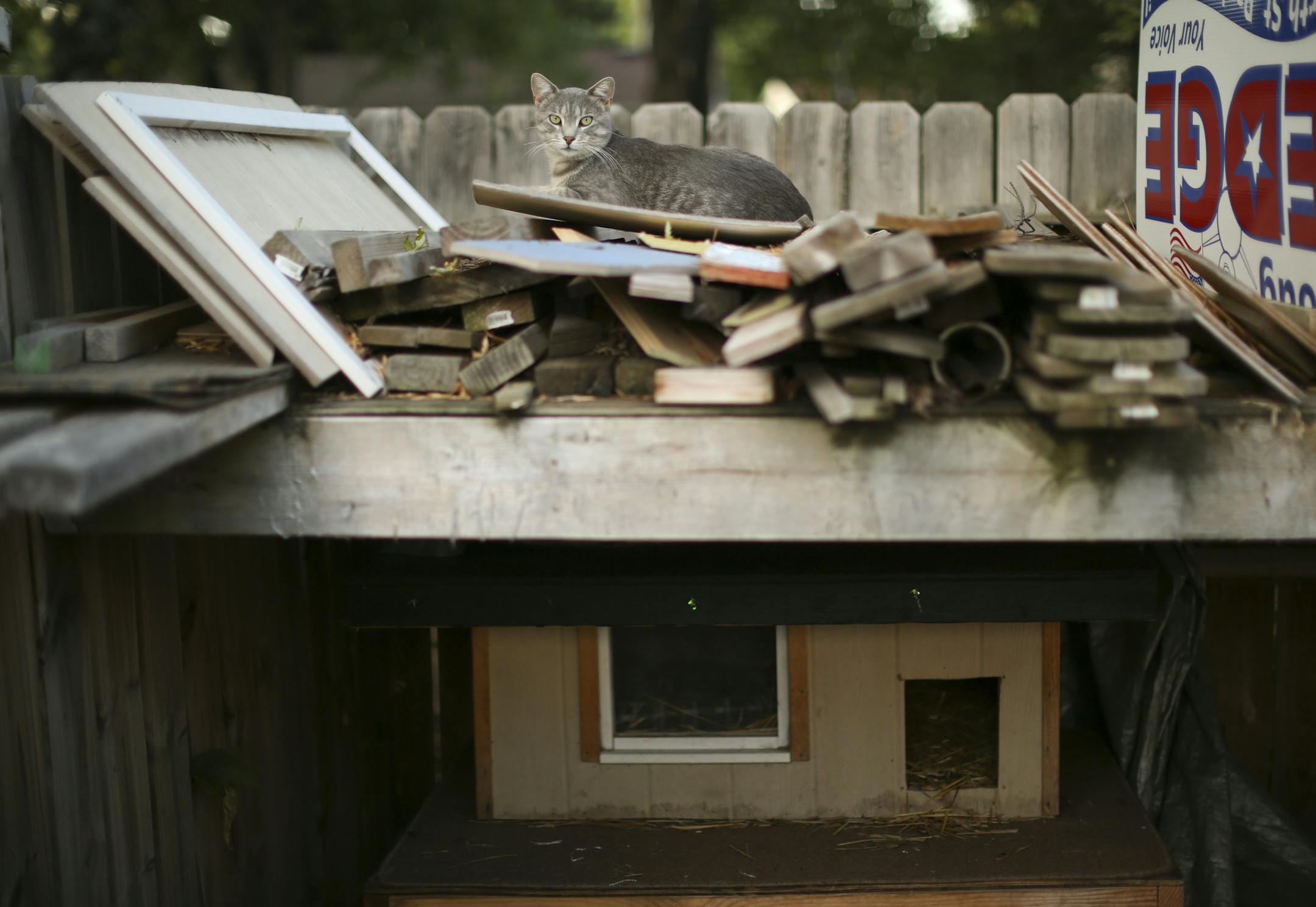
A member of the feral cat colony cared for by Annette and Doug Edge of North St. Paul, who both testified. Doug Edge said cities could take steps against cat owners to reduce the number of roaming felines.
A member of the feral cat colony cared for by Annette and Doug Edge of North St. Paul, who both testified. Doug Edge said cities could take steps against cat owners to reduce the number of roaming felines. (The Minnesota Star Tribune)
A committee of the Minneapolis City Council voted 5-0 Wednesday afternoon, September 11, 2013 to recommend a new law that in essence licenses the care and feeding of feral cats. Annette and Doug Edge of North St. Paul manage a feral cat colony of 14 felines in their backyard. They both offered testimony at the city council meeting in support of the measure. Dan Niziolek, head of Minneapolis Animal Care & Control, outlined the proposed law for members of the city council Wednesday afternoon. ] JE
Jerry Bahls, president of the Audubon Society’s Minnesota chapter, opposed the plan, citing the rights of neighbors. Right: Dan Niziolek, director of Minneapolis Animal Care and Control, outlined the proposal. (The Minnesota Star Tribune)
about the writer

about the writer

Josephine Marcotty

Reporter

Josephine Marcotty has covered the environment in Minnesota for eight years, with expertise in water quality, agriculture, critters and mining. Prior to that she was a medical reporter, with an emphasis on mental illness, transplant medicine and reproductive health care.

See Moreicon