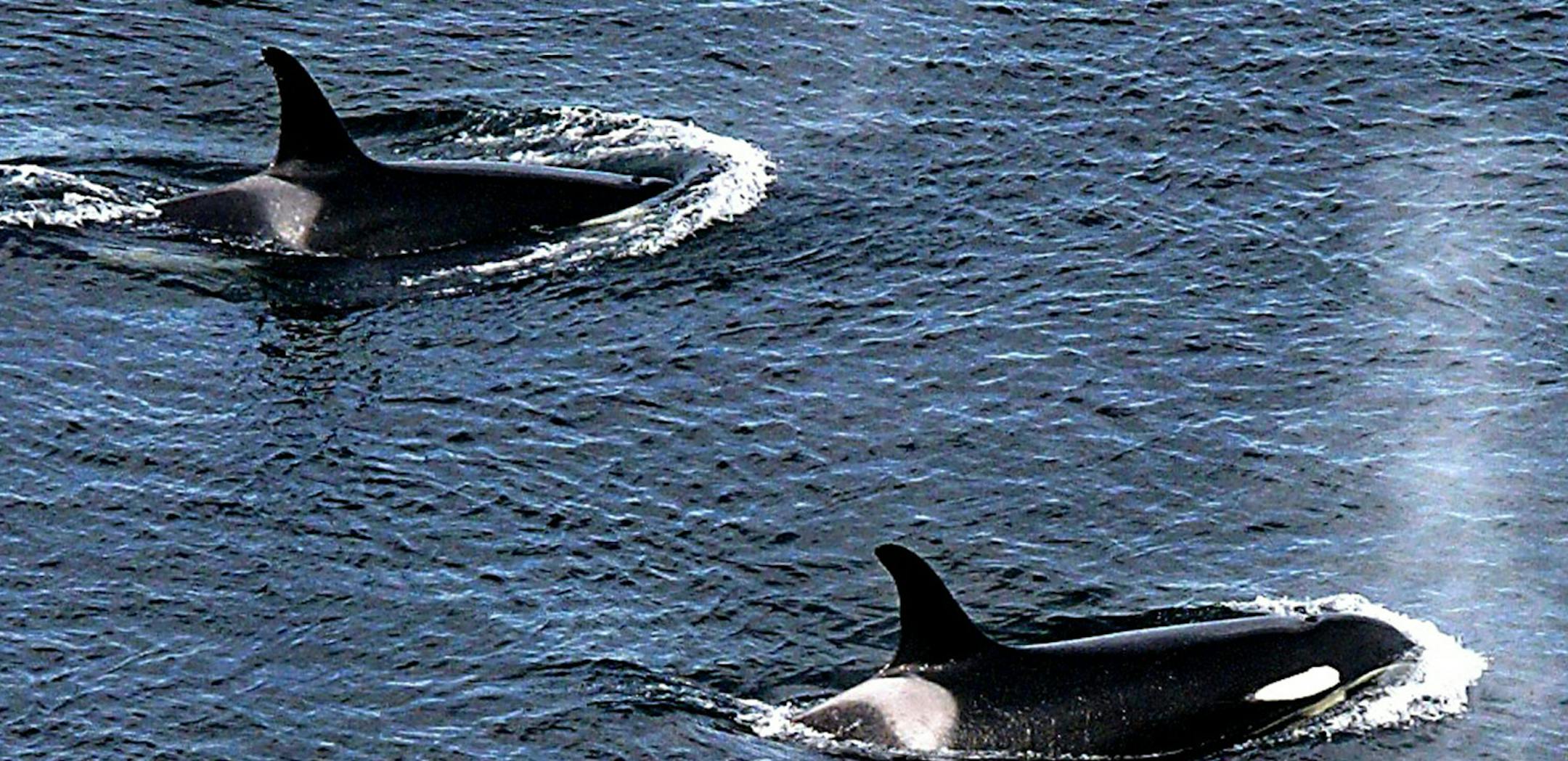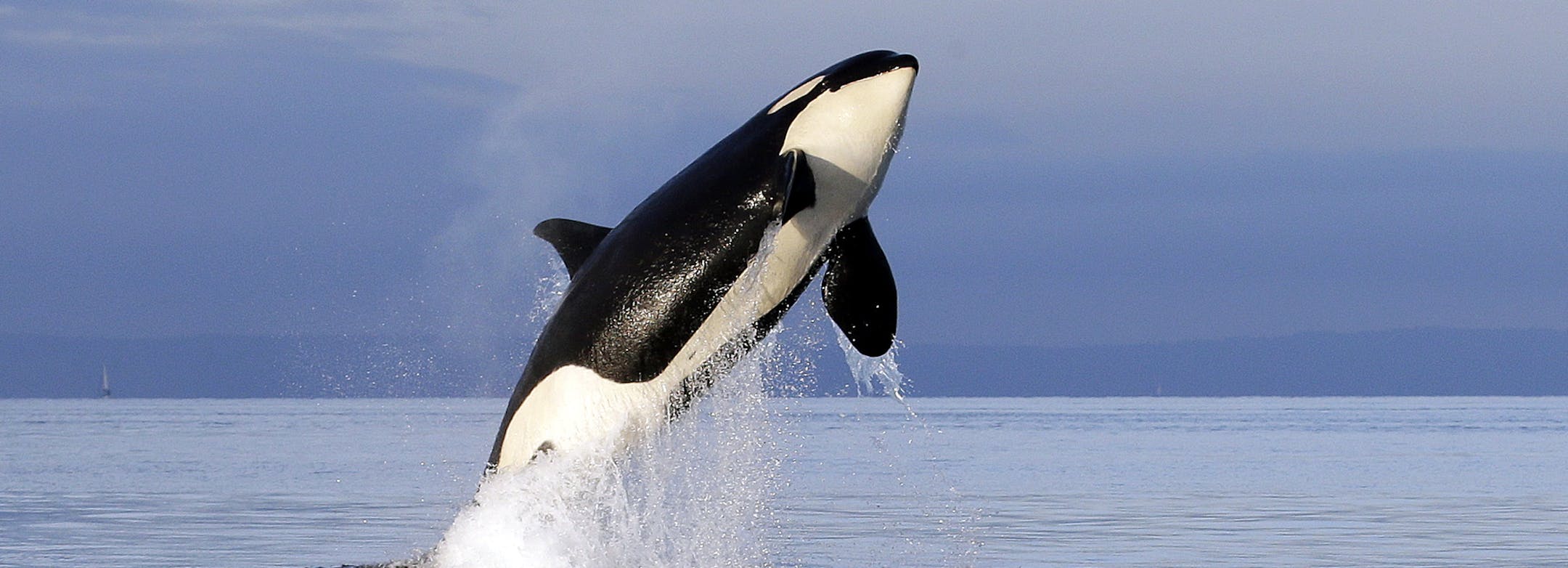
SEATTLE – Female orcas are most thrown off from foraging when boats and vessels intrude closer than 400 yards, said new research — troubling findings for the endangered population of southern resident orcas that desperately needs every mother and calf to survive.
"We need females to produce calves if we want to move toward population recovery," said Marla Holt, lead author on the study, and a research wildlife biologist at the National Oceanic and Atmospheric Administration's Northwest Fisheries Science Center in Seattle.
NOAA declared the southern resident orcas in 2015 a Species in the Spotlight, an initiative to bring more attention to the most endangered marine species in the U.S. These latest findings, published in Frontiers in Marine Science, are expected to help the agency align its guidelines for whale watching with rules already in place in British Columbia and the state of Washington to be more protective of southern resident mother orcas and their calves.
The new findings build on earlier field work that used temporary tags attached to southern resident orcas with suction cups.
The tags record the whales' movements and allow scientists to observe the orcas' lives underwater, as they dive, swim and pursue prey. It is those findings that revealed that male and female orcas alike change their behavior when vessels come close — females more than males.
Females will either stop foraging if they are, or not initiate foraging dives.
Just why females are more vulnerable is not known. They have smaller bodies and don't have the same capacity as males for extended dives. Mothers with calves also stay with their young, and therefore are restricted by the baby's physical limits to shallower waters, closer to shore.
Even kayaks cause disturbance. "We see an effect of kayaks," Holt said. "That physical presence is a factor people need to remember."