

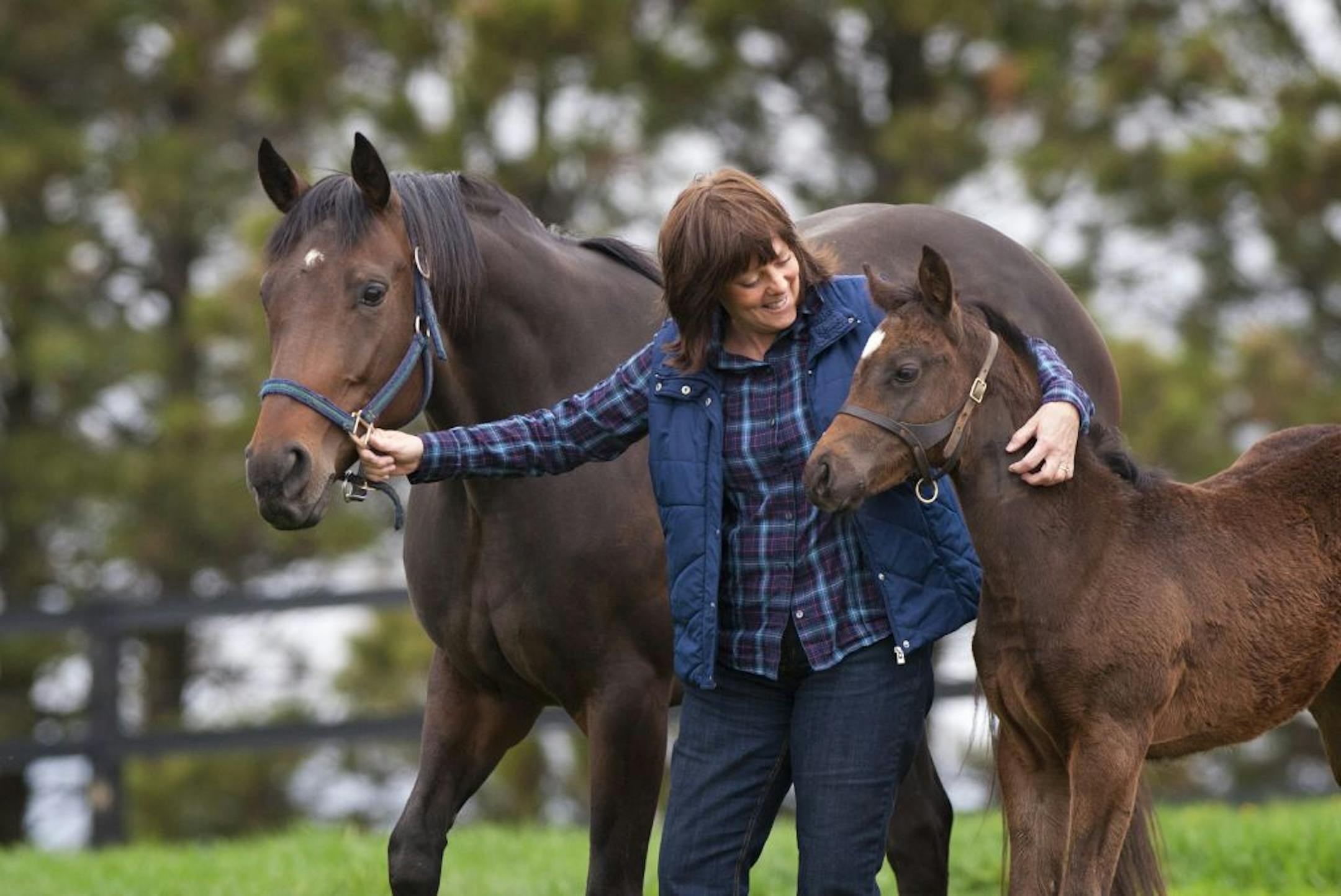
On a windswept morning at Bleu Valley Farm, Jeff Hilger stood at a paddock fence and dreamed about the future. "That's one of the nicest babies we've had," he said, watching a spindly-legged filly grazing alongside her mother. "She's going to be a runner."
Hilger, of Stillwater, wants to see her run at Canterbury Park. But if the Shakopee track does not win approval this year to add slot machines and become a racino, he fears Canterbury will be on the verge of closing when she begins her racing career two years from now. A steady decline in wagering at the track has led to lower purses, which several horsemen say has made it difficult to just break even during a 62-day racing season.
That, in turn, has led breeders such as Hilger to cut back dramatically or get out of the business altogether. The Minnesota Racing Commission reported only 142 thoroughbred foals were registered in 2010, the lowest number since 1998 -- and less than half the number registered just five years earlier. Racinos, horsemen say, would rescue the state's breeding industry. Without them, track officials concurred, Canterbury might not be able to attract enough horses to continue operating.
As Canterbury opens its 2011 season Friday night, racino legislation remains on the table in the Minnesota House and Senate. Canterbury President Randy Sampson believes it could win last-minute approval during negotiations over the state budget and a proposed Vikings stadium. While it's estimated that racinos could generate $125 million per year for the state, Hilger is focused on the purse money they would provide to an industry desperate for a lifeline.
"I'm at the point that if this doesn't get done, I'm out," said Hilger, a thoroughbred owner since 1989 and winner of state and national awards as Minnesota's leading breeder in 2010. "How can you make the investment if you don't even know whether Canterbury will be open? And it won't be open three years from now if we don't get this.
"You foal a baby, you raise it, and the first time it runs, it's like your kid. It would be heartbreaking to get out, but with the purses where they are, you can't make it."
Sampson said Canterbury remains on solid financial footing, though the company lost money last year for the first time in 15 years. But its total purses have declined from a peak of $149,767 per day in 2006 to $119,172 in 2010. Two of its main competitors for horses, Iowa's Prairie Meadows and Oklahoma's Remington Park, have racinos to plump up purses; for thoroughbred races in 2010, Prairie Meadows offered $227,537 per day and Remington offered $215,433, more than double what Canterbury paid.
Sampson estimated that racino revenue would push Canterbury's purses to as much as $250,000 to $300,000 per day for a season with a required minimum of 75 days. Without that incentive, he is fearful that the number of Minnesota-bred horses he relies on to fill races will diminish further. "When you look at this year's 3-year-old [thoroughbreds], that foal crop was probably close to 300," Sampson said. "This year, there probably won't be 150. We could continue to limp along for a while. But when you look out a few years, you have to wonder how we're going to fill our barns."


