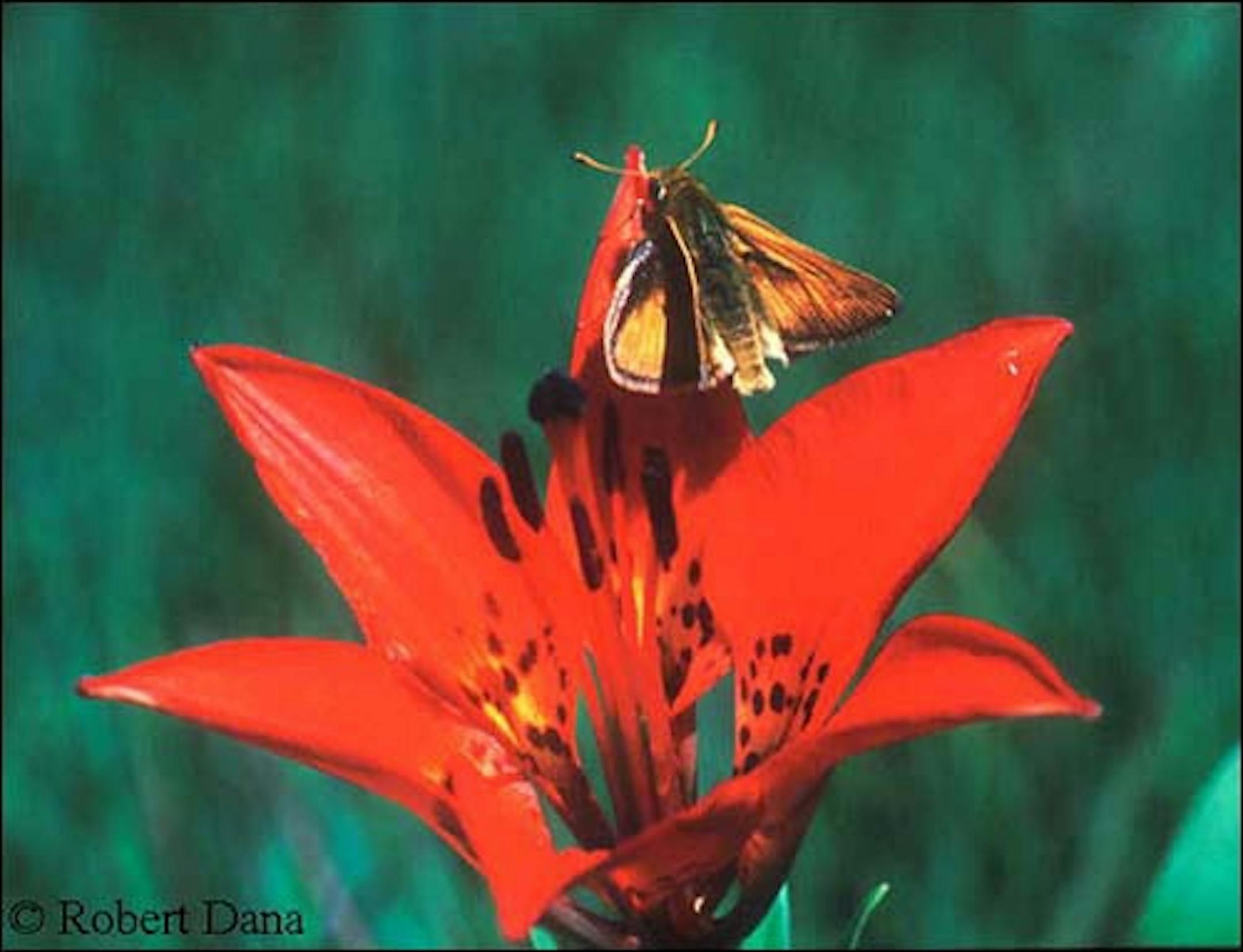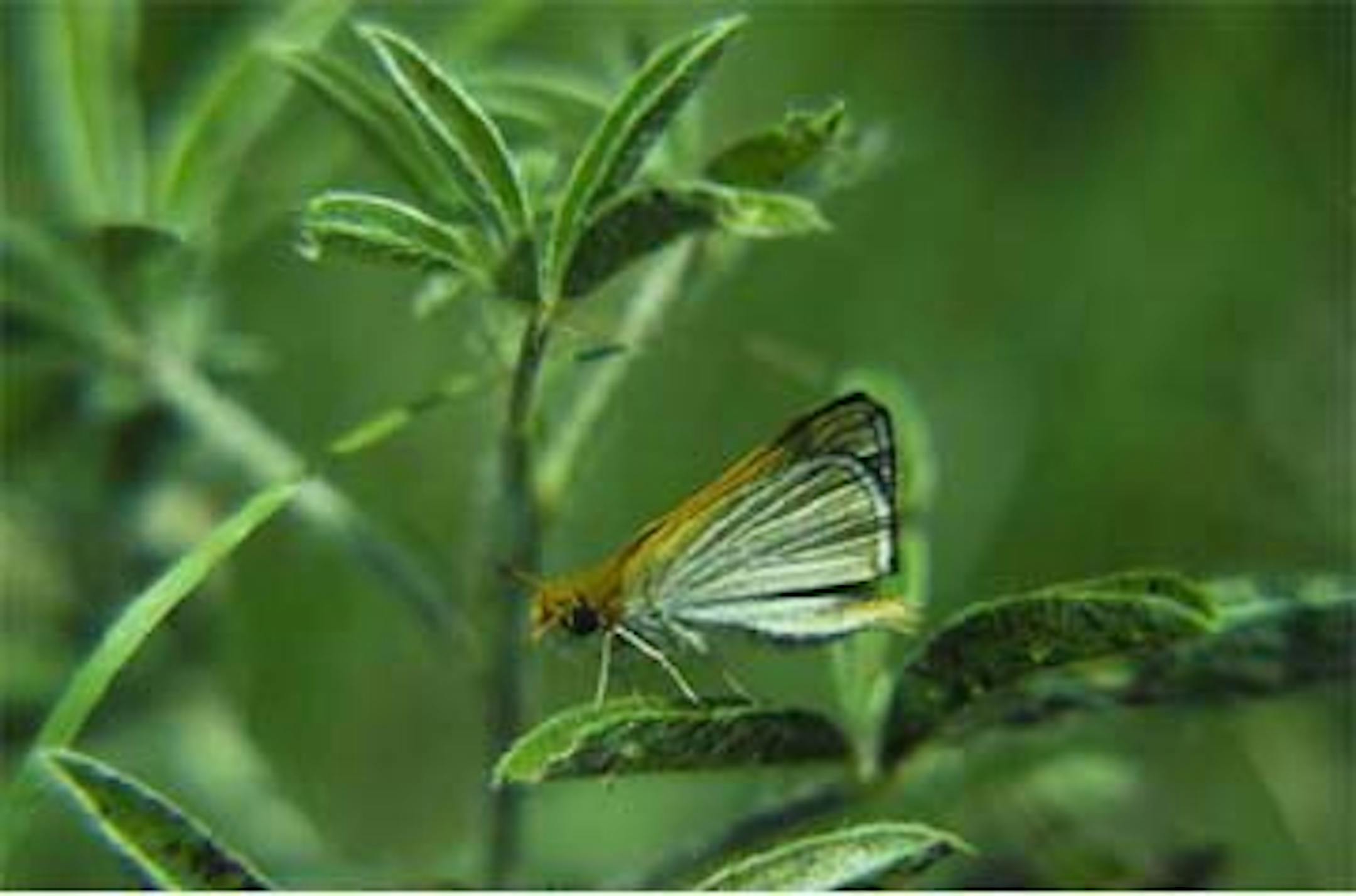
Two sharply declining populations of butterflies native to much of western Minnesota and elsewhere in the Midwest have been proposed for protection under the Endangered Species Act, federal officials said Wednesday, citing as the primary reason the loss of their natural prairie home.
The Dakota skipper is being proposed by the U.S. Fish and Wildlife Service (USFWS) as a "threatened" species. Found in Minnesota, the Dakotas and Canada, the Dakota skipper "has experienced a dramatic decline in numbers and no longer occurs on half the sites where [it was] previously found," the USFWS said in a statement.
The USFWS is proposing the Poweshiek skipperling for the more critical "endangered" status. Once found in Minnesota, seven other states and Canada, it now occurs only in a few native prairie remnants in Wisconsin and Michigan, and in Manitoba. Surveys indicate that Poweshiek skipperlings are gone from nearly 90 percent of the sites where they were previously found, the agency said.
The agency is attributing the species' declines to "degradation or changes" to their prairie habitat.
These species of butterflies are "representative of this dwindling piece of the prairie landscape that is declining," said USFWS spokeswoman Gerogia Parham. "They are little pieces in a big puzzle."
Tierra Curry, a conservation biologist at the nonprofit Center for Biological Diversity, based in Arizona, said, "These remarkable little butterflies have a long flight to recovery, but Endangered Species Act protection will help save them and their beautiful prairie homes."
Endangered species are plants and animals that are in danger of becoming extinct. Threatened species are those that may someday become endangered. The Endangered Species Act protects those listed from harm and conserves habitat designated as critical for the species' survival and recovery.
The USFWS is proposing to designate 54 tracts, ranging from 31 to 2,887 acres each, in Minnesota and the Dakotas as critical habitat for the Dakota skipper, an orange and brown species that is smaller but faster than most butterflies. This species is already on Minnesota's list of endangered butterflies.