

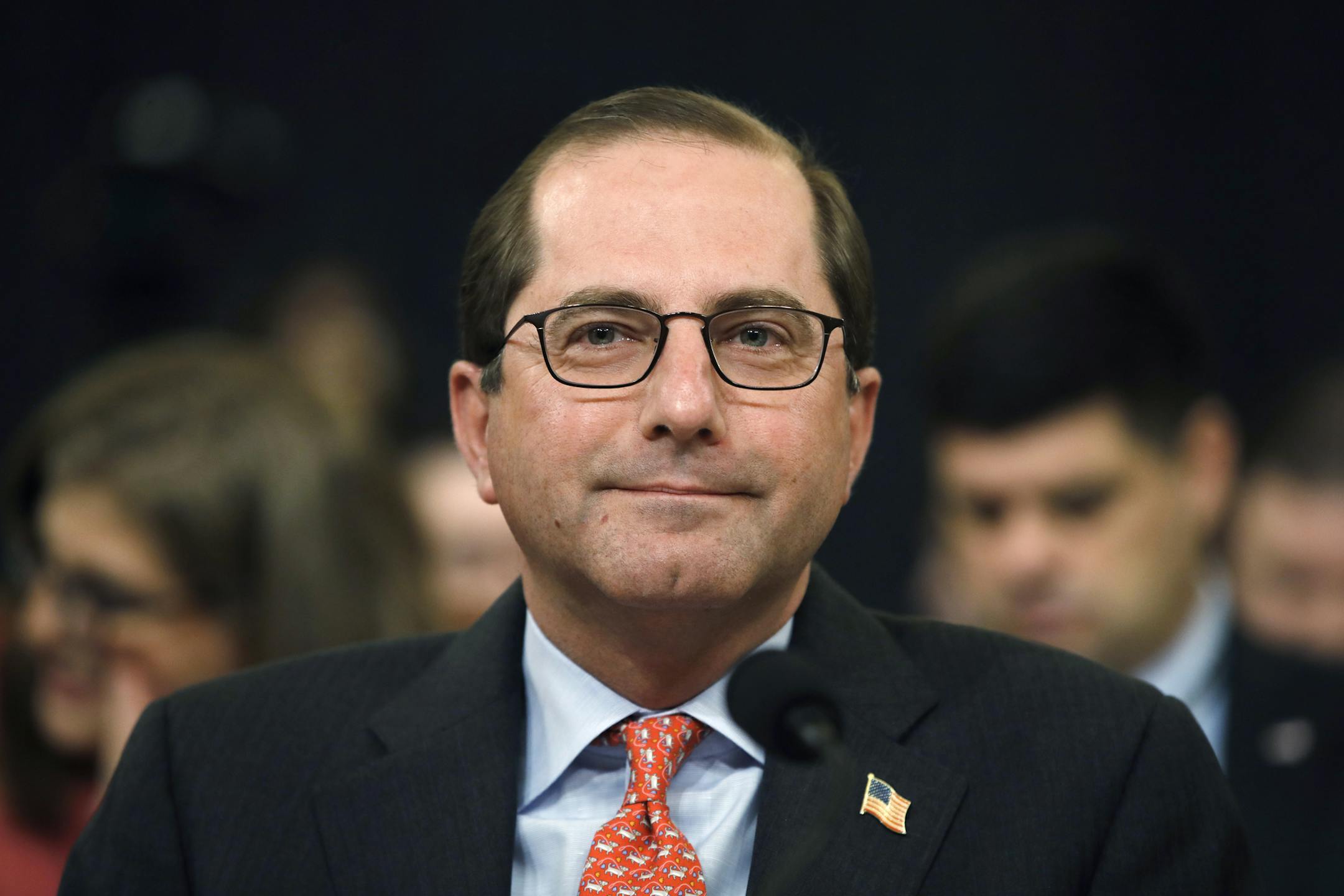
Alex Azar, the new head of the massive U.S. Health and Human Services agency, has been on the job only a few weeks, so he still deserves the benefit of the doubt about his leadership. But his congressional testimony last week raised troubling questions, particularly from Minnesota's perspective, about the agency's future direction during his tenure.
Azar, a former drug company executive, appeared before the U.S. House's Ways and Means Committee on Wednesday. Azar's testimony focused on his agency's budget, but he also touted its commitment to flexibility for states wanting to pioneer their own health reforms.
It took a lot of nerve for Azar to say that with a straight face. Minnesota has long been at the forefront of state-level innovation when it comes to health reform. Particular standouts: the state's two-year "reinsurance" program, passed in 2017, to lower consumers' monthly health insurance premiums. And the state's retooling of the MinnesotaCare program for working families to improve benefits and greatly reduce the state dollars needed to sustain the program.
But Azar's agency has not only failed to recognize this good work, it has penalized it and continues to do so, most recently in January. In a letter received Jan. 16, HHS officials denied Minnesota's urgent appeal to restore $369 million in federal aid that the agency stripped away last fall as an apparent trade-off for approving the state's reinsurance program. The dollars lost are a direct hit to MinnesotaCare.
HHS also has reduced support for MinnesotaCare through other actions — ones that are clearly intended to undermine the Affordable Care Act, former President Barack Obama's signature health reform law. The dollars lost add up to a staggering $806 million for fiscal 2018-2021.
There's a message that HHS is sending, and it doesn't reflect well on the agency. It supports only state innovations ideologically consistent with the Trump administration and will change the rules midstream for states already on a different path. That this constitutes state flexibility is ludicrous. It also puts Minnesota in a tough financial spot — a reality that legislators need to plan for.
The state pursued these reforms with assurances from both the Obama and Trump administrations that they met the rules for continued federal support. State Sen. Michelle Benson, R-Ham Lake, worked diligently to ensure that Minnesota would not be penalized for being one of the first to launch a reinsurance program. Had state policymakers known that those assurances were disingenuous, they may well have pursued a different solution to avoid the lost MinnesotaCare funding.
Although MinnesotaCare reserves can sustain the program temporarily, Minnesota lawmakers should not shrug off the financial challenges created by HHS's politically motivated rule shifting. (The agency declined to provide comment last week.)


