

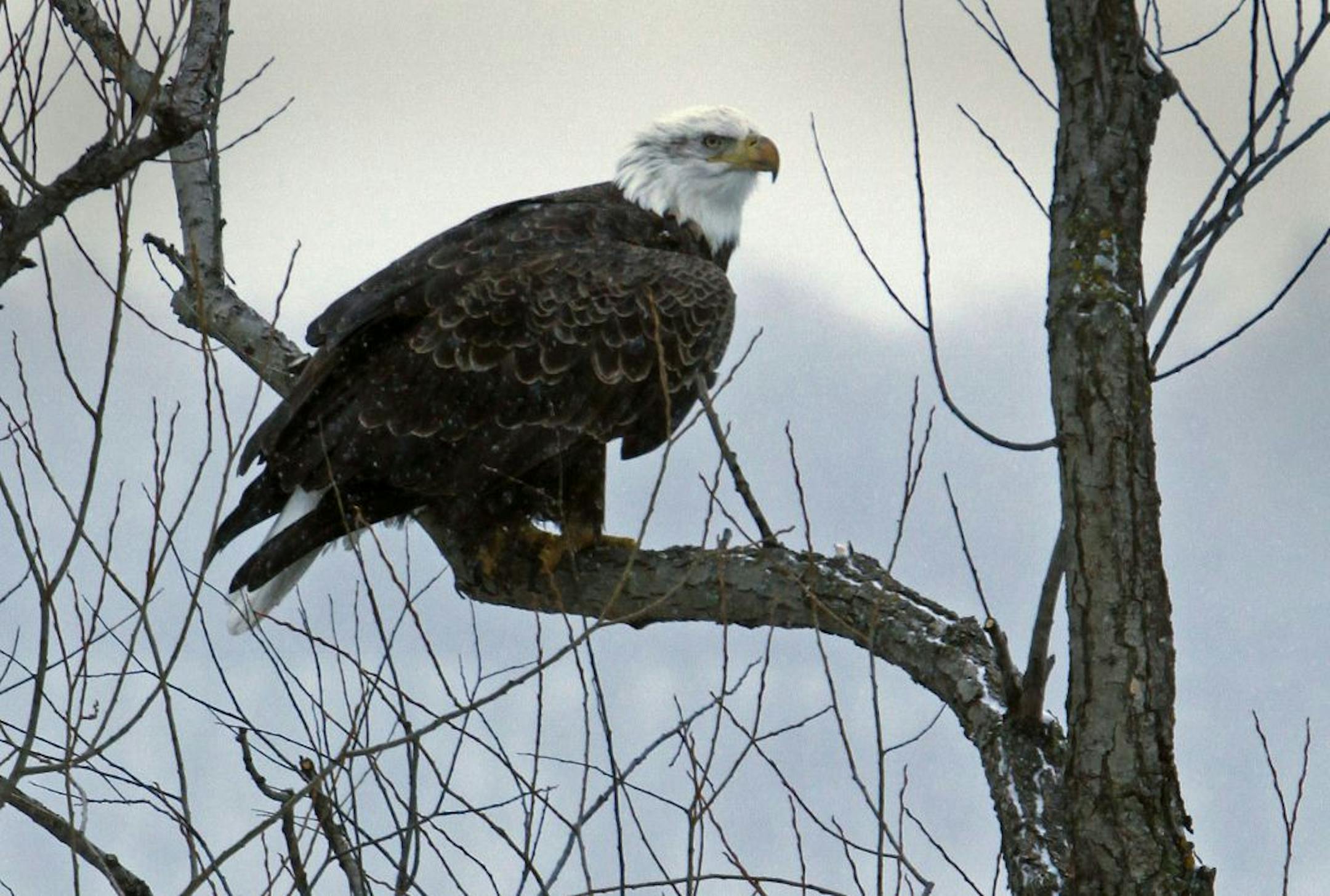
A bitterly contested wind farm proposed for Goodhue County got the go-ahead Wednesday to pursue a permit that would allow it to legally kill or injure eagles, in what could be the first case of federal authorities issuing a license to kill the protected national symbol.
The 48-turbine project would kill at most eight to 15 eagles a year, a number that would not harm the local population, federal officials said in a letter to state regulators. The U.S. Fish and Wildlife Service said its estimate does not include possible strategies to reduce the number of eagles killed and, that if a permit is eventually granted, the goal would be a much lower figure.
The small wind project near Red Wing has drawn national attention as one of the first to try the government's controversial new strategy of managing the sometimes lethal conflict between birds, bats and the towering turbines.
Several of the new federal "incidental-take" permits are in the works, including one in North Carolina and one in Oregon, but none has been granted.
The Goodhue County project, now owned by New Era Wind Farm, is the farthest along in the process, said Kelly Fuller of the American Bird Conservancy, a national advocacy group. "That is too many bald eagles," she said of the new estimate. "This is the kind of project that could be an enormous black eye for [the] wind industry."
Peter Mastic, owner of New Era, did not return a phone call on Wednesday seeking comment.
New Era Wind, previously AWA Goodhue Wind, applied for a permit four years ago, and still faces several regulatory hurdles that the Minnesota Public Utilities Commission (PUC) is likely to consider during hearings later this year. It's already faced numerous legal actions and fierce resistance by many in the largely agricultural community who have raised concerns about noise, shadows cast by the rotating turbines and possible effects on health.
The company has conducted bird and bat surveys, and filed a bird and bat protection plan, which the PUC has yet to consider. The letter from the Fish and Wildlife Service, plus comments by the Minnesota Department of Natural Resources, came in response to that plan.


