

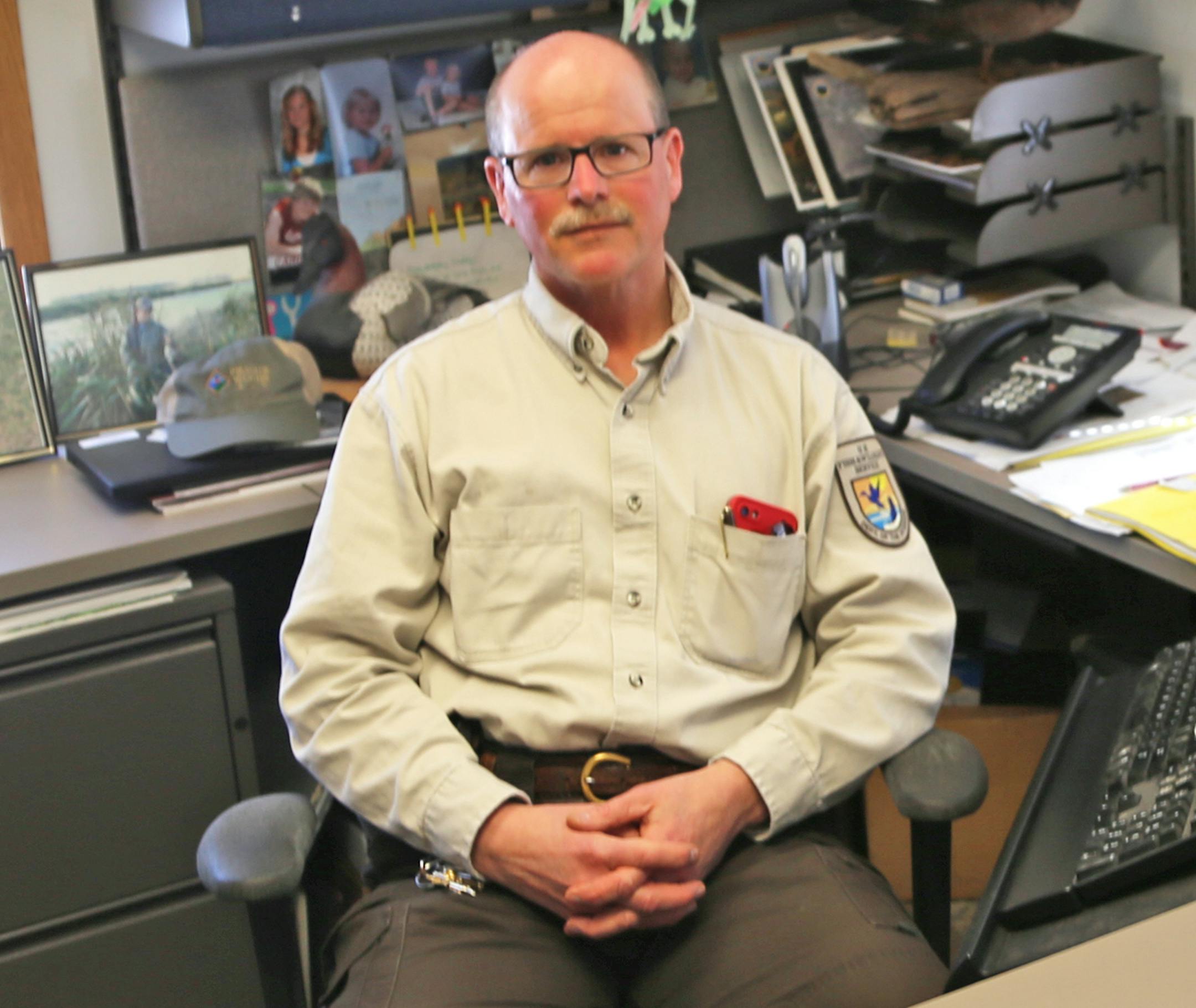
LITCHFIELD, MINN. – Not far from where Scott Glup maintains his U.S. Fish and Wildlife Service office near this Meeker County town of 6,650 residents, buffalo once abounded, also elk and red-winged blackbirds. Muskrats were plentiful, too, along with prairie chickens and enough ducks during spring and fall migrations to blacken the sky.
Supporting the life that supported those species were tens of thousands of potholes, wetlands and shallow lakes — a watery landscape that to a visitor the other day seemed barely imaginable, given the checkerboard-like farm fields that now stretch in every direction.
Among the relative handful of wetlands and shallow lakes that remain in a seven-county region in this part of the state, 153 parcels called federal Waterfowl Production Areas (WPAs) are overseen by Glup and his staff.
Purchased beginning in the late 1950s with proceeds from federal duck stamp sales — the stamps are required to hunt waterfowl in the U.S. — the areas by law must be protected and managed for wildlife, including, in addition to ducks and geese, shorebirds, grassland birds, plants and insects.
It's a job Glup, a 33-year Fish and Wildlife Service veteran, takes seriously.
"We're on the front lines of protection,'' he said. "We want to protect these lands not only for this generation but for future generations.''
The job is challenging because, in varying degrees, each of the WPAs in his district is a dumping ground for farmland drainage. The result, in many cases, is that silt carried by the drained water piles up sometimes 3 feet deep in the bottom of a wetland. At other times, so much water, some of it laced with farmland chemicals, enters a WPA that its capacity to support nesting waterfowl, or resting waterfowl, is diminished.
One result: fewer ducks — and fewer ducks is one reason a record-low number of waterfowl hunting licenses were sold in the state last fall.


