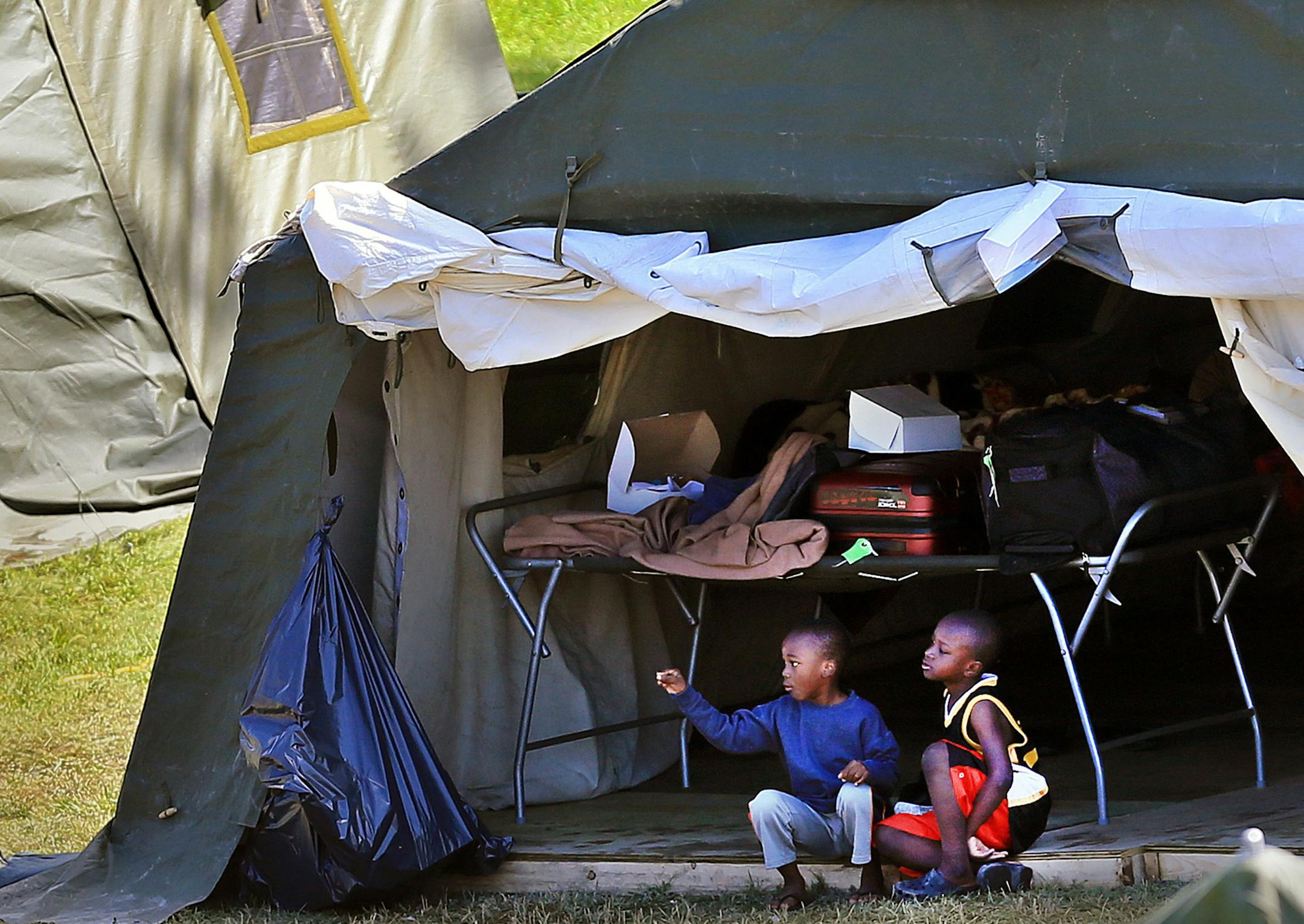
MONTREAL – Beads of sweat trickled down her forehead as Carole Wembert dragged one bulky black-and-red suitcase and toted two other bags, the load weighing heavy on both her mind and body as she approached the border crossing.
After 15 years in the United States, the Haitian immigrant had quit her job at Walmart in Fort Lauderdale, Fla. She packed up her four children, flew 1,200 miles to New York City, took a bus for seven hours and then a taxi before finally reaching the heavily forested spot on the U.S.-Canada border that has become a word-of-mouth entry point to a new life for immigrants.
The future in Canada was uncertain, but she was pretty sure what faced her in the U.S.: deportation.
"The president doesn't want the immigrants to stay," Wembert said.
She was repeating the widely held belief among some immigrant groups that President Donald Trump is closing the door to immigrants. Haitians in particular are worried because nearly 60,000 — including Wembert — have been living in the U.S. under temporary protected status (TPS), the special humanitarian relief given to Haiti since its devastating 2010 earthquake left more than 300,000 dead.
The Trump administration has been increasingly signaling that it may end the status for Haitians in January. That's fueling an unprecedented exodus of mostly Haitian migrants from the United States across a dirt and gravel-covered ditch in upstate New York to Canada.
More than 3,800 migrants flowed into Quebec during the first two weeks of this month, Royal Canadian Mounted Police spokesman Claude Castonguay said.
"We've never seen such numbers coming in," Castonguay said.