

Opinion editor’s note: Star Tribune Opinion publishes a mix of national and local commentaries online and in print each day. To contribute, click here.
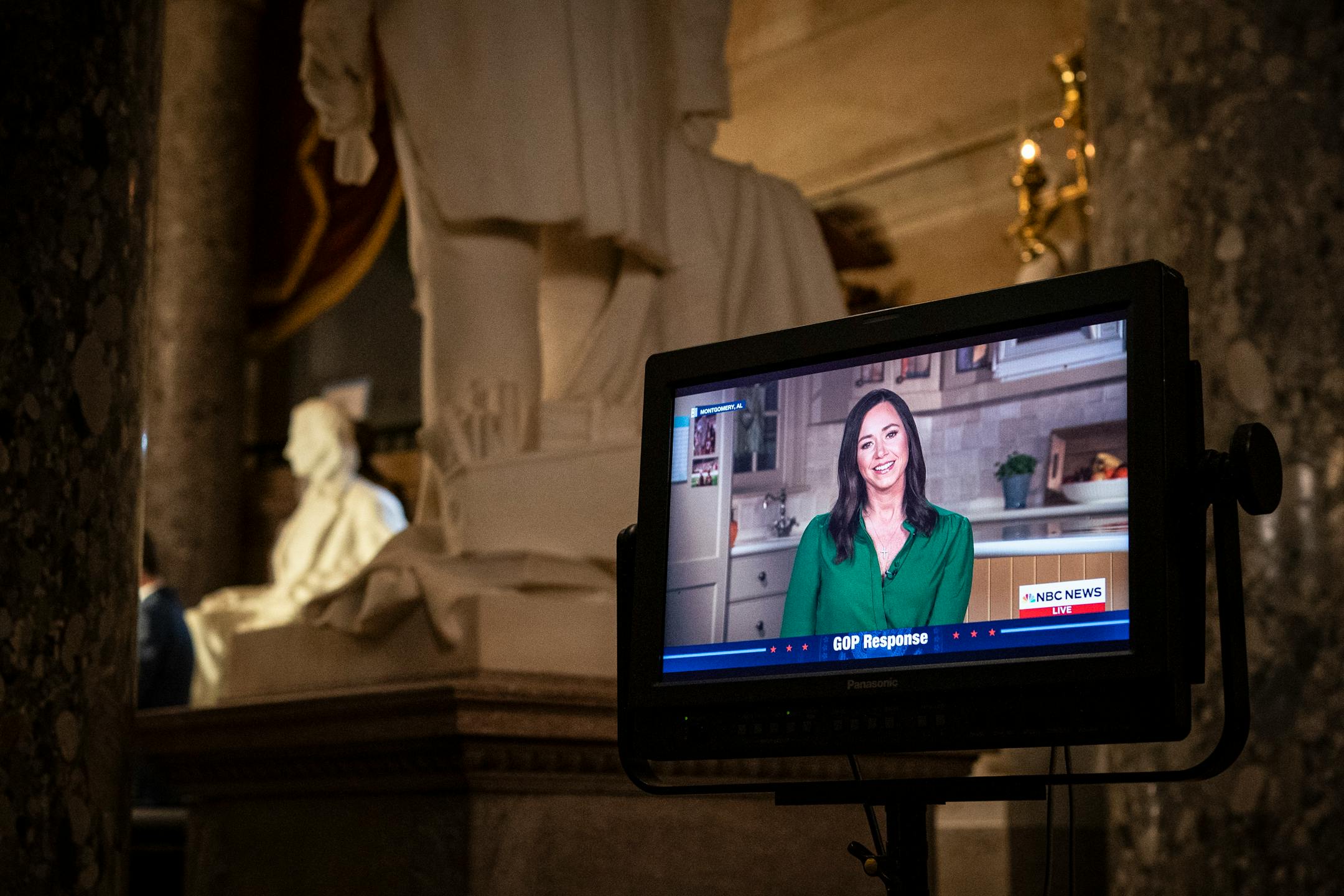
On Thursday, Katie Britt, the junior senator from Alabama, delivered the Republican response to the State of the Union address. Her overwrought performance has been widely mocked; that’s OK for late-night TV, but I’m not going to join in that chorus.
What I want to do instead is focus on the centerpiece of Britt’s remarks, a deeply misleading story about sex trafficking that she used to attack President Joe Biden. Her use of the story, which turns out to have involved events in Mexico way back when George W. Bush was president, wasn’t technically a lie, since she didn’t explicitly say that it happened in the U.S. on Biden’s watch. She did, however, say: “We wouldn’t be OK with this happening in a third-world country. This is the United States of America, and it’s past time we start acting like it. President Biden’s border crisis is a disgrace.”
That’s a clear attempt to mislead, the moral equivalent of a lie, and the careful wording actually suggests that she knew she was being misleading, and wanted an escape hatch if someone called her bluff.
To really understand the significance of her de facto lie, however, we need to put it in political context.
Over the past few months, there’s been a palpable shift in Republican rhetoric away from attacks on the Biden economy and toward dire warnings about “migrant crime.”
This shift has in part been forced by the fact that the Biden economy is actually doing very well these days, with inflation receding while unemployment remains near a 50-year low. In political terms, the narrative of a bad economy seems to be fading.
If I were a Republican strategist, I’d be especially worried about the changing tone of news coverage. The San Francisco Fed maintains a daily index of “news sentiment.” In the summer of 2023, although the economy was arguably already performing pretty well, this index was roughly as low as it was in the depths of the Great Recession. Since then, however, it has shot up to levels roughly comparable to those that prevailed on the eve of the COVID-19 pandemic.


