

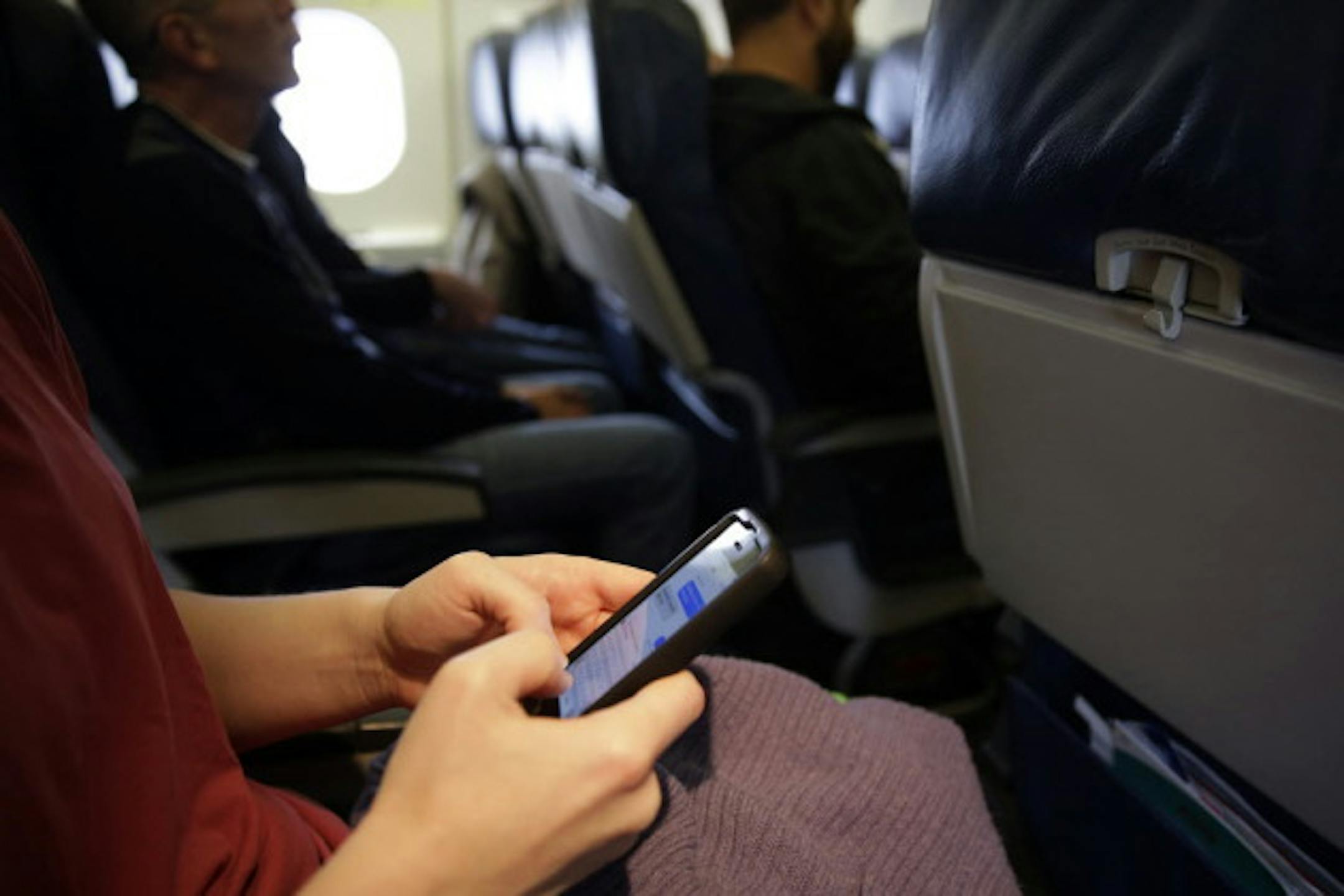
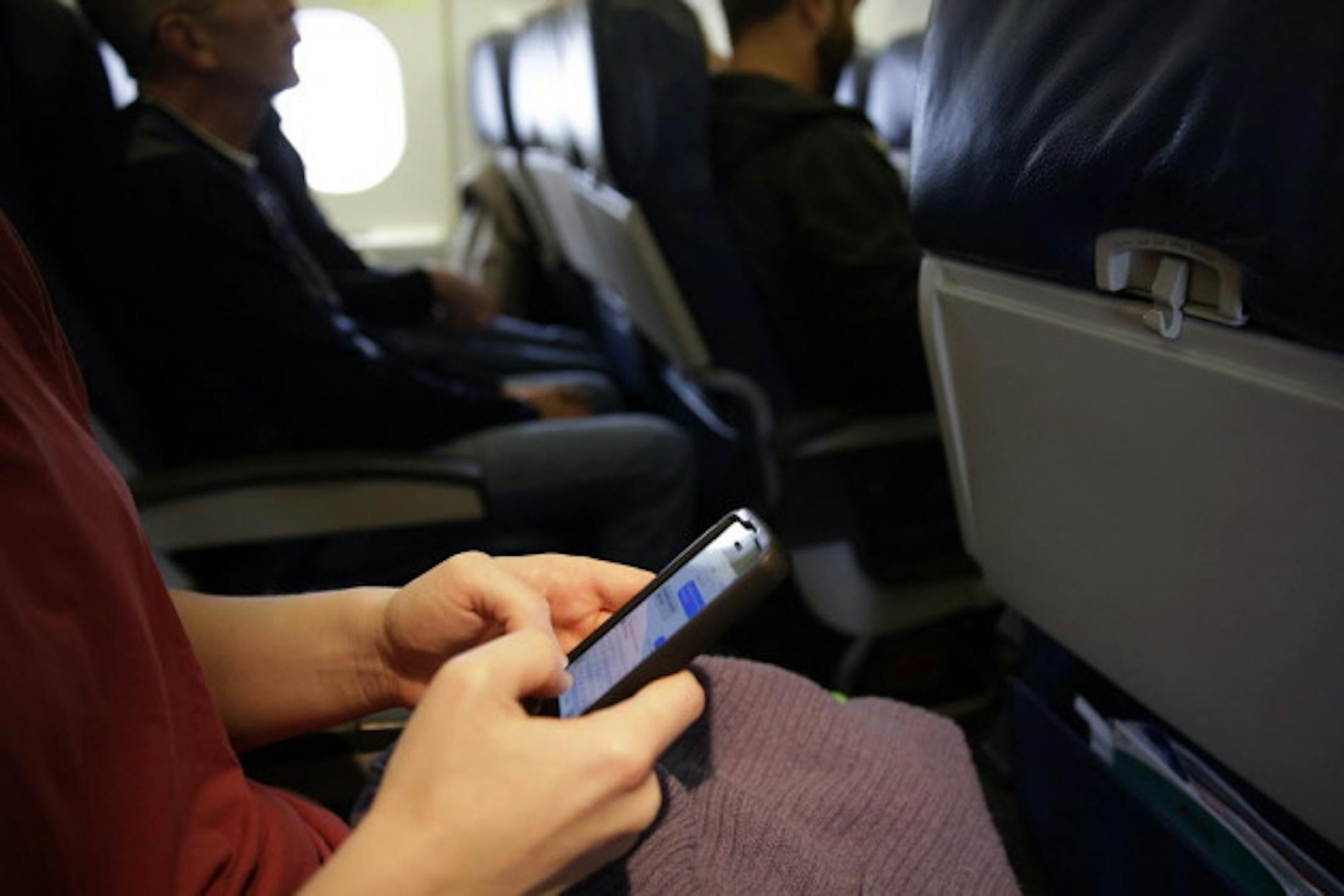
The Federal Communications Commission is proposing new rules that would allow airline passengers to make cell phone calls, place texts and use other mobile devices while in flight.
If approved, the current FCC ban on using wireless devices would be lifted and the decision on what type of wireless data services passengers could use while flying above 10,000 feet would be left up to individual airlines. Carriers would not be mandated to allow it, the FCC said.
The FCC will hold a public hearing Thursday afternoon in Washington D.C. to accept public comment on the proposal. It also will accept input on its toll-free number at 1-888-225-5322 or in writing. Comments can be faxed to 1-866-418-0232 or mailed to the FCC's Consumer and Governmental Affairs Bureau, Consumer Inquiries and Complaints Division, 445 SW. 12th Street, Washington, D.C. 20554.
While customer demand for wireless service has been rising, a majority of Americans say they are opposed to relaxing the rules which have been in place for more than 20 years. In a Quinnipiac University poll out this week, 59 percent say phones and other devices should remain powered off during flight while only 30 percent favored their use. Support for the mute button is strong among all groups, even voters 18 to 29 years old, who oppose phones on planes by a margin of 52 percent to 39 percent.
The ban on cell phone use was put in place to protect against radio interference to cell phone towers on the ground. But technology that can prevent such interference can be installed on aircraft and has been used in other countries without incident, the FCC said.
The proposal aims to give airline passengers the same communication access in the air that they have on trains and buses or in coffee shops.
Airlines would have to equip planes with special antennas approved by the Federal Aviation Administration before passengers could start talking. Without the antenna, "the prohibition remains," said Julius Knapp, chief of the FCC's Office of Engineering and Technology and Roger Sherman, acting chief of the agency's Wireless Telecommunications Bureau.
Even if airlines install the equipment and allow passengers to use cell phones and wireless devices, carriers would have the final say on whether to provide the service and how. They also would have the ability to program a system to not handle voice calls (while allowing text, email, and web browsing). In addition, systems can also be turned off if necessary for safety announcements and emergencies, the FCC said.


