

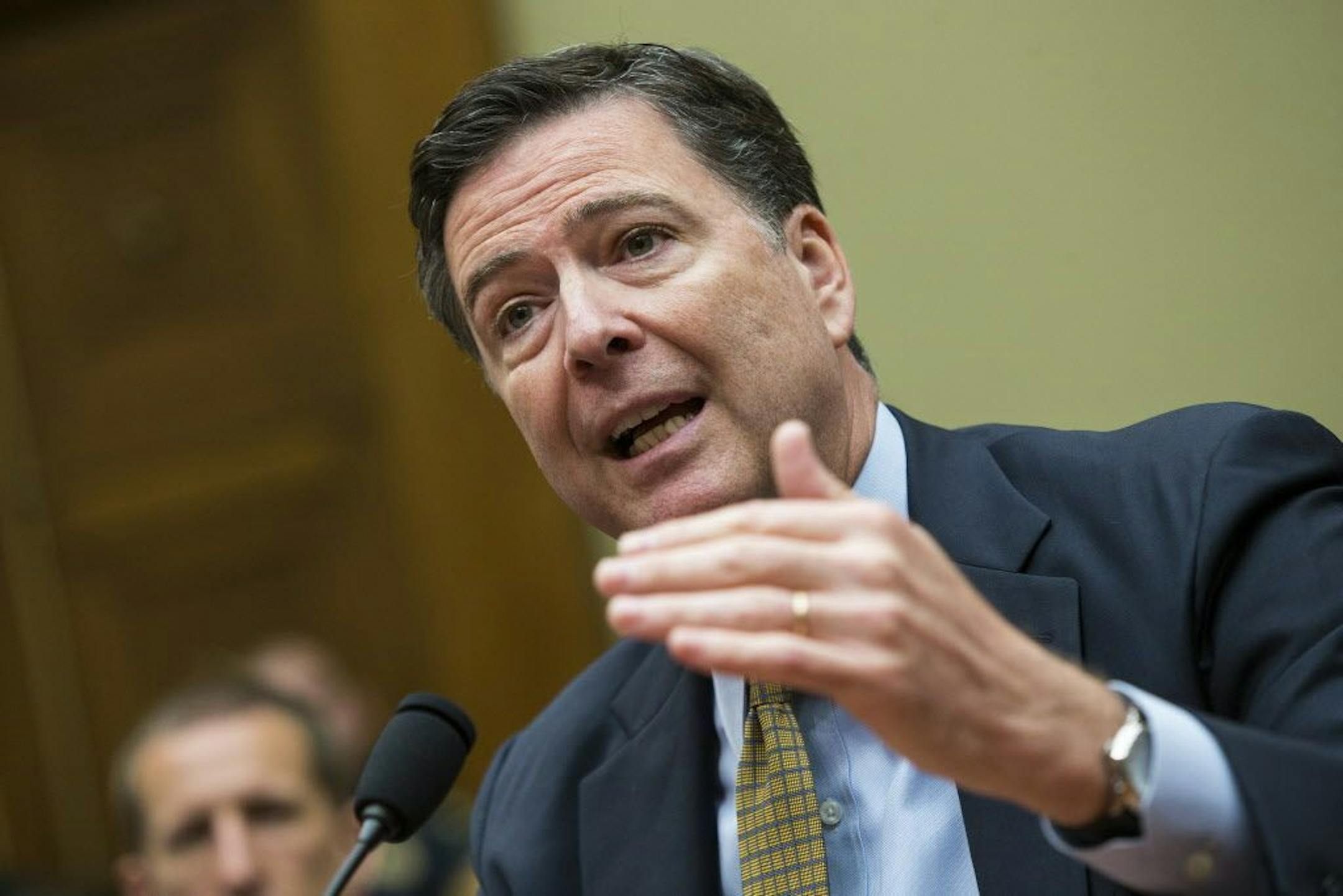
WASHINGTON – James Comey, the director of the FBI, faced a dilemma Thursday when deputies briefed him about a new trove of e-mails, discovered in the course of an investigation of former Rep. Anthony Weiner, that they said might be connected to the dormant inquiry into Hillary Clinton's private e-mail server.
Comey, who had cleared Clinton of any criminal wrongdoing in the e-mail affair this summer, could let Congress know about the new developments immediately, bureau officials said, an unusual step that would risk accusations that he was unfairly harming Clinton's presidential campaign less than two weeks before the election.
Or he could delay any announcement and examine the new e-mails more closely, risking criticism that he had suppressed important new information if it came out after the election, despite his pledges of "transparency" in the investigation.
Comey, a Republican appointed by President Obama three years ago, decided that he could live with criticism of his judgment, aides said. So on Friday morning, the FBI's congressional liaison e-mailed a letter from the director to the chairmen of eight congressional committees — virtually ensuring that it would be quickly publicized by eager Republicans.
The reaction was swift and damning, with Clinton's supporters and even some Republicans blasting Comey. Indeed, Comey, who was attacked this summer by Democrats and Republicans for both his decision not to bring charges against Clinton and the way he handled it, found himself in an even stronger crossfire Friday.
By late Friday, Comey felt it necessary to further explain his actions in an e-mail to FBI employees in which he acknowledged that "there is significant risk of being misunderstood." He explained that he was trying to balance the obligation he felt to tell Congress that the investigation he had said was completed was continuing, with not knowing yet "the significance of this newly discovered collection of e-mails."
Across Pennsylvania Avenue from the FBI, Justice Department officials were said to be deeply upset about Comey's decision to go to Congress with the new information before it had been adequately investigated.
That decision, said several officials who spoke on the condition of anonymity, appeared to contradict long-standing Justice Department guidelines discouraging any actions close to an election that could influence the outcome.


