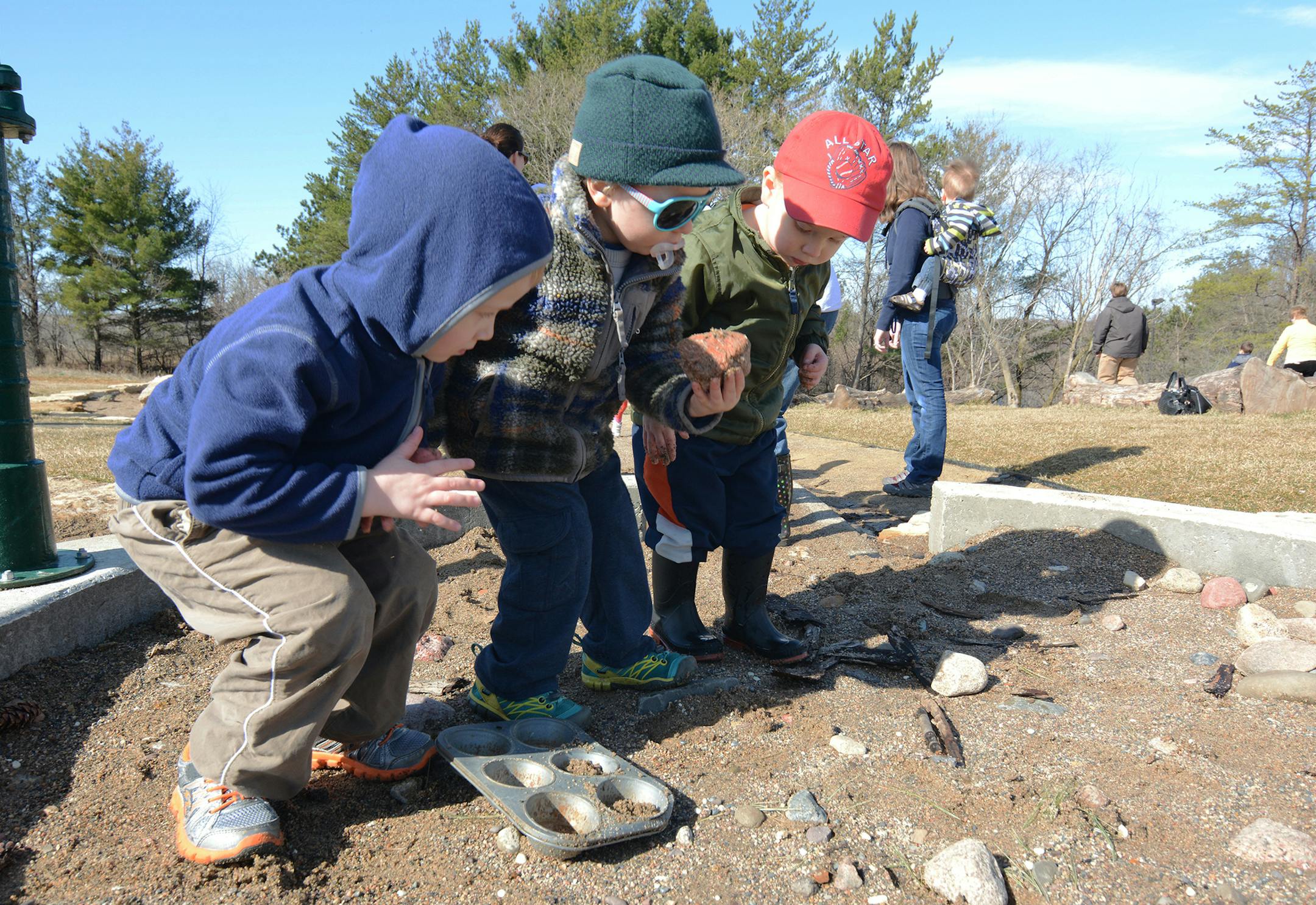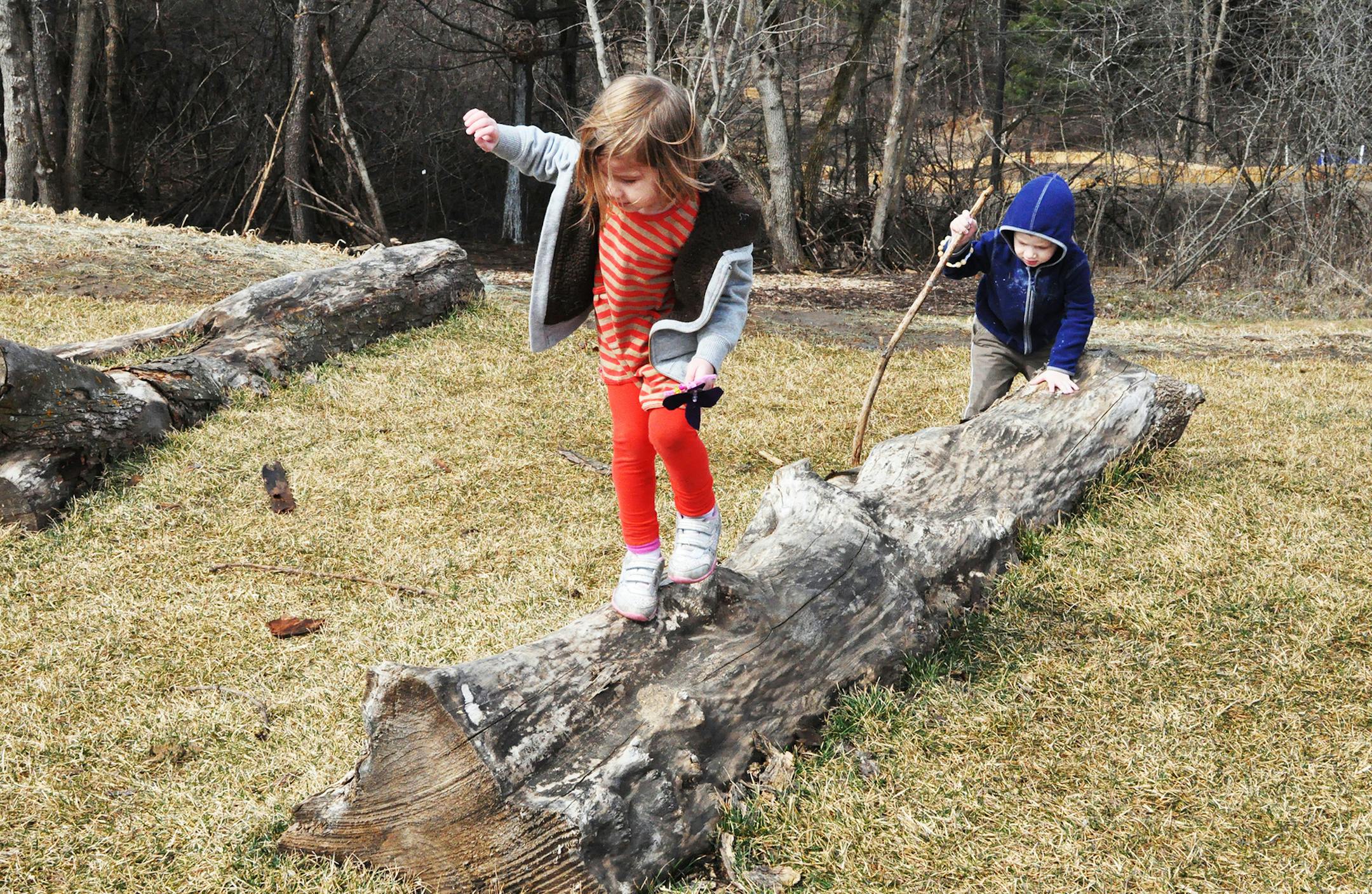
Out at Fawn Crossing, the new nature play area at Whitetail Woods Regional Park near Farmington, kids balance on logs, build bridges across a trickling waterway, and construct mammoth forts in a patch of woods.
"Those forts get so beautiful and magnificent and complicated and intricate that it always feels like a shame to pull them down," said Autumn Hubbell, outdoor education coordinator for Dakota County Parks. "But we do take them down so that the next children can be creative about their play."
The new play area opened in September with Whitetail Woods, and is part of a growing trend of nature play areas throughout the country.
"There certainly are hundreds and hundreds of them at this point," said Ken Finch, president of Green Hearts Institute for Nature in Childhood, a nonprofit in Omaha.
He said the nature play movement started gaining popularity in 2005 with the release of Richard Louv's book "Last Child in the Woods: Saving Our Children From Nature Deficit Disorder."
"It's been growing pretty steadily ever since," Finch said.
Nature playscapes can vary. Some are multimillion-dollar affairs, but others "really are no more than putting a little bit of temporary fencing around an existing piece of nature," he said.
The Fawn Crossing nature play area cost $35,000 to design and build, Hubble said. It includes a sand pit, a water feature, boulders and logs for climbing, stepping stumps, a wooded area for fort building and a section of restored prairie. Grapevine sculptures in the shape of pods and nests — made by local artist David W. Cook — are tucked in the woods and hang from trees.