

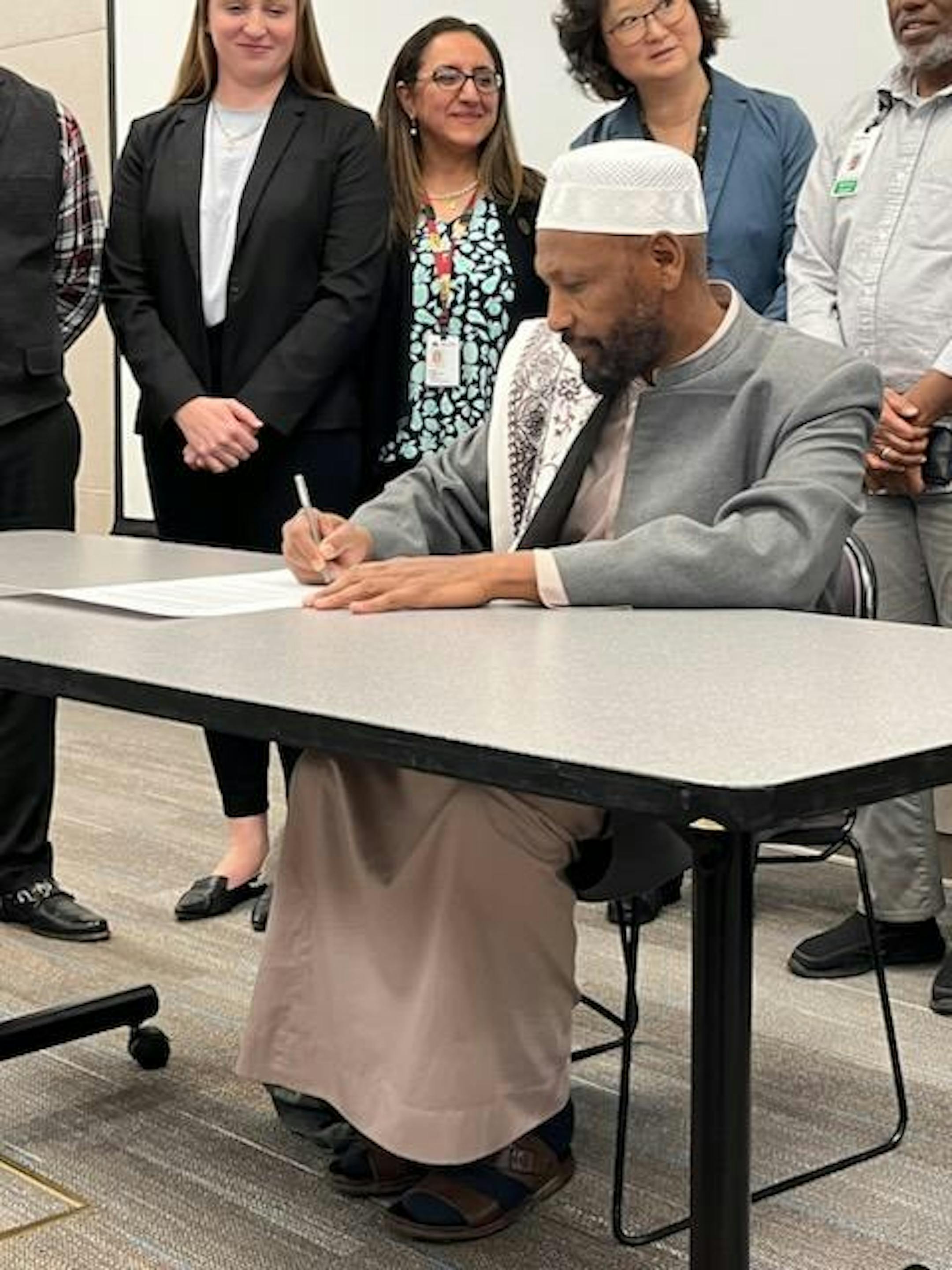
A decree by Twin Cities Muslim leaders this week in favor of the use of donor breast milk for medically fragile infants has rippled across the globe.
Brighter Health MN received hundreds of emails and calls from people worldwide after Thursday's fatwa, which is a formal explanation of Islamic beliefs. The Bloomington-based health agency was part of a coalition that requested the religious decree to address parent objections that use of the breast milk would create kinship under Islamic law between donor and child.
"We just got another email from somewhere in Australia: 'Hey, I just had twins and I saw this article. Is this real? Can we use this in this country?' " said Munira Maalimisaq, chief executive of Brighter Health and a nurse practitioner.
When mothers can't produce enough breast milk, pediatricians recommend donor milk to prevent a dangerous infection called necrotizing enterocolitis in infants born prematurely or at low weights. Muslim parents understood the risks but often refused, fearing that kinship with an unknown donor would put their children at risk for unwittingly entering into incestuous marriages later in life.
Leaders of seven Twin Cities mosques met after receiving the request in October. Imam Mohamed Mahad of the Nurul-Iman Mosque in Minneapolis said they recognized that their decision could have "lasting impact" in a Muslim community with a large Somali population but also Afghani refugees and others with different perspectives on the issue.
"The benefits of pasteurized donor human breast milk are so significant that all babies, particularly pre-term, low birthweight and ill babies, should be given this milk when their own mother's [milk] is not available," Mahad said Thursday.
The fatwa is believed to be the first of its kind in the United States on an issue with which other nations are grappling. Thursday's announcement was attended by Mohamed Sheikh Issak, Somalia's ambassador to Sudan.
Iran was among the first Islamic nations to broadly approve the use of donor breast milk.


