

Jonathan Markle sat in a hospital, shivering and in shock less than two hours after his SUV crashed through the ice on Lake Minnetonka with his 8-month-old daughter strapped inside, when a deputy asked him if he'd submit to a blood draw for alcohol testing.
"I don't really have a choice, do I?" he asked, according to testimony. He didn't, the deputy replied.
Markle submitted to the test, which showed he was legally drunk. His daughter died three days later. The criminal-vehicular homicide case against him now hinges on whether that blood sample can be used as evidence in the wake of a recent U.S. Supreme Court ruling that deemed warrants necessary for blood draws in most drunken-driving cases.
Markle, 41, of Minnetrista, was charged with the felony after he drove his SUV onto a frozen channel between Priests and Halstead bays Jan. 18 on the way home from Lord Fletcher's restaurant. When the vehicle broke through, his wife, Amanda, 31, and a second daughter, 2-year-old Isabelle, escaped from the submerged vehicle and were treated for hypothermia. His infant daughter, Tabitha, spent more than 15 minutes underwater before divers were able to rescue her.
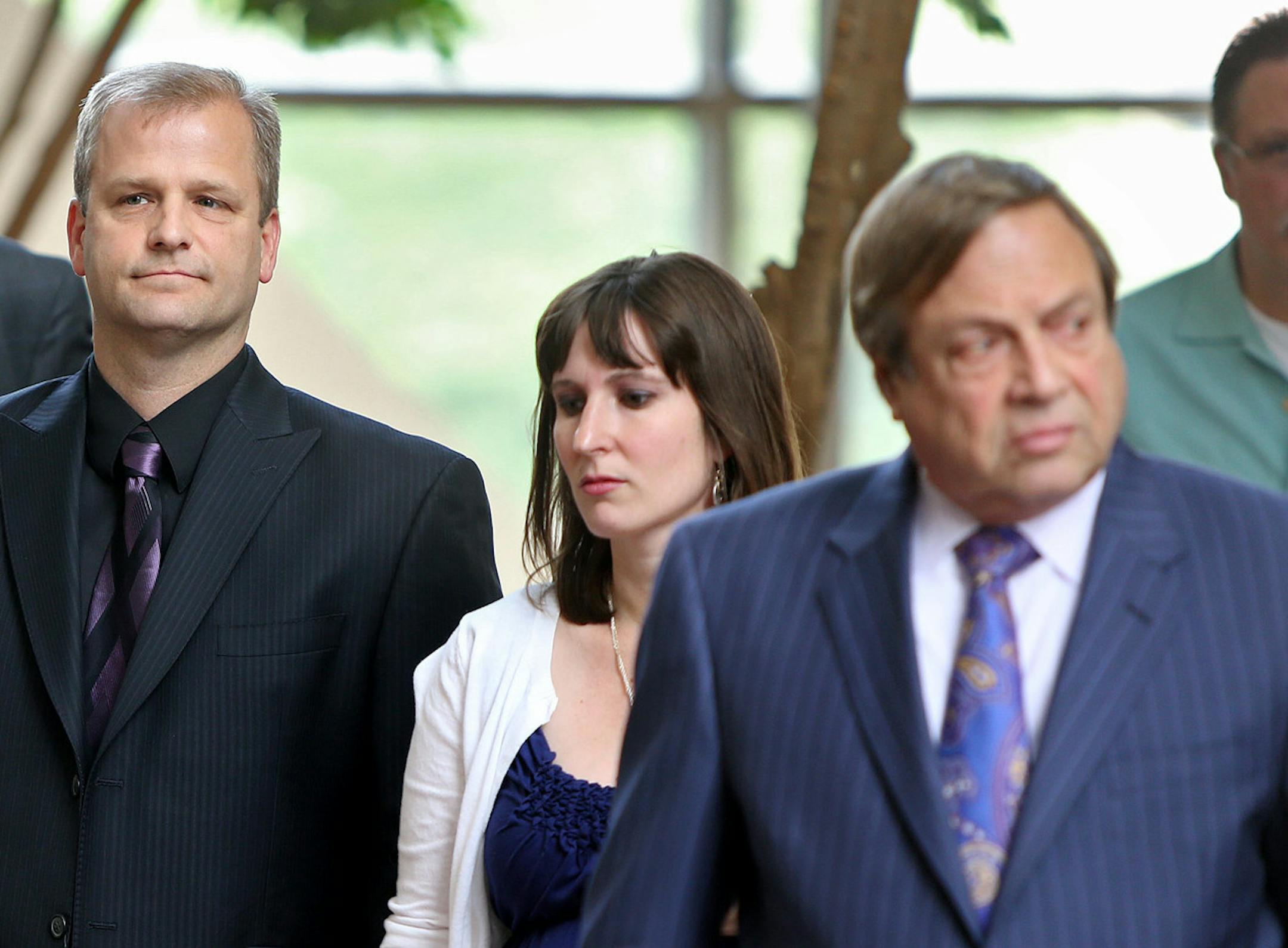
According to testimony, Markle took the shortcut over his wife's protests. Transcripts of 911 calls show Markle refused to leave the sinking vehicle as he dove repeatedly into the dark, freezing water as he tried to save his daughter. Markle, who is free on bail, sat next to his attorneys and watched the proceedings.
High court ruling vs. state law
In the motion hearing Tuesday, Markle's attorneys, Joe Friedberg and Paul Engh, argued to have the blood sample — the key piece of evidence in the case against him — thrown out. The sample revealed a blood alcohol level of 0.13 percent, well over Minnesota's legal driving limit of 0.08 percent. Prosecutor Deborah Russell countered that time was of the essence when the incident changed from rescue operation to criminal investigation the moment a police officer smelled alcohol on Markle's breath.
"If they had understood what the Constitution demands, they would have gotten a warrant," Friedberg argued to District Judge Jay Quam. "The reason they didn't do it is very clear: Nobody's told them to."
Friedberg's argument hinges on the U.S. Supreme Court's April decision in Missouri vs. McNeely, a 5-4 ruling that said authorities should obtain a warrant before taking blood samples from suspected drunken drivers. The ruling rejected two Minnesota Supreme Court rulings that said warrantless blood draws were permissible because of the risk that blood alcohol levels could dissipate in the time required to obtain a warrant.


