

![Bikers brought their fat tire bikes to the trails at the Murphy-Hanrehan Park Reserve on 1/18/14.] Bruce Bisping/Star Tribune bbisping@startribune.com](https://arc.stimg.co/startribunemedia/RGDKARB5F2XUPN4VSS6FR7TRAE.jpg?&w=1080)
A few years ago, when mountain bikers on fat-tired bikes first ventured into the Minnesota woods, a group of guys went online to share their best tips for making the trails ridable. Despite the 4-inch-wide tires that give fat bikes their distinctive, almost cartoonlike appearance, the bikes still sink in deep snow. Opting instead for a packed trail, some of the guys said they should just send masses of volunteers outfitted with snowshoes to stomp out a path and hope fresh snow didn't fall before they got to enjoy it. Others were more — and often less — practical, suggesting a snowmobile, a motorized snowboard or even using buckets of water to create an icy path. One guy suggested some combination of blowtorch and a snowmobile.
It wasn't entirely clear if he was joking.
That was just a few winter riding seasons ago, but since then fat biking has turned a corner. Riding a crest of surging sales, bike shops report running out of the $1,600 to $4,500 bikes as ridership has grown by about 50 percent nationally each of the last two years, according to an industry presentation from Quality Bicycle Products (QBP), a major bicycle parts supplier based in Bloomington.
Some 20,000 fat bikes are in circulation in the U.S., many with tires ranging from 3.7 to 4.7 inches wide, enabling them to roll down snow-packed trails, across beaches and frozen lakes and in a surging crop of new races and organized rides designed specifically for people who want nothing more on a freezing, snowy day than to hop on a bike and go.
"It seems like everyone has a fat bike nowadays," said Reed Smidt, president of Minnesota Off-Road Cyclists (MORC), an advocacy and bike trail building group.
Smoothing the way
If this is fat biking's moment, then the volunteer trail workers and groomers have made much of it possible.
Some 50 miles of groomed fat biking trails, known as single-track, are now offered at six parks in the metro area.
![Buzzy LaMere rode his fat bike on the trails at the Murphy-Hanrehan Park Reserve on 1/18/14.] Bruce Bisping/Star Tribune bbisping@startribune.com Buzzy LaMere/source.](https://arc.stimg.co/startribunemedia/UL65Z5PMZE53L6ZI4DGQXUMH44.jpg?&w=1080)
![(left to right) Dan Dittmer of Shakopee, Mike Criego of Prior Lake and Alan Eastlund of Edina rode the trails at the Murphy-Hanrehan Park Reserve on 1/18/14.] Bruce Bisping/Star Tribune bbisping@startribune.com Dan Dittmer, Mike Criego, Alan Eastlund/source.](https://arc.stimg.co/startribunemedia/JA5RNFFTLIGZ7D7XT24ELAOPJ4.jpg?&w=1080)
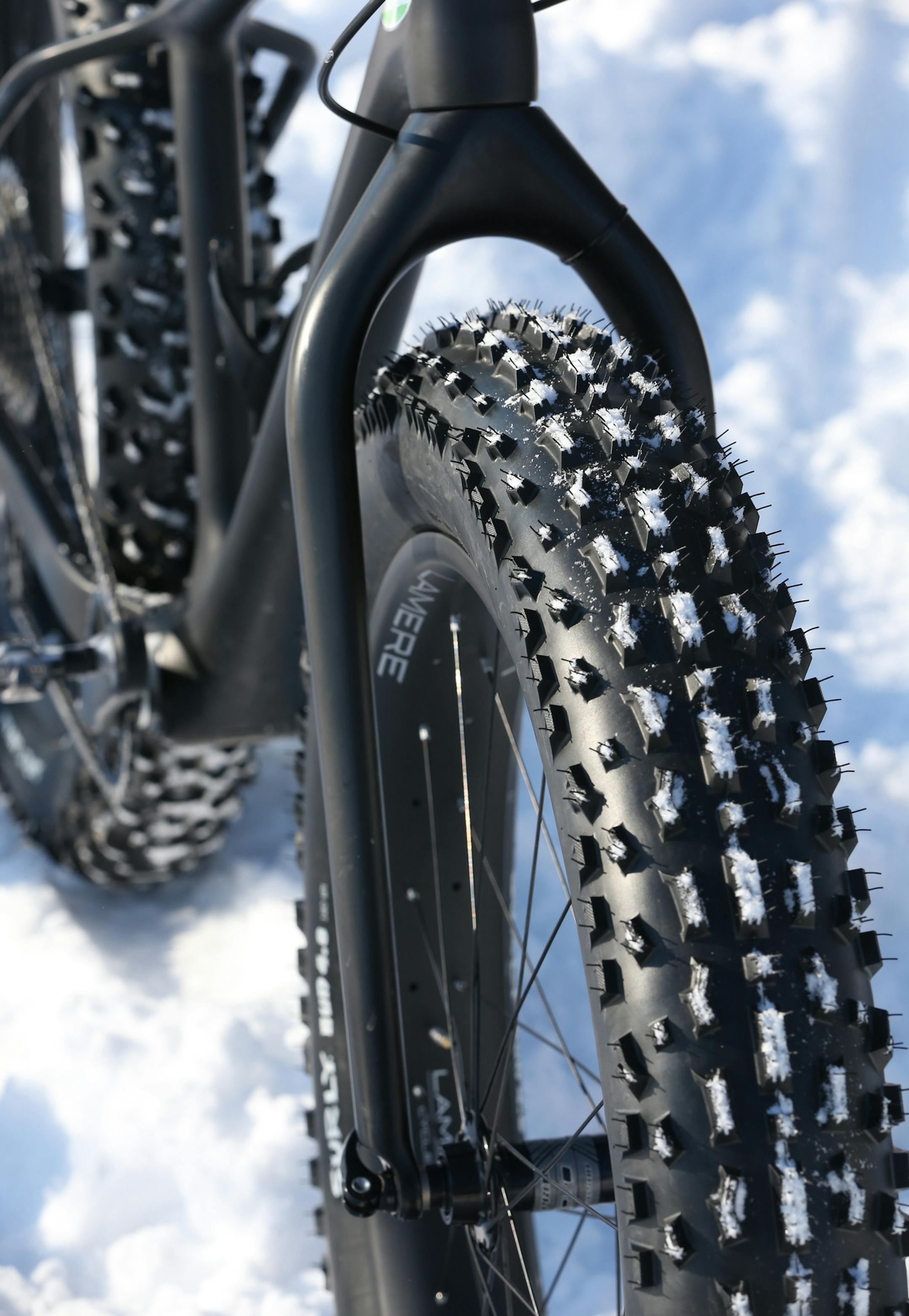
![Buzzy LaMere rode his fat bike on the trails at the Murphy-Hanrehan Park Reserve on 1/18/14.] Bruce Bisping/Star Tribune bbisping@startribune.com Buzzy LaMere/source. ORG XMIT: MIN1401181648510153](https://arc.stimg.co/startribunemedia/KIU3B3QYIUDM5BKQAN6A4B5NRA.jpg?&w=1080)


