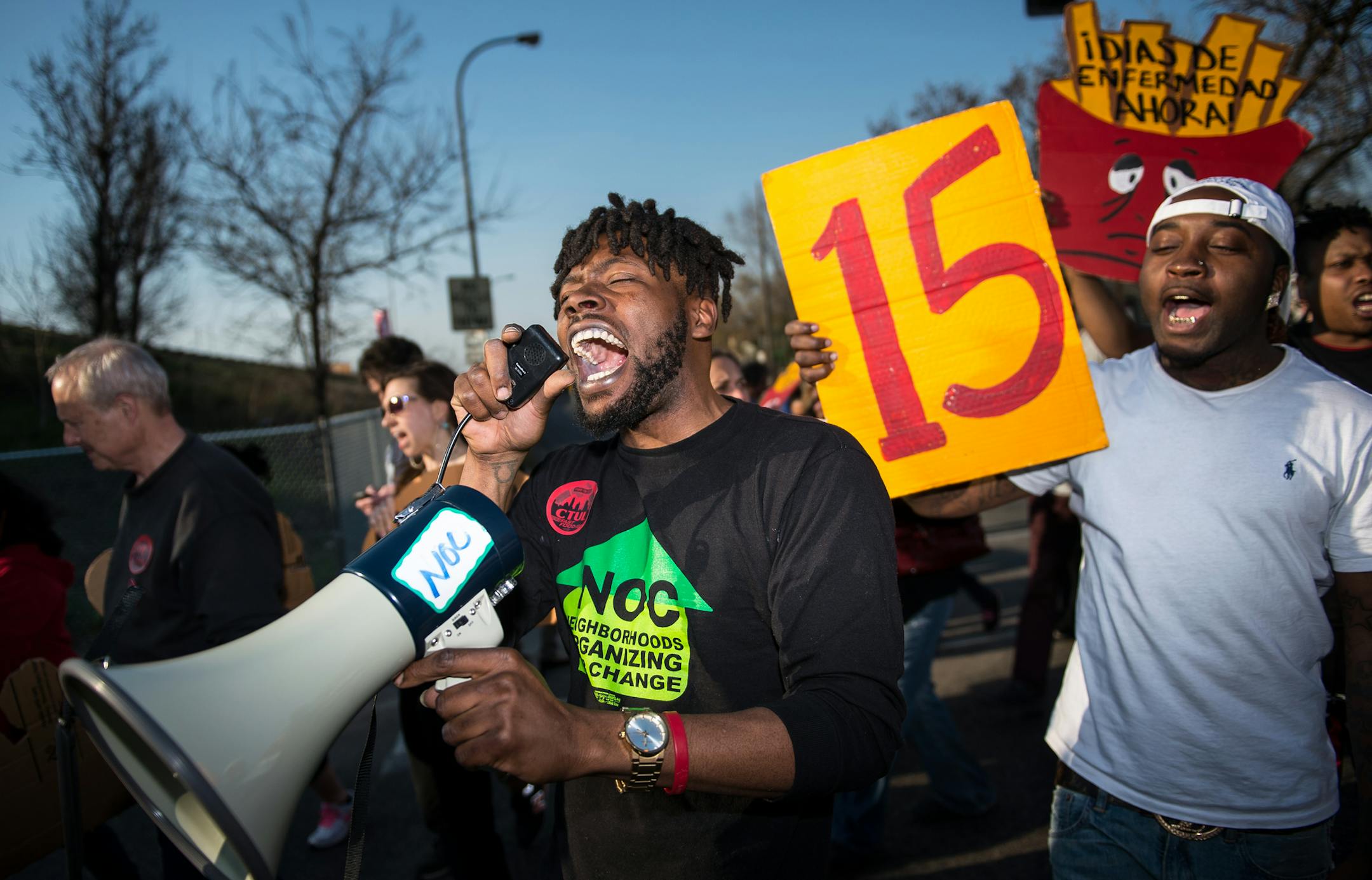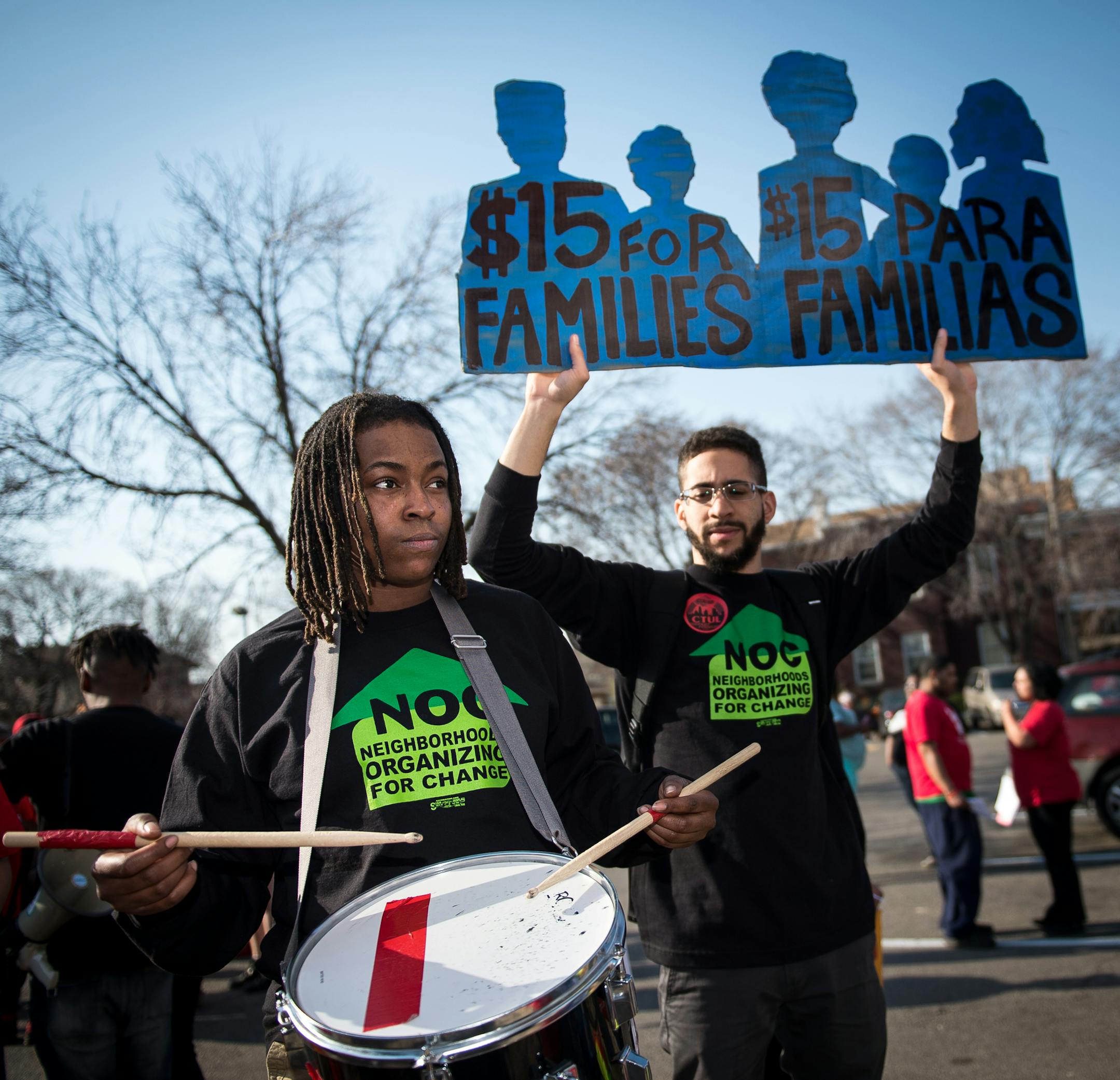
In 2013, Neighborhoods Organizing for Change was the kind of nonprofit that might disappear without a stroke of luck: a single employee working in a drab office, little name recognition and an even smaller budget.
Three years later, the group has emerged as an increasingly powerful force in Minneapolis and statewide politics, pushing for — and often winning — reforms on issues ranging from voter ID to the minimum wage to criminal justice reform.
NOC's members have led rallies at City Hall, prompted the governor to set aside $100 million to address racial disparities and brought a major presidential candidate to north Minneapolis. Some sit in prominent advisory roles in local government, including on the panels addressing citywide sick leave in Minneapolis and St. Paul.
Wintana Melekin, the group's civic and political engagement director, said NOC thrives on giving people of color a voice and the momentum to push policymakers to do more than just listen. She credits the group's sustained drive for equity — knocking on doors, lobbying lawmakers, bringing people to City Hall again and again — for shifting the course of local politics as usual.
"Versus before, where racial equity was a talking point or an addition or a campaign, it is now the center of gravity," she said.
In its earliest incarnation, NOC was a neighborhood-focused south Minneapolis-based offshoot of the national progressive community group ACORN. But in 2011, after a destructive tornado swept through north Minneapolis, the group's then-director, Steve Fletcher, landed a grant to help the North Side recover. He offered it up to anyone in the affected neighborhoods willing to work.
Anthony Newby, a local entrepreneur looking to get into community organizing, figured it was a bluff: another organization from outside the North Side that would make big promises and fail to deliver. But North siders got the jobs, NOC stuck around to help, and Newby was inspired. Later that year, he signed on to work with the group, linking it up with the Occupy movement protesting economic inequality.
Expanding focus
Newby took over as executive director in 2013. He moved the office to north Minneapolis' West Broadway Avenue and scrawled his goals on a napkin: In one year, he'd build up a million-dollar budget and a staff of 10. He started with $14,000 in the bank and no great prospects to find more money.