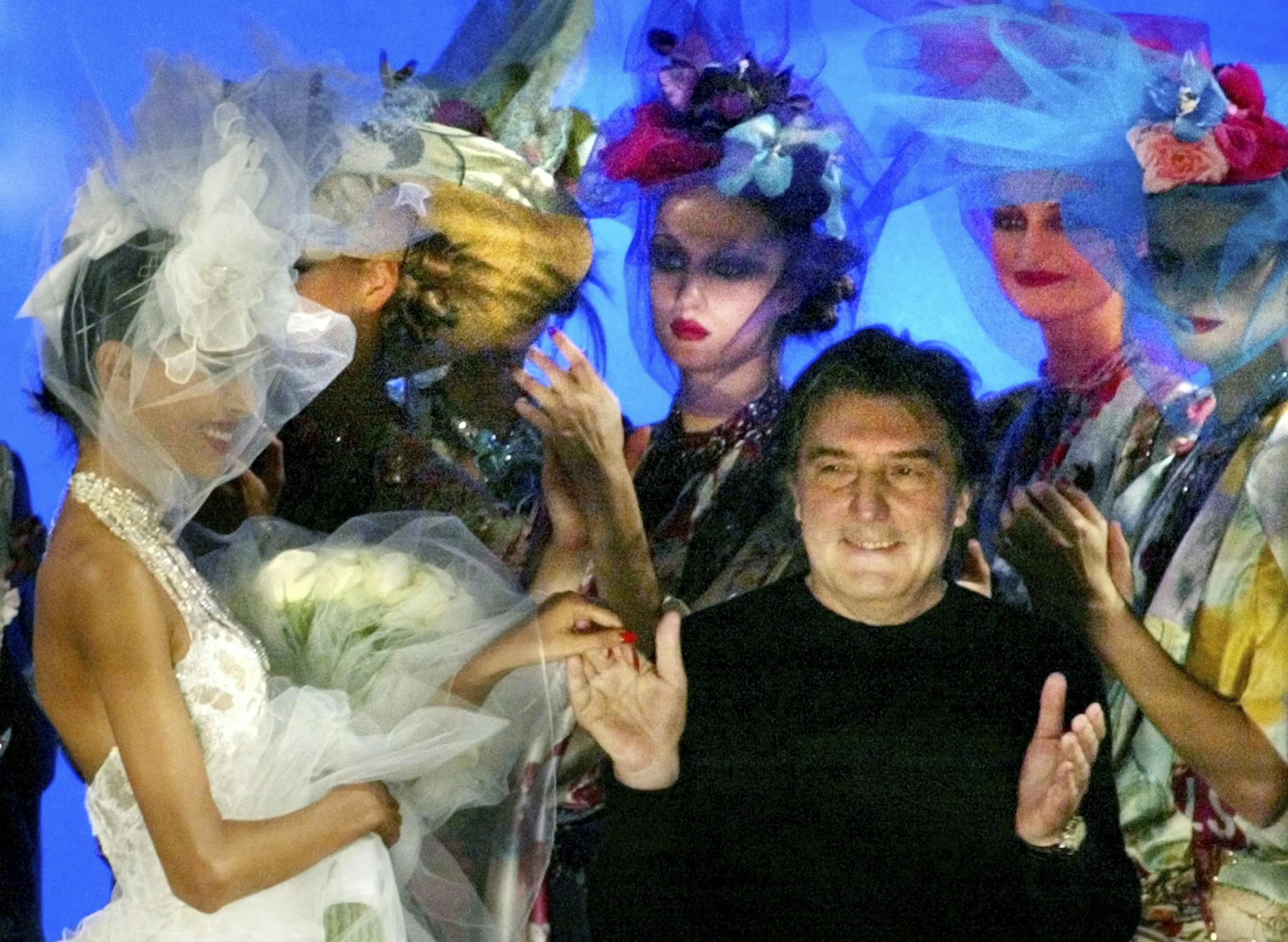
Emanuel Ungaro, 86, whose merging of attention-getting colors and patterns with sleek lines made him one of the most talked-about fashion designers in Paris beginning in the 1960s and served as the foundation for the fashion house that still bears his name, died Saturday in Paris.
Ungaro, who came from a family of tailors, established his fashion house in 1965 after working under designer Cristóbal Balenciaga.
Celebrity journalist James Brady, in a "Brady's Bits" column in 1987, wrote that Ungaro, whom he had known since the 1960s, financed his first show with a loan that used a girlfriend's Porsche as collateral. The event, Brady wrote, was held in a small apartment. People sat on the balcony and peered in through windows to see the clothes.
Within a few years Ungaro's creations were being worn by A-listers like Jacqueline Kennedy Onassis and being seen in films on Catherine Deneuve (in "Le Sauvage," 1975), Gena Rowlands ("Gloria," 1980) and other actresses.
His ever-changing signatures over the years included stand-up collars, abundant use of suede, wrap dresses, mixed prints and more. He might pair a paisley blouse with a plaid suit, or prescribe a colorful shawl for a distinctive look, or go all in on polka dots.
"I hate boring clothes," he told the Washington Post in 1977. "I hate seeing women dressed in a sad way."
Ungaro explained his approach to design in 1994, when he opened a boutique in New York City.
"If you want to exist in fashion, and in any other manifestation of art, you have to disturb people," he told the New York Times. "Provocation, in my mouth, means disturbing to the eye. Not disturb just to disturb, but disturb by showing something unexpected."