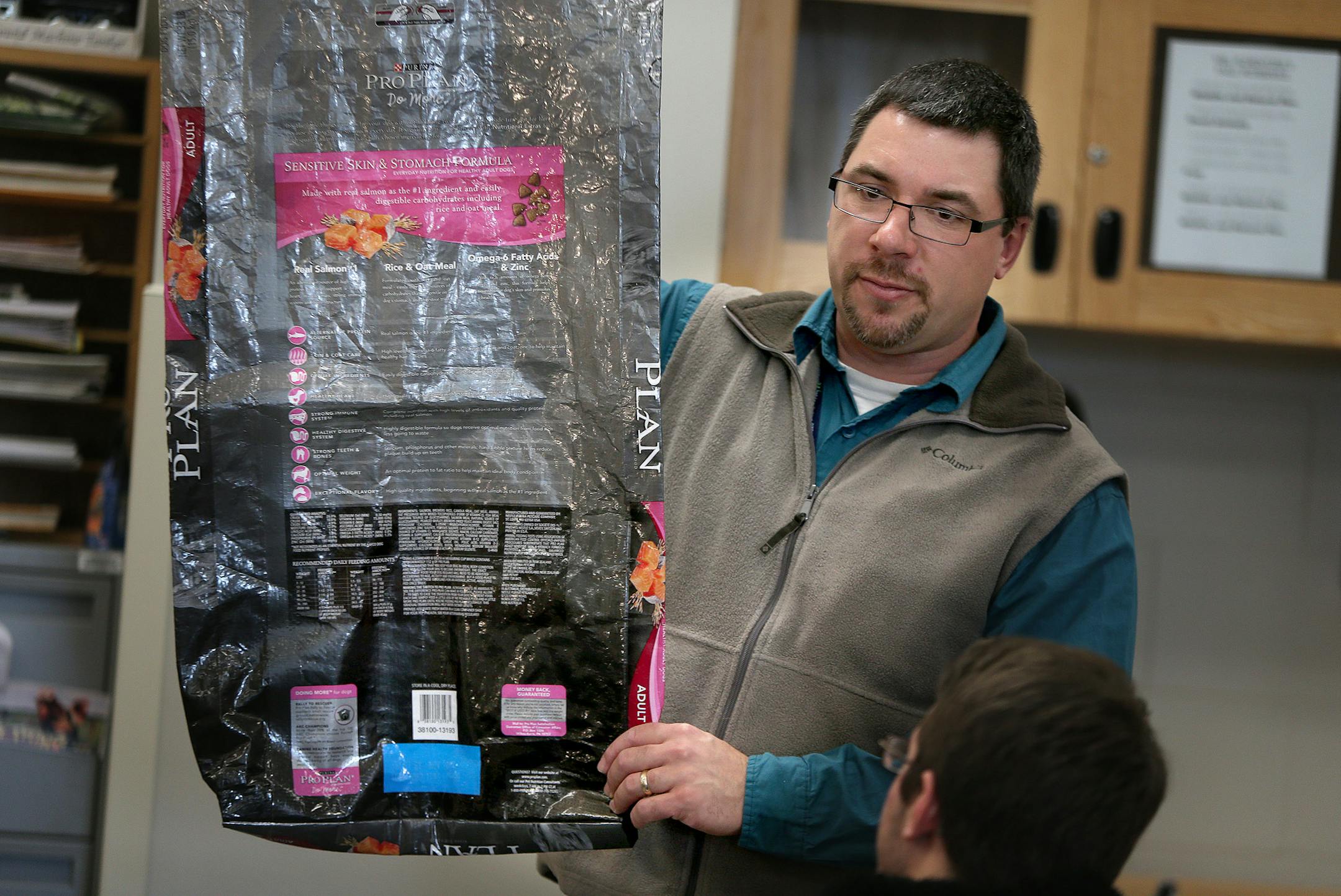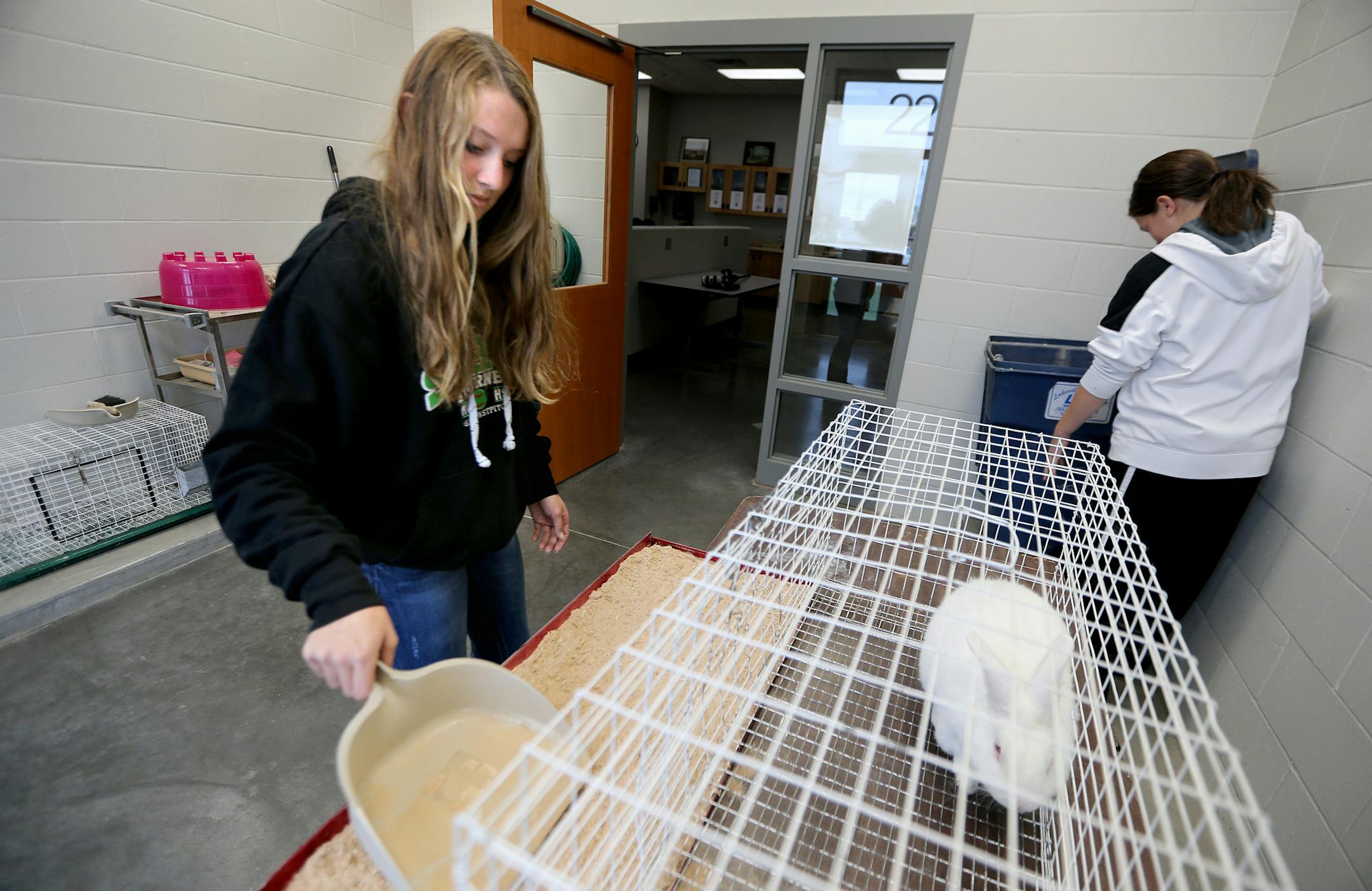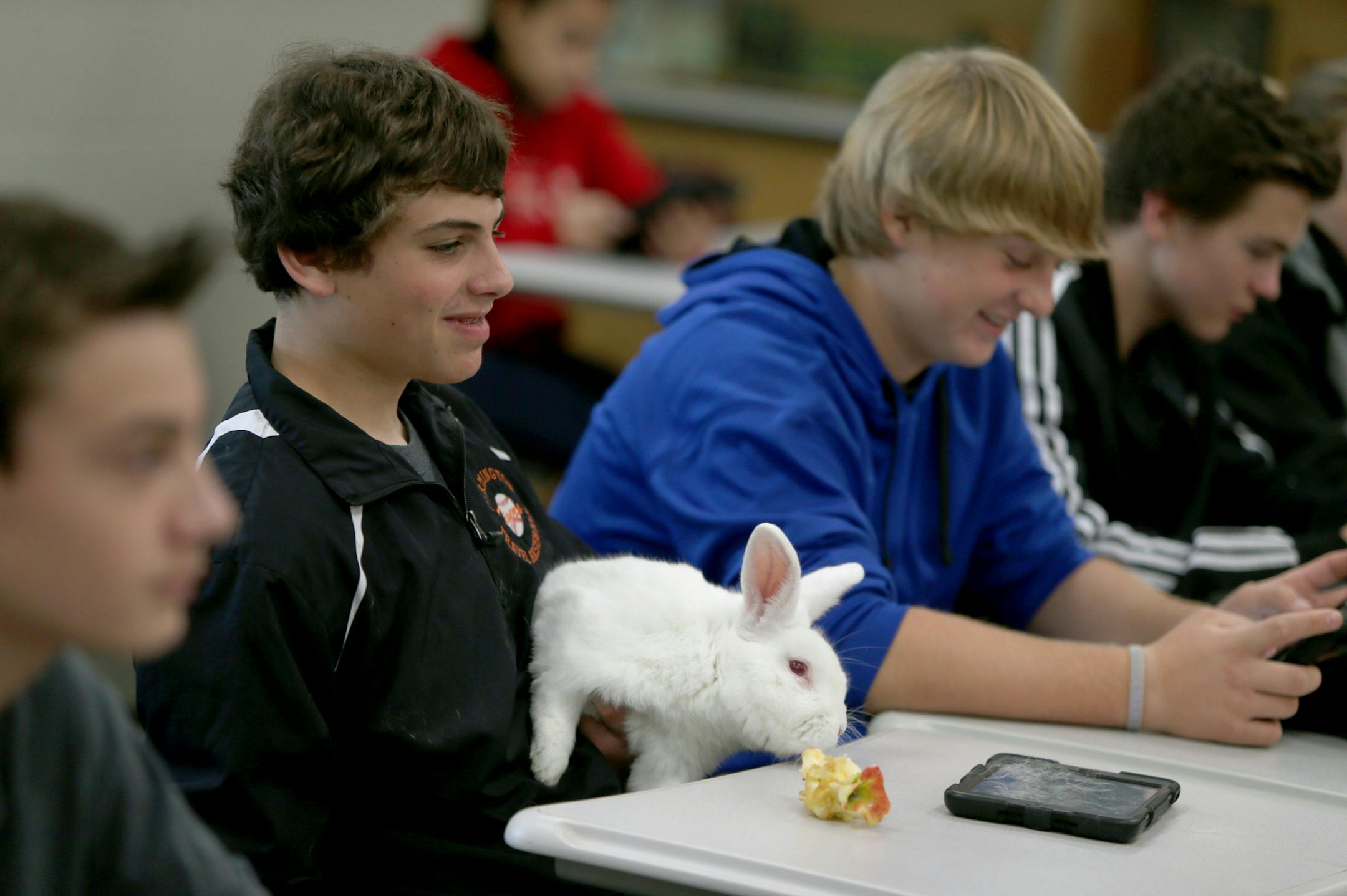
On a Tuesday morning at Farmington High School, agriculture instructor Ken Schentzel is using the class pet, a chubby albino rabbit named Lightning, as part of the day's lesson on small animal nutrition.
"Right now this rabbit is living the good life," Schentzel says, explaining that since it doesn't use much energy and isn't pregnant, the animal only needs a "maintenance diet" to survive.
During the lesson, Schentzel, who has 35 students in his small-animals class, weaves in practical lessons about nutrition that also apply to humans and large animals — such as how similar a rabbit's digestive tract is to a horse's.
The class is one of seven electives that Schentzel, the school's only agriculture instructor, teaches over three trimesters. Each year, he has 350 to 400 students.
Though few metro-area schools offer agriculture classes anymore, most of Schentzel's classes are full, and the agriculture program — now in its 75th year at Farmington — is going strong.
"The big thing for a lot of my classes is I want kids to know how important agriculture is and how much it impacts their lives," Schentzel said. "I know it sounds kind of harsh, but we can live without tourism or technology, but we can't live without food."
These aren't your grandfather's "plows and cows" classes, though.
Schentzel emphasizes that today, agriculture education is about more than just farmers working in a field. He teaches classes on wildlife and natural resources, small engines, animal science, home maintenance and sometimes even landscaping and horticulture.