

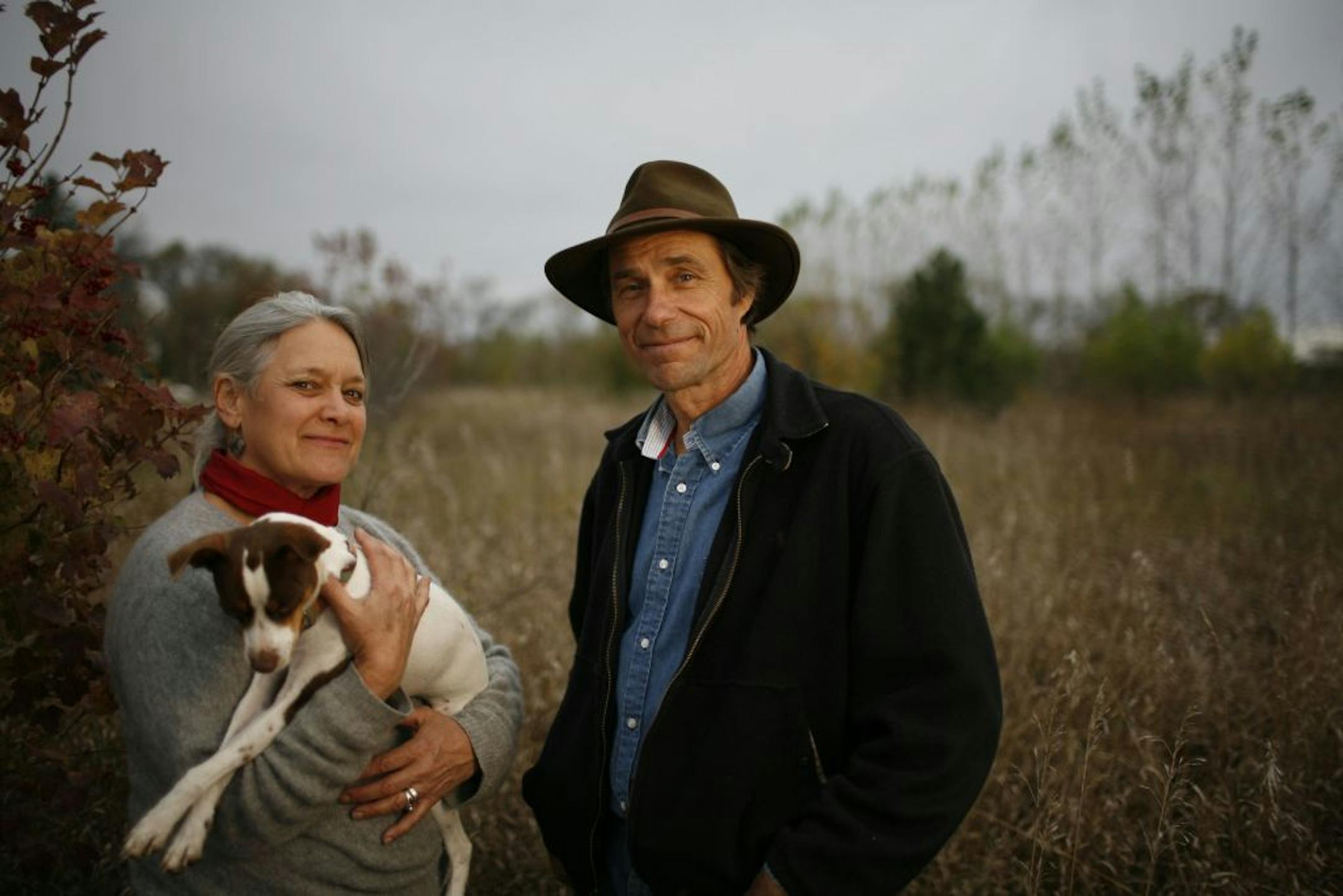
MONTEVIDEO, MINN. -- Even in mid-October, the little farm near the Minnesota River Valley is a stark oasis of lush green surrounded by a landscape of black plowed fields or tawny corn ready for harvesting.
"This is what our land used to look like," said Audrey Arner, pointing to a jet-black plowed field of harvested soybeans that borders her property.
The difference is night and day. And that's the difference in how Arner and her husband Richard Handeen farm compared to their neighbors. They don't plow their 240 acres, or plant row crops such as soybeans and corn. They long ago converted their land to perennial grasses, where they raise and sell grass-fed beef cattle. Some 7,000 trees and 42 species of shrubs have been planted in a matrix of treelines, sheltering the land and animals from wind, snow and erosion, and providing wildlife with habitat and food.
"The habitat on the farm provides us with an income, but it also benefits wildlife," said Handeen, whose parents and grandparents worked the farm.
Deer, pheasants, songbirds, and yes, even coyotes, are attracted to the habitat. The couple has tallied 90 different bird species. And friends and family bagged six pheasants on opening weekend of the hunting season.
"We saw a lot," said Arner, including 30 hens and juvenile birds on Saturday.
"If you were a pheasant, where would you rather be?" she asked, standing between her neighbor's empty plowed field and her green pastures, segmented by thousands of trees and shrubs.
The couple is among a small but growing number of farmers who use methods to restore and protect the land, improve habitat for domestic and wild animals, while also providing income. The methods reduce soil erosion and water pollution, lesson the use of chemicals and improve the soil. It harkens back to simpler times, when small farms dotted the landscape and farmers put their cattle out in pastures instead of planting all their land in corn and soybeans.


