

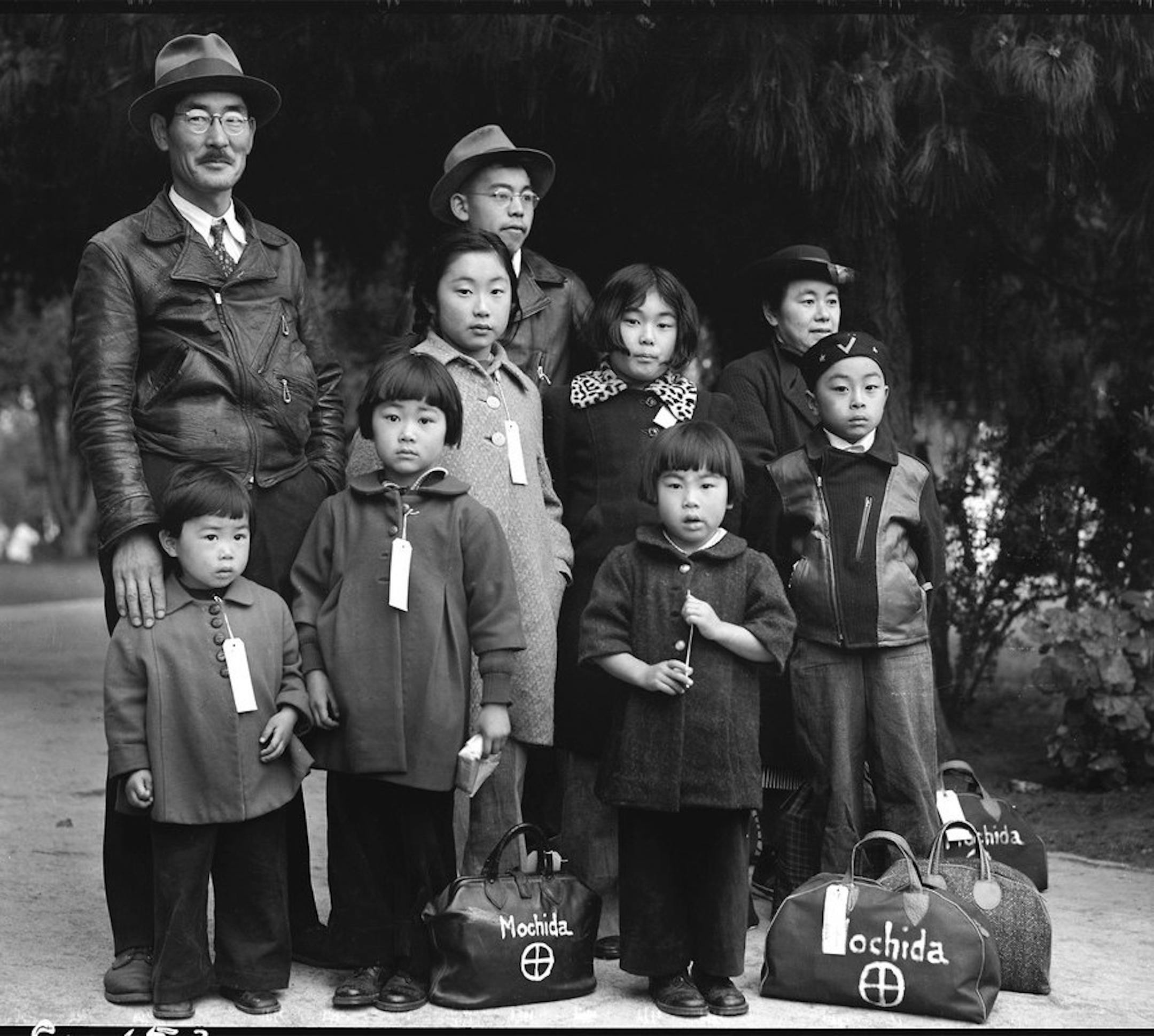
Dorothea Lange is known for her Depression-era photos of hard-bitten rural Americans.
She created a lesser-known portfolio of work documenting a shameful chapter in American history — the forced internment of 117,000 Japanese-Americans during the months after Pearl Harbor.
In 1942, she had been hired by the government to photograph the relocation of the American citizens as a way of demonstrating that they had been treated kindly.
"The government wanted a record to show that this had been a humane process and there was nothing for anyone to complain about," Elizabeth Partridge, Lange's biographer, told filmmaker Abby Ginzberg. Ginzberg's new documentary film shows the horrendous truth.
Though she was given some restrictions — she was not to show barbed wire or guard towers in the photos — Lange was generally left to her own devices.
What she recorded was a deep, quiet sadness.
"She had a way of capturing a combination of the despair and the fortitude, the resilience," said Ginzberg.
The photos that Lange produced were unsatisfactory for the War Relocation Authority's purposes.


