

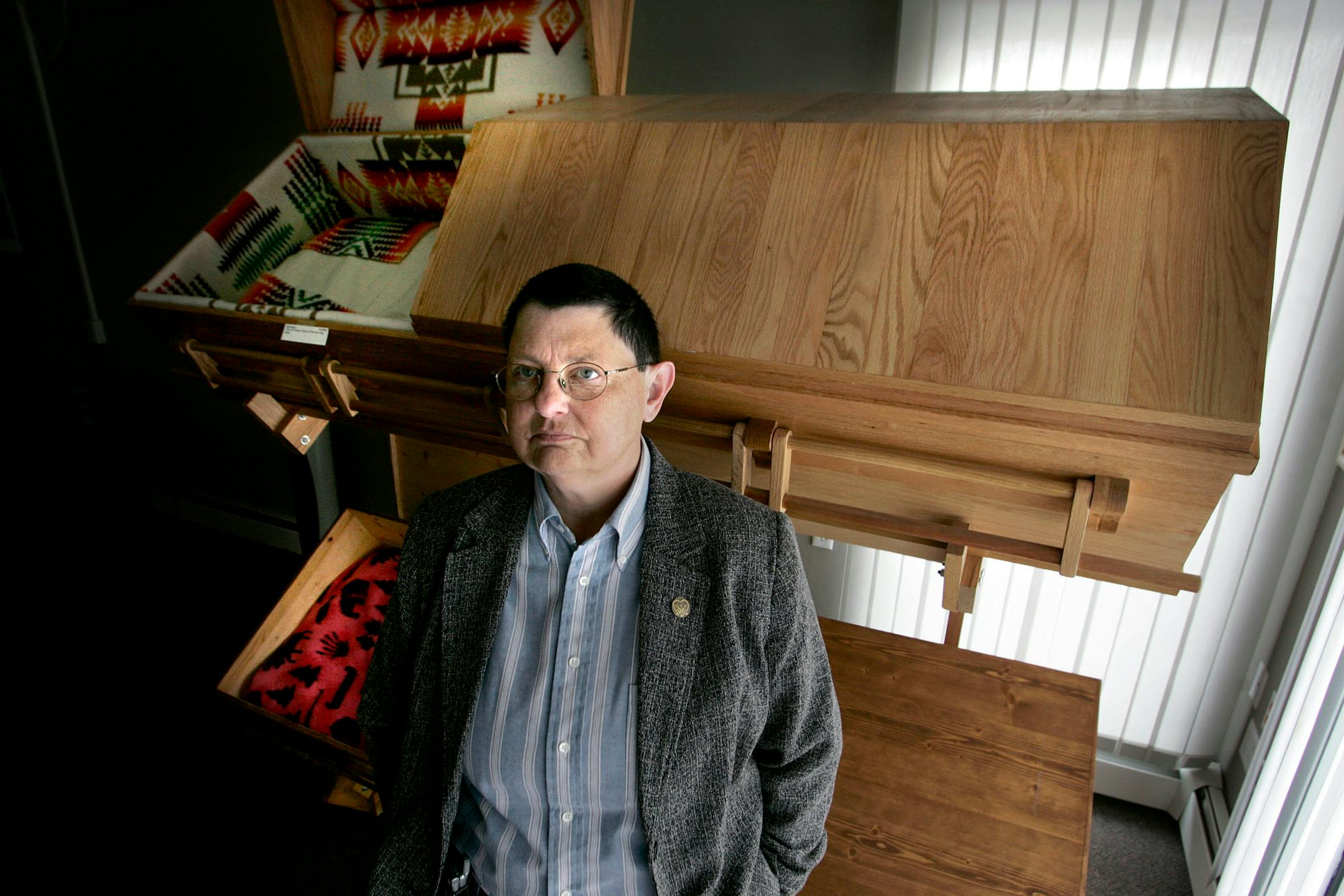
Until two years ago, the Rev. Claudia Windal, an Episcopal priest, never even thought about using her spare time to open a funeral home. Now her life is consumed with thoughts about how to keep it from going out of business.
A Lakota Indian who didn't know about her roots until she was an adult, Windal, 58, went back to school to study mortuary science when she realized that it was the best way to provide funerals for people of little means. Fourteen months ago, she opened Oyate Tawicohan (Way of the People) Funeral Home in Minneapolis, the state's only Native American-owned mortuary, and while she does offer traditional Indian burials, her business serves anyone who can't afford to go elsewhere.
"I lose money on every burial. People keep telling me I'm crazy, and some days I'm this close to believing them," she said with a chuckle, holding up a barely separated thumb and forefinger.
She isn't verging on bankruptcy because of negative cash flow on the funerals. She planned on that. What she didn't plan on was bad plumbing, which flooded her business and ruined the four apartments that are part of the building.
"The loan with the bank was predicated on renting those apartments to pay the mortgage on the building," she said. "Plumbing that wasn't up to code broke and flooded the whole place. I've repaired the funeral home, but I don't have enough money to repair the apartments. And all the bank keeps saying is, 'Foreclosure, foreclosure.'"
Whatever money she can scrape together goes to help the families of her clients. The ultra-basic, no-frills funeral costs about $2,000, of which "Hennepin County provides a walloping $930" for people on welfare, Windal said. She makes up the difference, either through donations or on her own, even offering gas vouchers for mourners who can't afford to travel to the funerals.
Windal's biggest gripe about public-aid funerals is with the recommendation of a cardboard casket. "I refuse to do that," she said, her voice taking on an angry edge. "Everyone who sees it says, 'Ah, a welfare casket.' We deserve better than that."
Unless there's no other way around it, she uses wooden caskets. "They're cremation caskets," she said. "They're not fancy, but at least they're wood: plywood with a pine or oak veneer; I prefer the look of the oak. The handles don't move because they aren't designed to be carried to a grave, but you can adjust them a little bit. And you can raise the head" for the visitation.


