

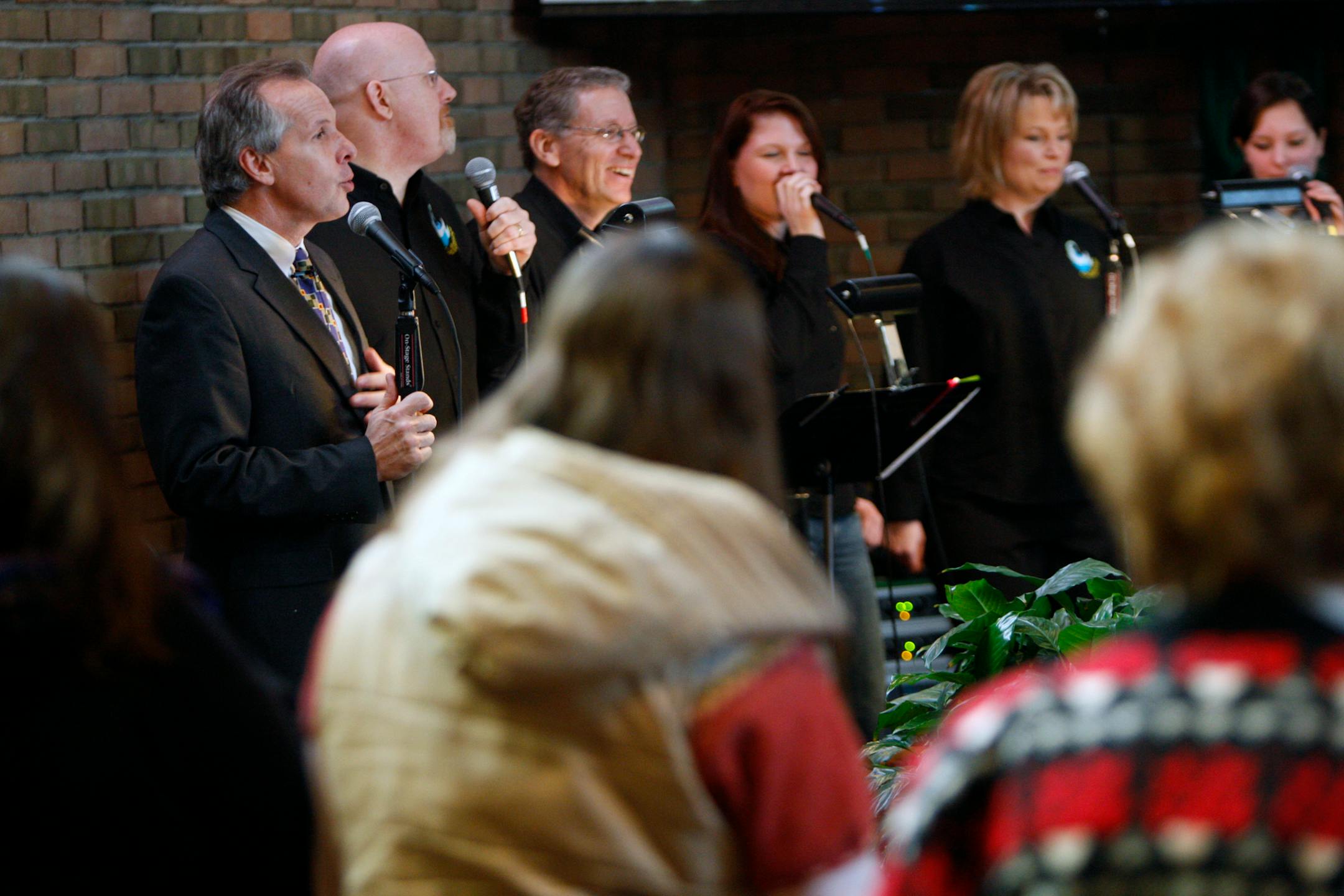
The Rev. Dan Collison, worship arts pastor at Wooddale Church in Eden Prairie, is proud of his church's pipe organ. Weighing in at a whopping 40 tons, it is thought to be the largest tracker organ -- one in which the connections are mechanical rather than electrical -- in North America.
"It clearly is the centerpiece of our traditional worship service," he said.
But he's equally proud of the music in his church's two other service styles, contemporary (led by rhythm and horn sections) and alternative (guitars).
"I love the organ," he said, "but the role of the organist has changed. Different styles of worship reach out to people with different tastes. Our contemporary service has gotten to be just as big as our traditional service. And our alternative service, while not as big as the other two, appeals to an important group of people, those 15 to 35."
Many churches are forgoing the classic pipe organ for a more contemporary sound driven by guitars, drums and electronic keyboards. The trend is largely suburban, where new churches are sprouting up. Most churches in core urban areas were built when traditional music mandated the presence of an organ.
Pipe organ prices are measured in the hundreds of thousands of dollars (and beyond). Many newly launched churches lack the financial wherewithal to buy an organ, while others rent space and don't have the option of installing one.
But it's more than money. Some churches big enough to afford the organs still aren't buying them, and other churches that already have them aren't using them nearly as much as they used to.
No exact figures exist on the number of churches with organs. Yearly sales figures for church organs are holding steady, according to the American Guild of Organists. But the number of churches is increasing quickly, with the Twin Cities area having gone from 2,200 to 3,000 in the past 10 years, meaning that the percentage of churches with organs is falling. All of which has led to articles on the Internet with titles like "Death of the Church Organist."


