
Faith+Values: Gay bishops: private lives behind the public activism

Two books paint similar pictures of Episcopal Church leaders who feared that gossip would overshadow their work.

May 2, 2008 at 8:43PM
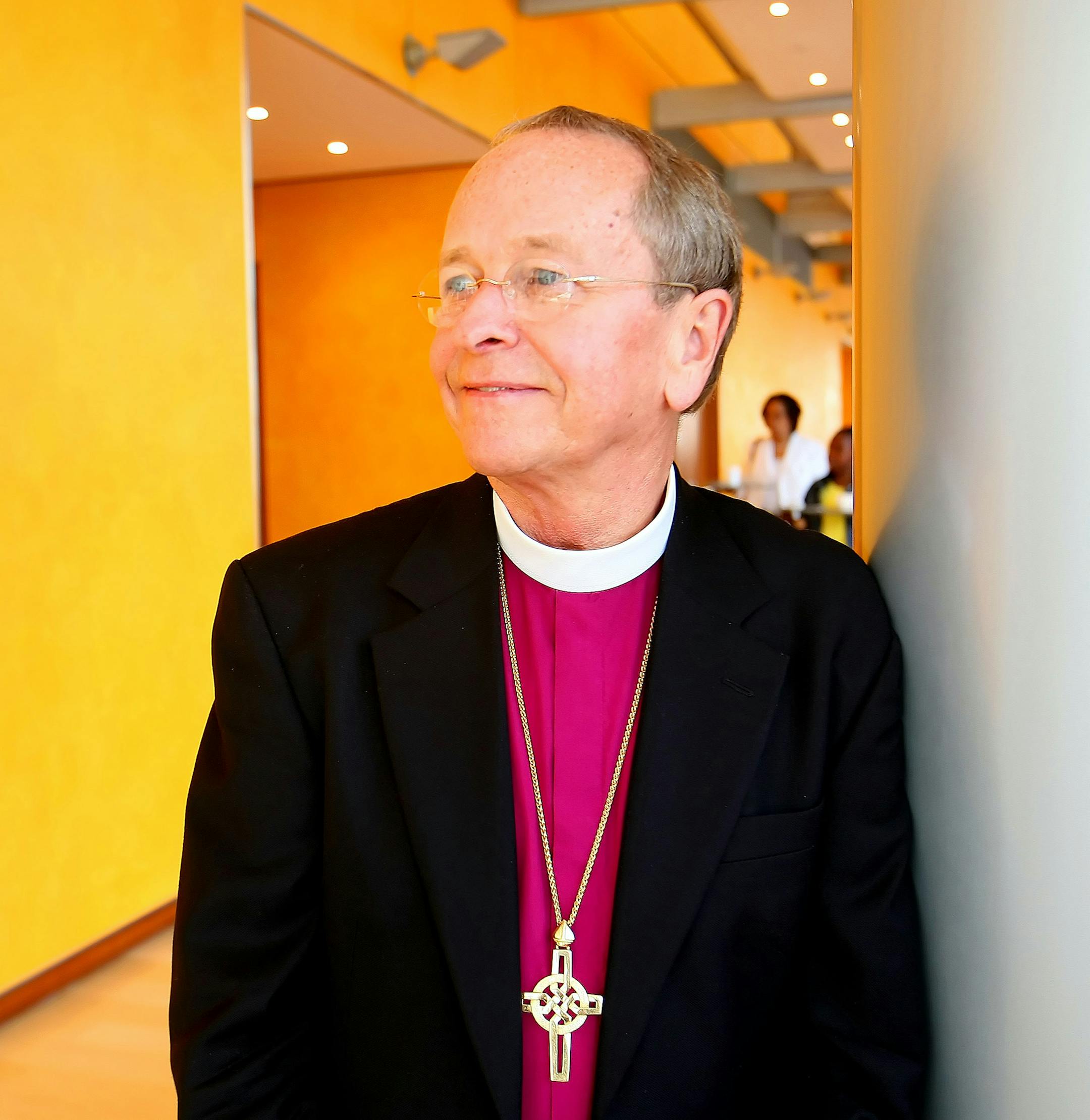
Bishop Gene Robinson in New York in April 2008.
Bishop Gene Robinson in New York in April 2008. (New York Times/The Minnesota Star Tribune)

"I want to be known as a good bishop, not a gay bishop," said Bishop Gene Robinson. But so far, at least to most of the world, that hasn't happened. He's known as the homosexual man whose controversial election as the bishop of New Hampshire threatens to split the Episcopal Church into two denominations.

"A wide variety of the media typecasts me as a one-issue person, but if I were just a one-issue person, why would the people of New Hampshire want me [as their leader]?" he said in an interview. "I hope to open people's eyes to a much broader vision of me."

To that end, he has written a book, "In the Eye of the Storm" (Church Publishing, $25), which, as coincidence would have it, is hitting bookstores the same time as another book about a gay Episcopal bishop. In "The Bishop's Daughter" (W.W. Norton, $25.95), poet and author Honor Moore writes about her relationship with her late father, Bishop Paul Moore Jr., who spent 17 years as the bishop of New York without the public knowing that he was bisexual.

Both books paint portraits of men who worried that the titillating aspects of their private lives would have a negative impact on their lifelong work on a vast range of social and theological issues.

Moore's sister, Marian Moore, who lives in the Twin Cities, said she hopes the book will remind people of her father's "vision, courage and love of people. We've already had the headlines about his secret life; now we can talk about the rest of his life."

When he died in 2003, the headline on his obituary in the New York Times lauded him as "a strong voice on social and political issues." He "spoke out against corporate greed, racism, military spending and for more assistance to the nation's poor, pursuing his political and social agenda in both the city and within the national Episcopal denomination," the article said.

Although some members of her family have yet to forgive him for keeping his sex life a secret, Moore said that she understands her father's reasoning.

"He was able to make changes by accessing support, both financial and political, that wouldn't have been possible culturally at that point had he come out as gay or bisexual," she said.

That being said, she's glad that the secret finally is public. "I can explore his heroism more easily when we've also explored the shadow," she said.

Looking beyond

Robinson said he's also hopeful that his book will help people get past "the elephant in the room."

"It's just an accident of history that I happen to be the first openly gay bishop," he said.

He spends the first 40 pages of his book analyzing the religious community's take on homosexuality and devotes the remaining 150 pages to a wide array of theological issues. But he knows that out in the real world, it won't be that easy to move onto other issues. The Convocation of Anglicans in North America is a network of Episcopal churches that is considering severing ties with the U.S. church because of its refusal to pull back its support for gays and lesbians.

"I truly believe in my heart that this is not an issue that should split the church," he said. "I think that one of our greatest gifts is the ability to agree on what is important and disagree about everything else. My staff will tell you that I am the last person who will try to suppress any disagreement. Our God, our faith, our church is not that fragile that we have to agree on every little thing."

Moore said that she doesn't want her father's sexual orientation to be his legacy. She wants him to be remembered for his social activism.

"I wrote a song about him in which the chorus says, 'You taught me to stand up tall when I am called,'" she said. "Growing up in the '60s, we'd go to civil rights marches and peace marches as a family. That's what we did together. It was an exciting upbringing, although when you're living it, you don't realize how unusual it is."

When the war in Iraq started, she went to Washington, D.C., to protest. "I called my dad on my cell phone -- it was about six weeks before he died, although at that point, he already knew [that his cancer was terminal] -- and I said, 'Pops, I'm standing in front of the White House and I'm about to be arrested.' And he said, 'Sweetie, I'm so proud of you!'"

Making sense at last

Honor Moore writes in her book about being taken by surprise when her father's will contained the name of a man no one in the family knew. Eventually that man stepped forward and revealed that the two men had been lovers for 30 years.

Marian Moore said, "That really wasn't disturbing to me, although it was disturbing to some of my siblings. I felt a lot of sadness for my mother [who had died earlier], but I wasn't judgmental about my father. At one point he said to me, 'I loved your mother very much.' I'm sure it [his other relationship] tore him up. I'm sure there was a lot of self-loathing. I really don't know how he worked it all out" in terms of his conscience.

And when the surprise had passed, the rest of his life seemed clearer, she said.

"My father was a complicated guy," she said. "I always felt like I couldn't quite reach him. Once the truth was out, my brother said, 'Now I get it.'"

Jeff Strickler • 612-673-7392

about the writer

about the writer

Jeff Strickler

Assistant Features Editor

Jeff Strickler is the assistant features editor for the Minnesota Star Tribune. He has spent most of his career working for the Variety section, including reviewing movies and covering religion. Now he leads a team of a reporters who cover entertainment and lifestyle issues.

See Moreicon