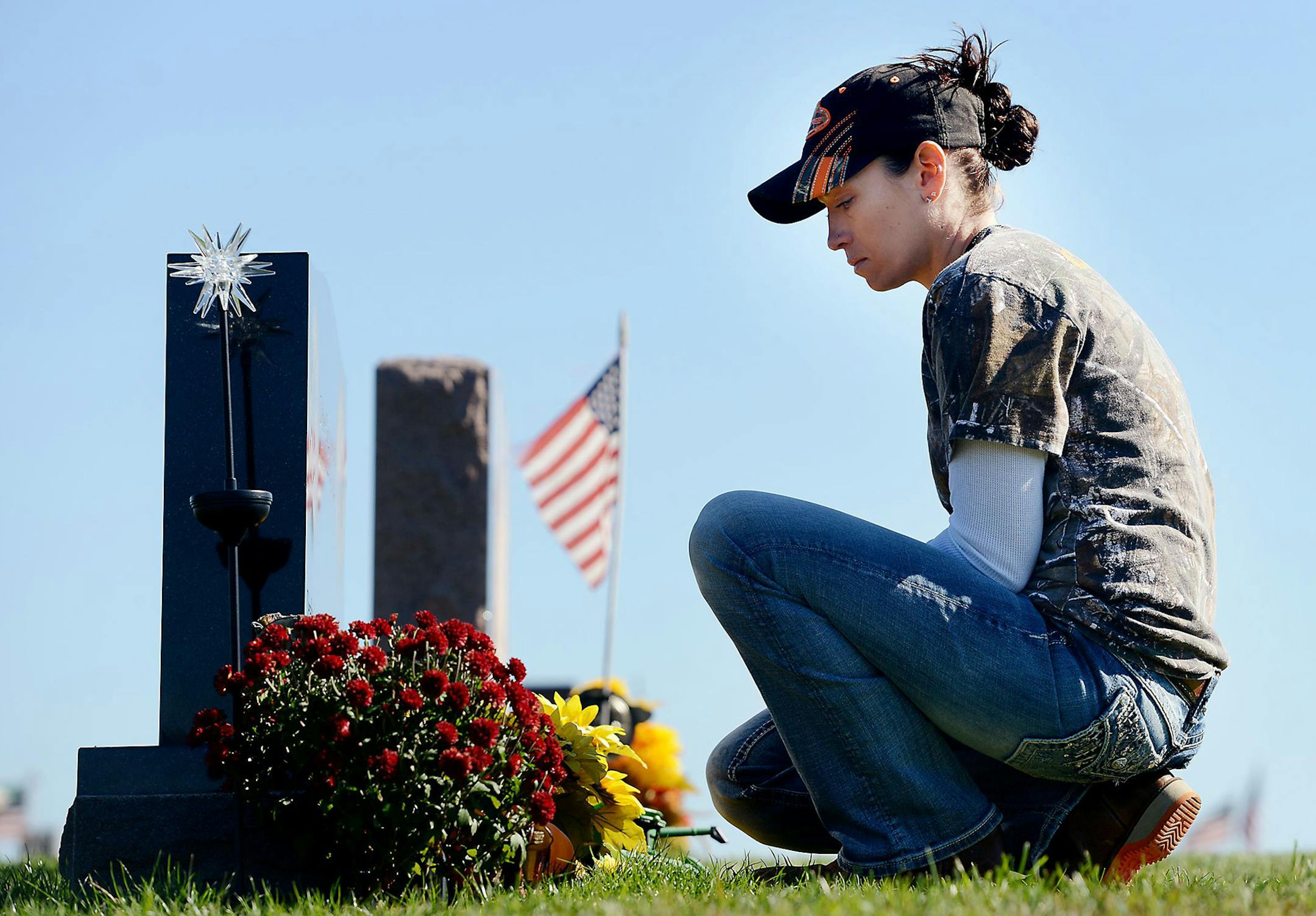
When Kelli Jo Lovich was asked to donate the organs of her 4-year-old son, Colbee, who died after suffering severe brain injuries last year in an ATV accident, her response was immediate: "No."
But Shannon Pribik, a procurement coordinator with the Center for Organ Recovery and Education (CORE), persisted. Pribik promised there would be minimal trauma to Colbee during organ recovery and agreed to stay by his side until the funeral director arrived for his body.
Lovich relented. "He was only 4," she said of Colbee, "but he loved to help."
Procurement coordinators are on the front lines of the nation's overwhelmed transplant system.
They approach families like the Loviches in the midst of a tragic loss and ask them — when their grief is raw and their spouse, child or sibling is tethered to machines in the intensive care unit — to donate their loved one's organs so that others can live.
"When you do it for the first time, you feel like you're invading their space," said Linda Miller, who operates a University of Toledo graduate training program for coordinators.
The stakes are high.
With more than 122,000 people waiting for transplants, and an average of 22 of them dying each day, coordinators face great pressure to recover organs from the roughly 2 percent of Americans who end their lives in a way — usually of brain injuries while on a hospital ventilator — that makes donation possible. People who die outside of a hospital cannot be donors because their organs deteriorate too quickly.