

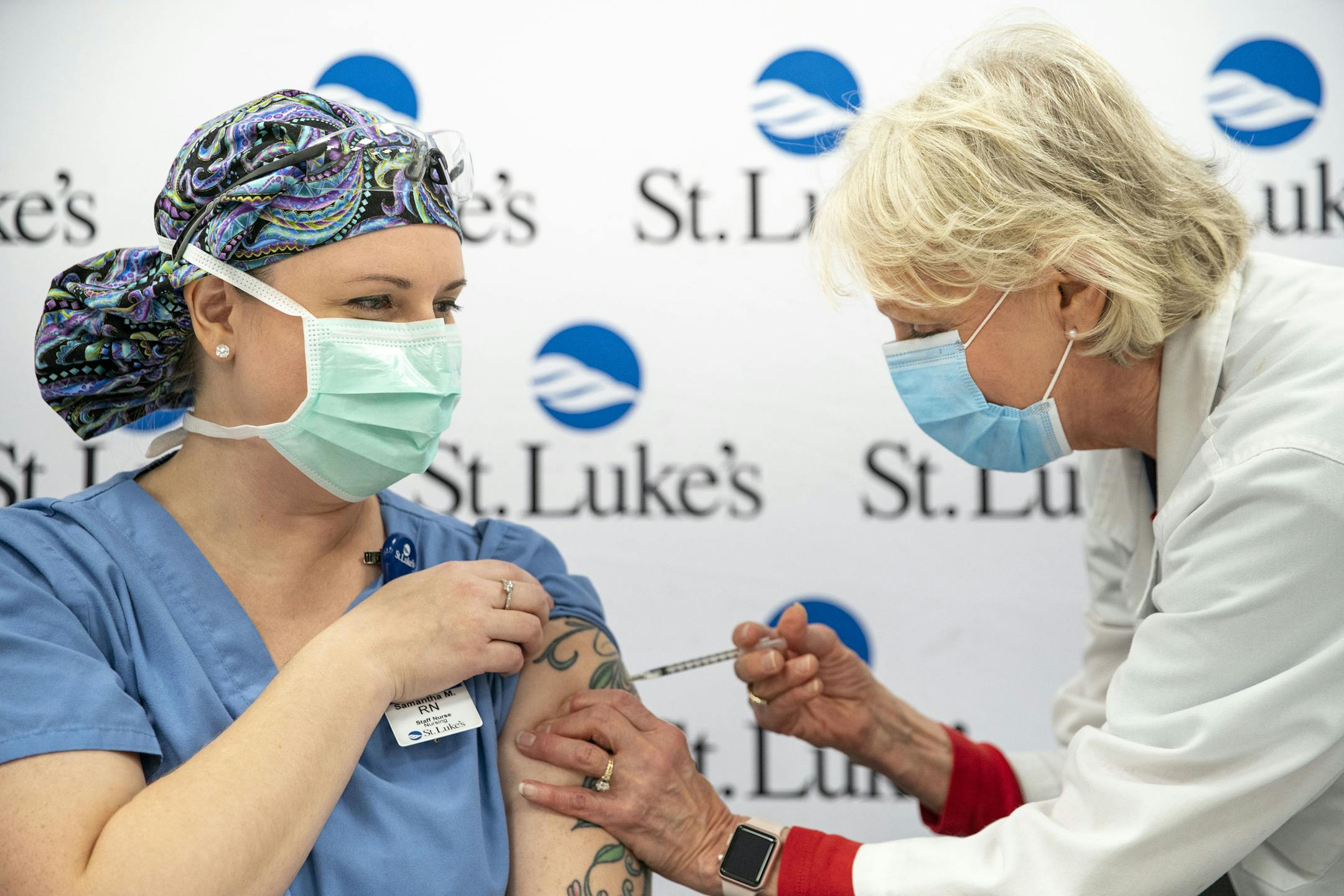
More than 84,000 people as of Tuesday morning had received first shots of COVID-19 vaccine in Minnesota, where extra doses in vials have stretched the limited initial supply.
HealthPartners reported squeezing six doses out of almost all five-dose vials of Pfizer COVID-19 vaccine, meaning that its initial allotment of 10,000 doses by week's end could provide as many as 12,000 shots for doctors, nurses and other providers.
"It's possible we will have a larger number of vaccinations than what our allocation would otherwise be on paper," said Dr. Mark Sannes, who is leading the COVID-19 response for the Bloomington-based health care system. "Our goal is to give all that we get."
The Minnesota Department of Health on Tuesday reported that 80,857 people had received first doses of the two-dose COVID-19 vaccines made by Pfizer and Moderna. The state has received 297,350 doses through last week, and expects another nearly 66,000 doses this week — based on guidance that each Pfizer vial contains enough vaccine for five injections and each Moderna vial contains enough for 10.
The U.S. Food and Drug Administration on Dec. 16 issued a tweet advising the use of extra doses after health systems received their first Pfizer vials and found more vaccine than expected. The caveat is that vaccine can't be mixed from multiple leftover vials to create extra doses.
Health care providers said they were grateful for the extra doses of vaccine against the novel coronavirus that causes COVID-19. The pandemic has now caused 5,461 deaths in Minnesota and 425,261 diagnosed infections, including 18 deaths and 1,612 infections reported on Tuesday.
Limited initial vaccine supplies have been rationed for health care workers who are at risk of viral exposure and long-term care residents who are at greater risk of severe COVID-19 illness due to their age and underlying health problems.
Minnesota has enough doses in hand to provide first injections to health care providers who are at greatest risk, mostly those who work in COVID-19 units or emergency departments, said Kris Ehresmann, state infectious disease director. The state is on track to provide first doses to all health care workers and long-term care residents by month's end, she added.


