

In Jordan's extraordinary rose-red "Lost City" of Petra, I have just huffed up 700 zigzagging stone steps to the ancient mountaintop High Place of Sacrifice with its sacred altar and goat blood drain. And now, along a dirt trail, I rest in a rug-draped souvenir stall while an octogenarian Bedouin woman — who is traditionally clad in a long embroidered madraga dress and grew up in a cave — deftly strings a necklace of dried cloves to sell me.
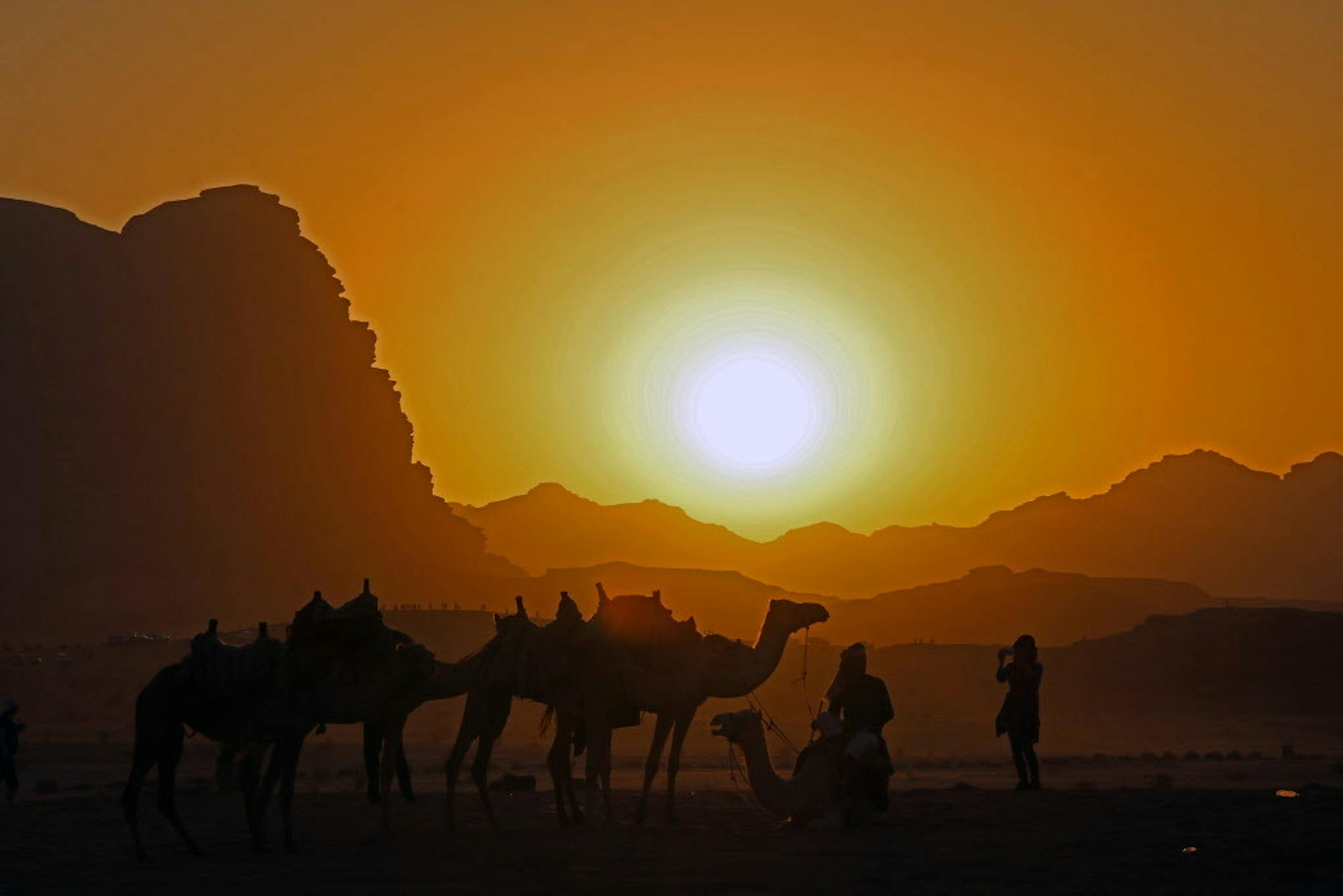
Way down below, camels with tasseled bridles emit rumbling, dinosaurlike roars while being led by robed Bedouin tribesmen whose eyes are rimmed in jet-black kohl liner. Other indigenous Bedouins, headscarves atop their flowing ringlets, trot on donkeys ("you want air-conditioned taxi?") past monolithic, 2,000-year-old tombs.
Mystical, mind-blowing Petra literally rocks.
Around the first century B.C., the now-extinct Nabatean people ingeniously chiseled the capital of their Arab empire from sheer sandstone cliffs. At times 30,000 inhabitants bustled about the affluent metropolis that was a major trade stopover for incense- and spice-toting camel caravans. Stretching across harsh desert terrain (Petra's archaeological park encompasses 102 square miles), the once-forgotten marvel includes intricate temples; obelisks honoring pagan gods; etchings of snakes, lions and eagles; cave dwellings; a theater; and more than 600 massive burial chambers, all hewed from soaring rock faces that glow in swirling hues of terra cotta, apricot and blush pink. It's bewitching.
"Petra is one of the world's biggest mysteries," says Omar, my Jordanian guide with Exodus Travels. "There is no record of history. And 65 percent of Petra is still underneath our feet, hidden by dust."
For almost two weeks, I traverse much of Jordan by bus with Exodus, an adventure company that also brings me and 15 other intrepid voyagers to the less-visited far reaches of this Middle East nation. Petra is Jordan's primo tourist draw, but elsewhere we're the only ones clambering over archaeological ruins of a mosaic-splashed Roman fort and the castles of a Muslim dynasty.
History mixes with the present here. Driving through the parched desert, we pass a sprawling Syrian refugee camp housing 36,000 in rows of white shelters; Jordan has taken in about 1 million people who have fled the war-torn nation to its north.
Before joining the tour group, I spend two days in the vibrant old quarters of capital Amman and clearly stick out; locals repeatedly ask where I'm from. This is a Muslim country, and when I say "America," they all warmly reply, "Welcome to Jordan," often with their hands placed over their hearts. I'm probably welcomed 100 times — in taxis, cafes while I eat mezze plates of hummus and falafel, shops, hookah bars, streets lined with bowing worshipers outside a minaret-topped mosque.


