

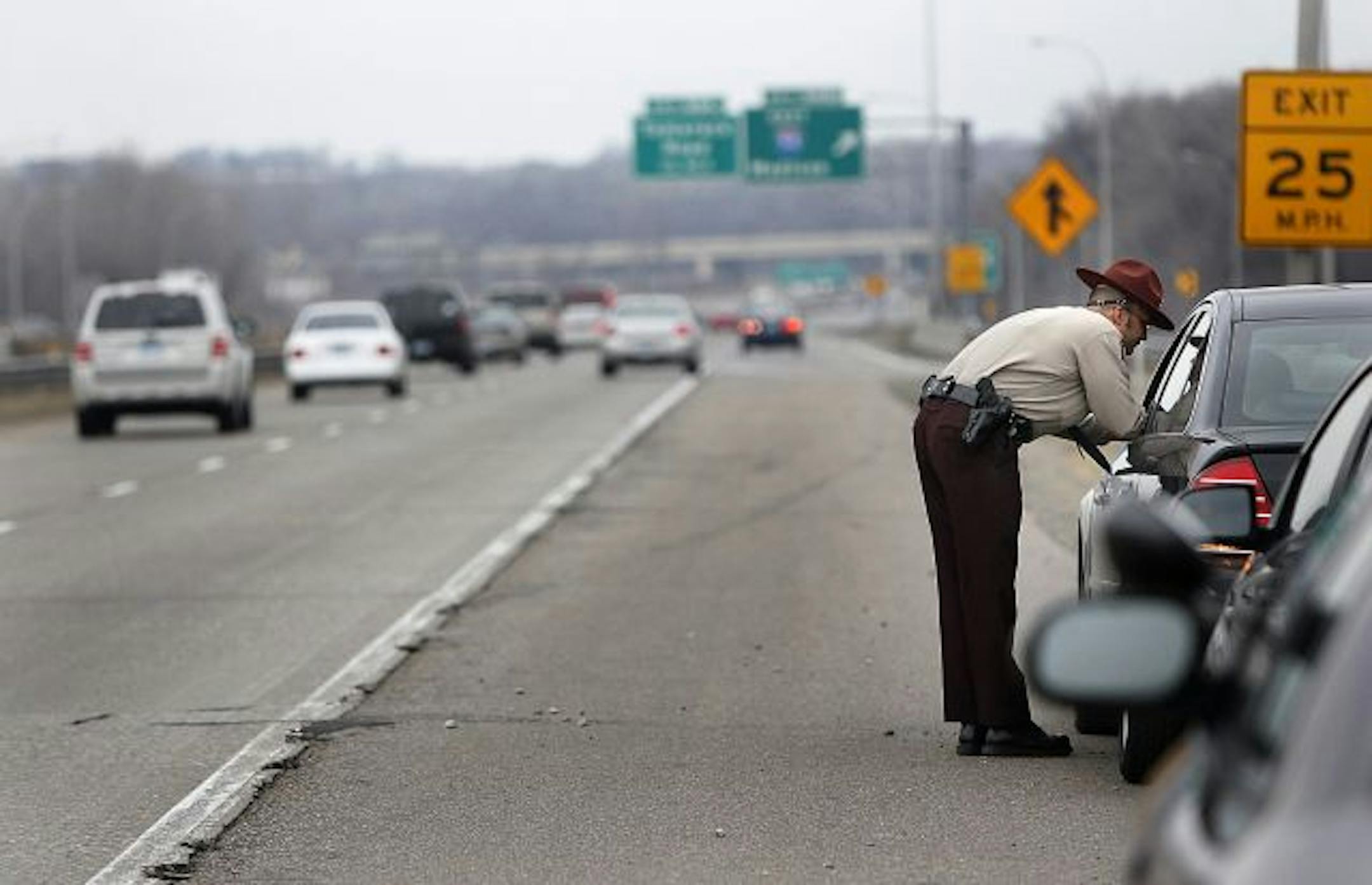
Many drivers have felt the dread of seeing flashing police lights in the rear-view mirror. But where to pull over? There might be heavy traffic, a guardrail, a snowbank. Stopping immediately might seem dangerous.
But can a driver delay the stop and not get in trouble?
That's the question left dangling by the Minnesota State Patrol's admitted mishandling of a highly publicized incident on New Year's Eve, when a trooper jailed a Hudson, Wis., driver after ramming his van when he didn't stop right away. Instead, he drove a mile and exited the busy freeway.
The patrol admitted that the trooper violated policies, but it also maintained that Sam Salter could have pulled over safely on Interstate 94, despite his concerns that the snow-packed shoulder wasn't wide enough and that he had his children in the back of the van.
While Salter got some vindication, the mixed message put out by the patrol might have left some motorists confused about how much judgment they can exercise when pulling over. The Star Tribune consulted statutes and several experts in an attempt to answer the question with at least a little more clarity.
First, state law is unambiguous. A driver must "immediately" move to the right edge of the road and stop.
But pulling over "immediately," it turns out, does not mean slamming on the breaks, say experts. Nor does it mean stopping in a lane. Nor on a shoulderless bridge, just over a hill crest, nor on a blind curve. Most troopers waiting for speeders look for straight stretches to avoid problems.
Room for common sense


