

Fennel is a wonderfully efficient vegetable, as the entire plant is edible — bulb base, long stalks and feathery leaves that resemble Queen Anne's lace. Native to the Mediterranean region, it's a key ingredient in several Greek dishes.
Anise is another name for fennel and refers to its mild, though distinct, licorice flavor, most apparent in the feathery fronds.
Like its cousin celery, fennel is a slow-growing vegetable and it's in high season right now, thanks to the long cool spring and gentle summer temperatures. When shopping at the farmers market, look for fennel bulbs that feel heavy for their size, have tightly packed layers and are free of cracks or brown spots. The stalks should feel firm and springy, not limp. Store fennel in a plastic bag in the vegetable bin of the refrigerator for up to four days; after that the flavor fades.
Fennel's firm white bulb is moist and crisp, a delicious alternative to celery in chicken and tuna salads. When roasted or braised, fennel turns tender and silky and is especially good with tomatoes as a side dish.
To slice the fennel bulb, stand it on the root end and cut vertically with a sharp knife. Chop the fronds to use as parsley, fennel's other relative. The tender stalks impart their flavor to chicken or fish when grilled alongside. The fronds make a wonderful bed for roast chicken and salmon.
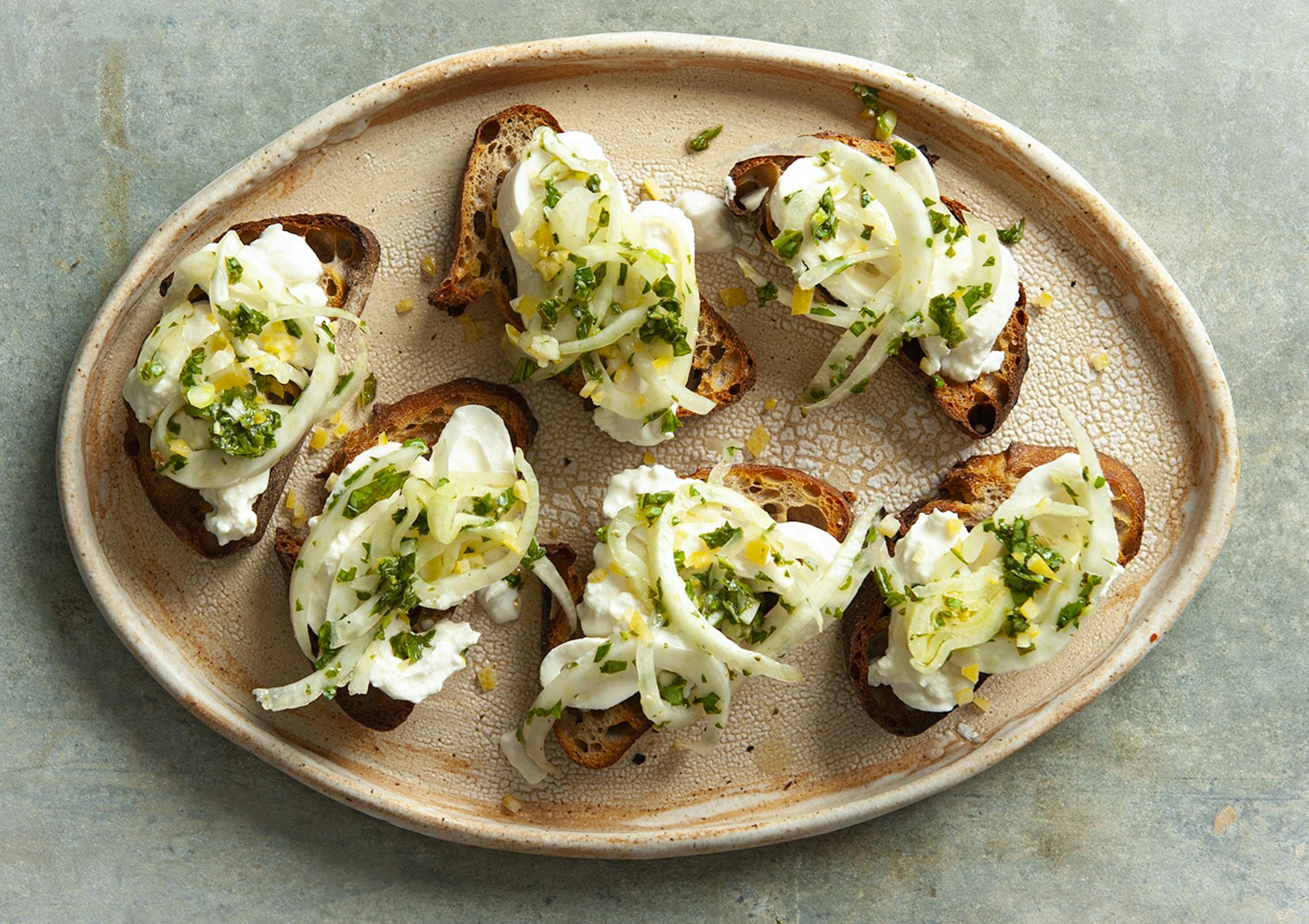
This time of year, a salad of raw fennel is downright refreshing. It makes a crunchy topping for bruschetta with creamy cheese or when tossed with chicken, a fine summer meal on its own.
Beth Dooley is the author of "In Winter's Kitchen."
Fennel and Lemon Salad Atop Bruschetta
Serves 4 to 6.


