

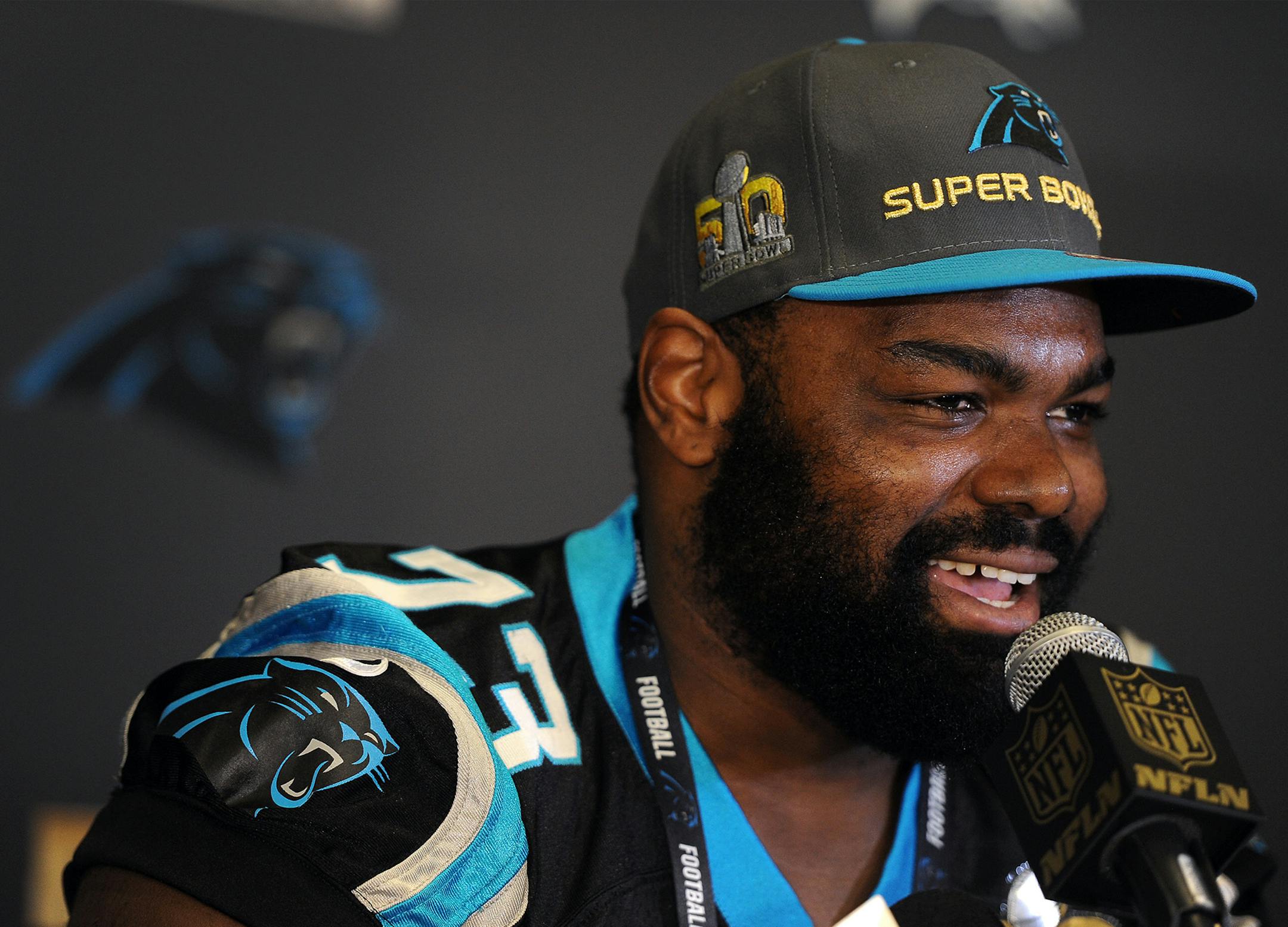
Former NFL player Michael Oher, whose journey out of poverty and into football stardom was dramatized in the 2009 movie "The Blind Side," asked a Tennessee court on Monday to formally end his legal relationship with the family who took him in, claiming that he had never actually been adopted and had been tricked into signing away his decision-making powers so the family could make millions of dollars off his life story.
Oher, 37, is seeking a termination of the conservatorship that began when he was 18, plus money that he says he should have earned from the movie, as well as an injunction preventing Leigh Anne Tuohy and Sean Tuohy from using his name and likeness.
The petition, filed in Shelby County in Tennessee, claims that when he thought he was being adopted, the Tuohys urged him to sign a conservatorship in which he relinquished his ability to enter into contracts. The lawsuit also claims that Oher, who started living with the Tuohys at age 16, unknowingly signed away the rights to his life story to 20th Century Fox in 2007.
Oher's lawyer, J. Gerard Stranch IV, declined to comment beyond what was stated in the lawsuit.
For "The Blind Side," the hit film that starred Sandra Bullock as Leigh Anne Tuohy, Tim McGraw as Sean Tuohy and Quinton Aaron as Oher, the Tuohys negotiated a contract of $225,000 plus 2.5 percent of future "defined net proceeds" for themselves and their biological children, the lawsuit said.
Oher says in the lawsuit that he received nothing while the movie generated more than $300 million in revenue worldwide.
The Tuohy family did not immediately respond to requests for comment from The New York Times. In an interview with The Daily Memphian on Monday, Sean Tuohy said that he had been "devastated" to hear about the lawsuit and that it was "upsetting to think we would make money off any of our children." Tuohy said that he would be willing to end the conservatorship and that everybody in his family, including Oher, got an equal share from the movie, around $14,000.
Sean Tuohy went on to say the conservatorship had been intended to allow Oher to play at the University of Mississippi, which he and his wife attended.


