
Everything you wanted to know about bird sex

Courtship is preferred, but optional when it comes to producing mallard chicks.

For the Minnesota Star Tribune
May 30, 2017 at 8:20PM
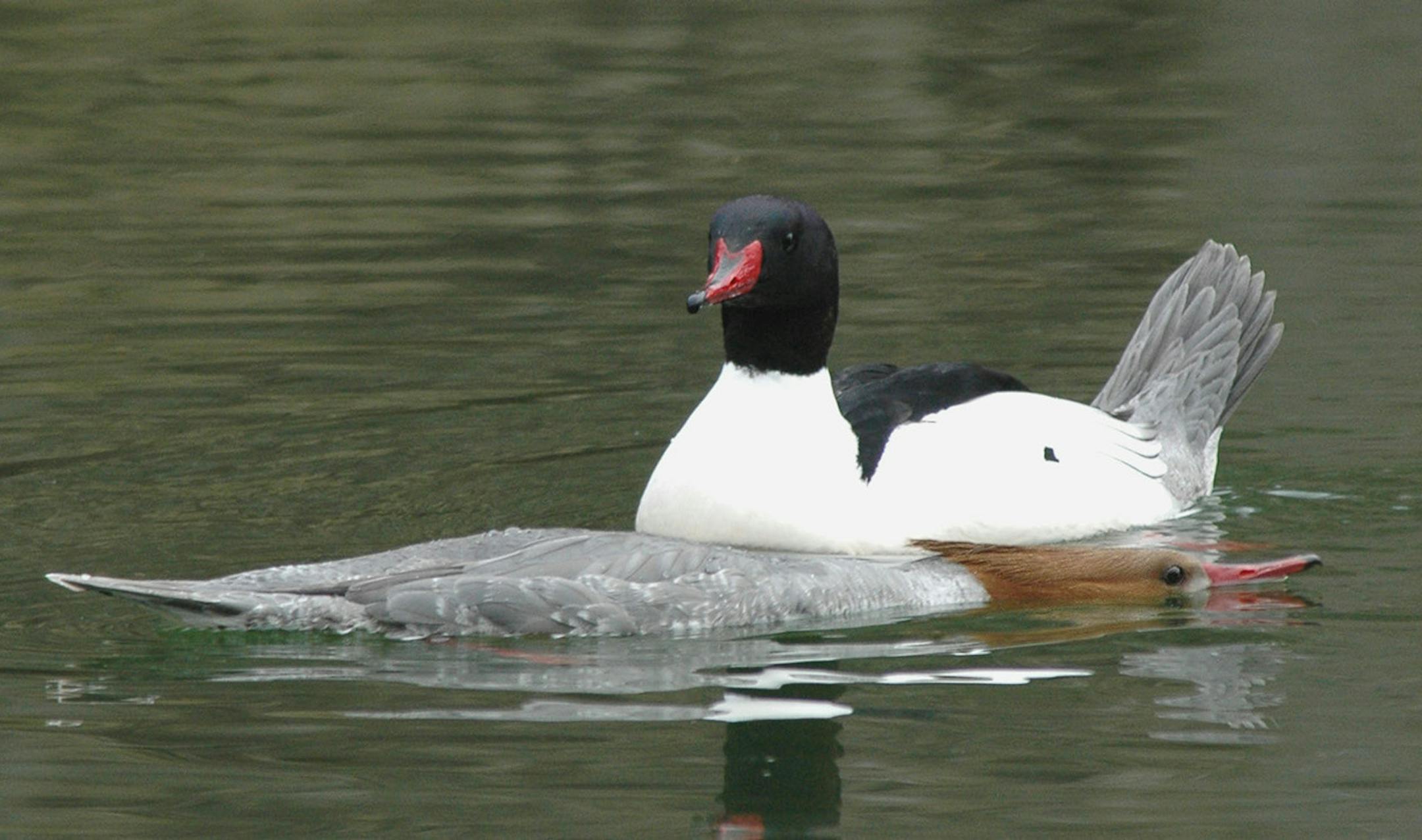
A courtship display by a pair of common mergansers. Her head flat against the water is signaling her desire to mate. The male’s erect tail indicates his agreement.
A courtship display by a pair of common mergansers. Her head flat against the water is signaling her desire to mate. The male’s erect tail indicates his agreement. (The Minnesota Star Tribune)

It looked like rough sex. It turns out it was just standard procedure for mallards.

We have a pair of mallards nesting in the swamp behind our house. I've been reading about mallards because of behavior I've watched.

The vigorous mating, for instance.

Our mallards arrived as a pair. They would have bonded last winter, perhaps locally, since so many spend the winter here.

The drake of this pair stays close to his mate. He stands guard, upright and alert, when she feeds on shore. I've always thought he was watching for predators. Then I read a research report on mallards. It said, "males guard paternity … "

He's ensuring that all the ducklings, if and when they hatch, carry his genes. His hen mating with another drake could compromise that.

An unpaired drake flew in to our pond, eventually grabbing the hen by her neck and subduing her. The culmination of that frantic minute looked like copulation. That male also was acting on behalf of his genes.

The literature describes three types of mallard copulation. Pair copulation is solicited by both birds, the result of their bonding and desire to nest. (Even with willing partners this can look rough.)
Forced extra-pair copulation is what I saw. The male of the mated pair might then also force copulation. He would be trying to cover a rival's sperm with his own.

Paired males also will seek to forcefully mate with other hens. It is the male's way of ensuring that he will breed successfully one way or another. Because of this, any drake's chance of all ducklings being his are about nine in 10.

Female mallards prefer a mate with bright bill color and plumage. Journal articles reported that females laid larger eggs when they mated with their preferred male. Larger eggs produce heavier ducklings with a better chance of survival.

I could find no explanation of the biological function that produces smaller eggs from unwanted sperm.

Females value energetic courtship activity when making their mate choice. Such behavior by the drake probably signals that he is strong and healthy.

Courtship involves a set of signals by both birds. Watch for bills jabbing, heads bobbing, nodding or shaking. Watch for the female swimming with her head low to the water.

As in so many relationships, male courtship skills are important. And they improve with age.

Wood ducks nest on our pond, too. I've watched our hen perform that swimming display. Always close to the male, she swam with bill flat on the pond surface. A few moments later, the wood duck drake bobbed his head four or five times, then mounted her.

Sex is strictly utilitarian for birds. The wood duck drake was atop his hen for a second.

Ducks are among the 3 percent of bird species that have a penis. This is a topic for another day. Most birds mate by simply turning tails aside and bringing together their cloaca, the birds' all-purpose vent (for waste, sperm, egg).

The mallard penis, incidentally, can be inches in length, and has a corkscrew shape. It is an interesting story, but again, for another day.

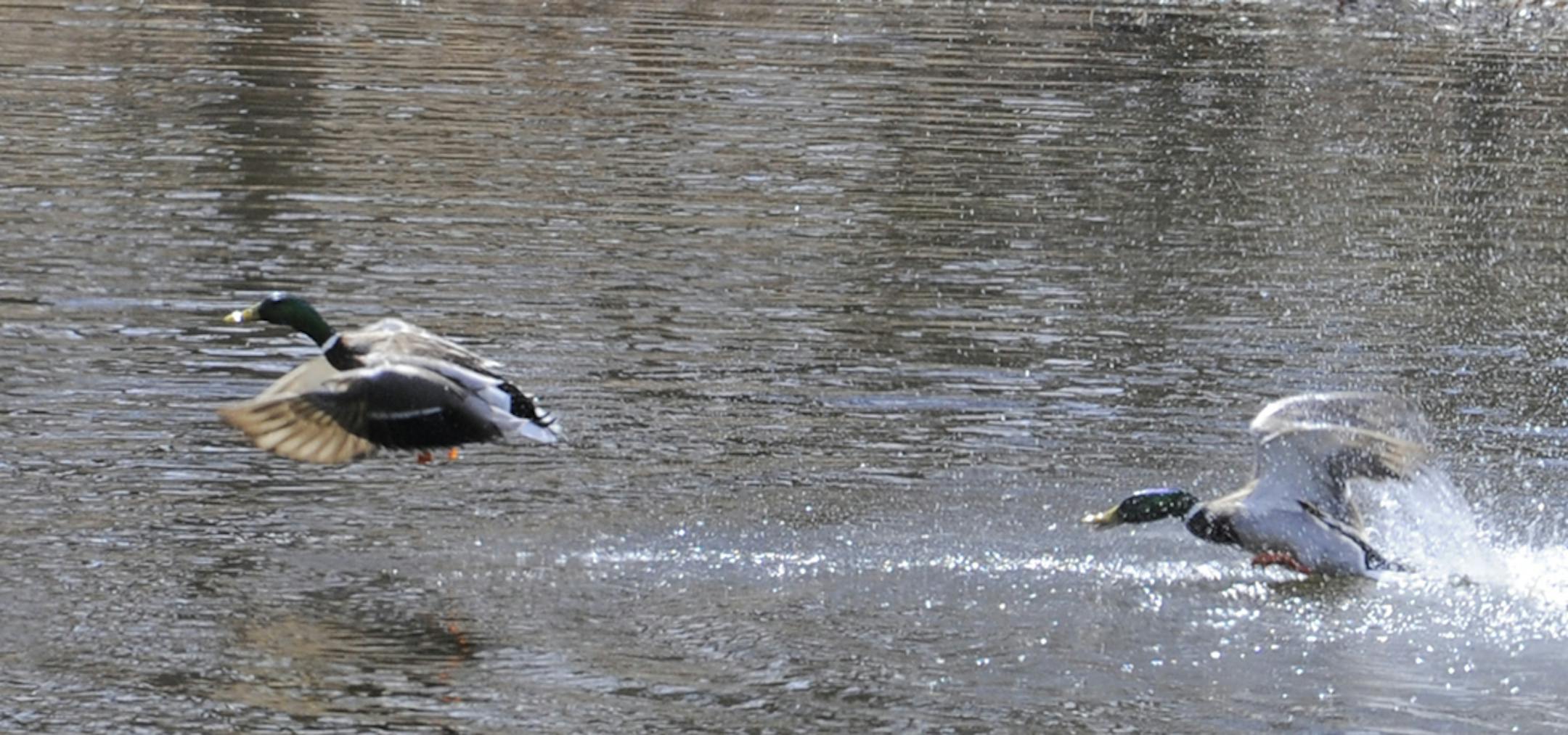
A drake mallard in flight has been driven off after making a pass at a hen paired with the victorious duck.
A drake mallard in flight has been driven off after making a pass at a hen paired with the victorious duck. (The Minnesota Star Tribune)
about the writer

about the writer

Jim Williams