

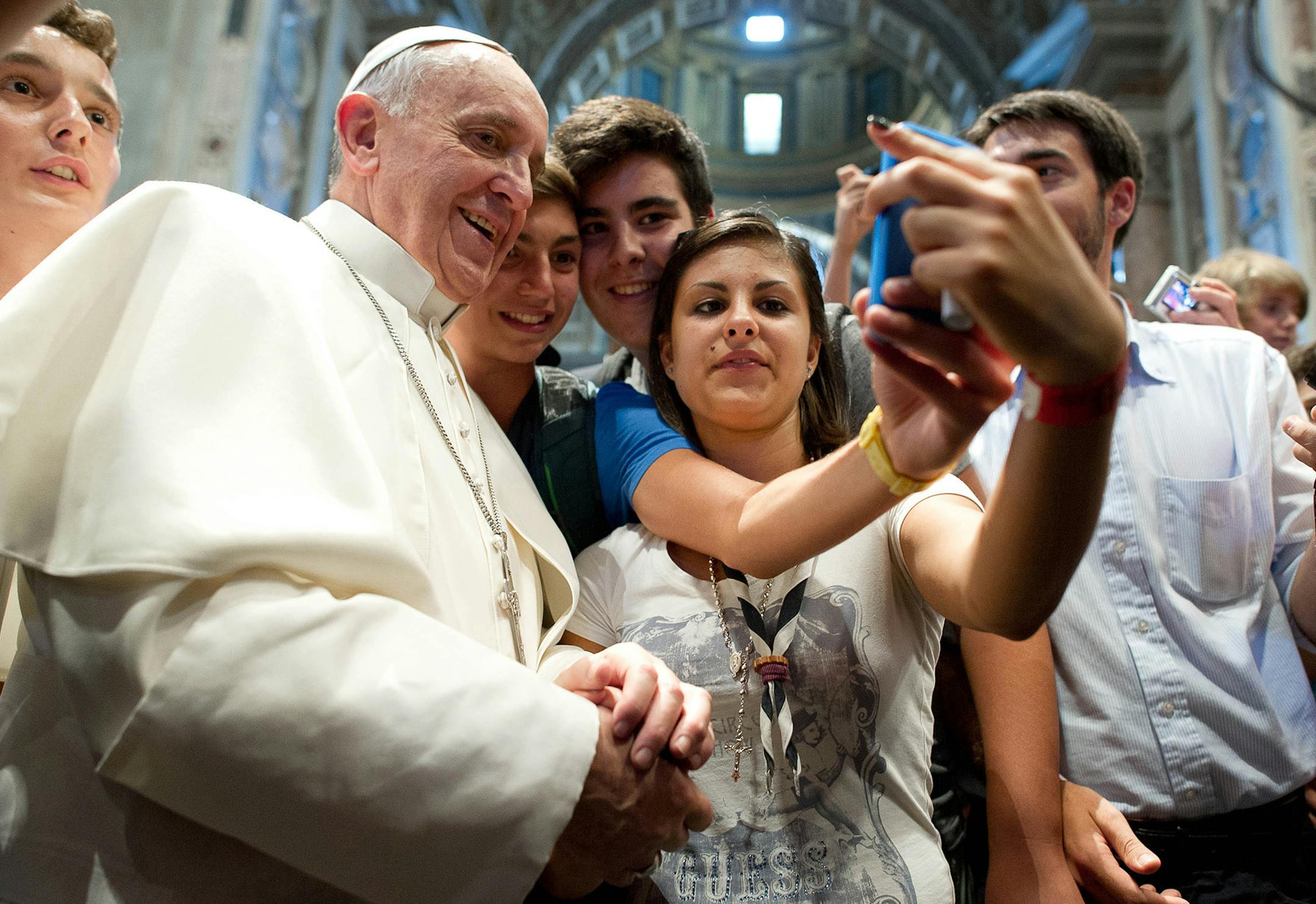
Last spring, I had the occasion to spend a day with the actor and comedian Aziz Ansari discussing our mutual interest in the psychology of texting. As we walked through Los Angeles, people approached him every few minutes not to ask for an autograph, but to demand a photograph. Ansari is gracious to his fans. He explained that instead of a photograph, he would offer a conversation. He inquired about their taste in music, what they liked about his performances, his stand-up, his sitcom "Parks and Recreation." His fans were mollified, but they were rarely happy. They had to walk away with nothing on their phones.
I've been studying people and mobile technology for more than 15 years. Until recently, it was the sharing that seemed most important. People didn't seem to feel like themselves unless they shared a thought or feeling, even before it was clear in their mind. The new sensibility played on the Cartesian with a twist: "I share, therefore I am."
These days, we still want to share, but now our first focus is to have, to possess, a photograph of our experience.
I interview people about their selfies. It's how they keep track of their lives. Ansari offered a conversation, but people wanted documentation. We interrupt conversations for documentation all the time.
A selfie, like any photograph, interrupts experience to mark the moment. In this, it shares something with all the other ways we break up our day, when we text during class, in meetings, at the theater, at dinners with friends. And yes, at funerals, but also more regularly at church and synagogue services. We text when we are in bed with our partners and spouses. We watch our political representatives text during sessions.
Technology doesn't just do things for us. It does things to us, changing not just what we do but who we are. The selfie makes us accustomed to putting ourselves and those around us "on pause" in order to document our lives. It is an extension of how we have learned to put our conversations "on pause" when we send or receive a text, an image, an e-mail, a call. When you get accustomed to a life of stops and starts, you get less accustomed to reflecting on where you are and what you are thinking.
We don't experience interruptions as disruptions anymore. But they make it hard to settle into serious conversations with ourselves and with other people because emotionally, we keep ourselves available to be taken away from everything. I talk to young people about etiquette when they go out to dinner, and they explain to me that when in a group of, say, seven, they make sure that at least three people are "heads up" in the "talking" conversation at any one time. Only then do they feel permission to text. But it doesn't have to be the same three people. In these settings, the most commonly heard phrase is "Wait, what?" as one person and then another drops back into the conversation and tries to catch up. All of this has become the new normal.
We have every reason to believe that President Obama revered Nelson Mandela and thought deeply about his relationship with what Mandela stood for. But when he took a selfie at Mandela's memorial service last Tuesday, he showed us how he, too, lives in our culture of documentation. It is easy to understand how he, like most of us, did not allow himself an uninterrupted time of reverie.


