

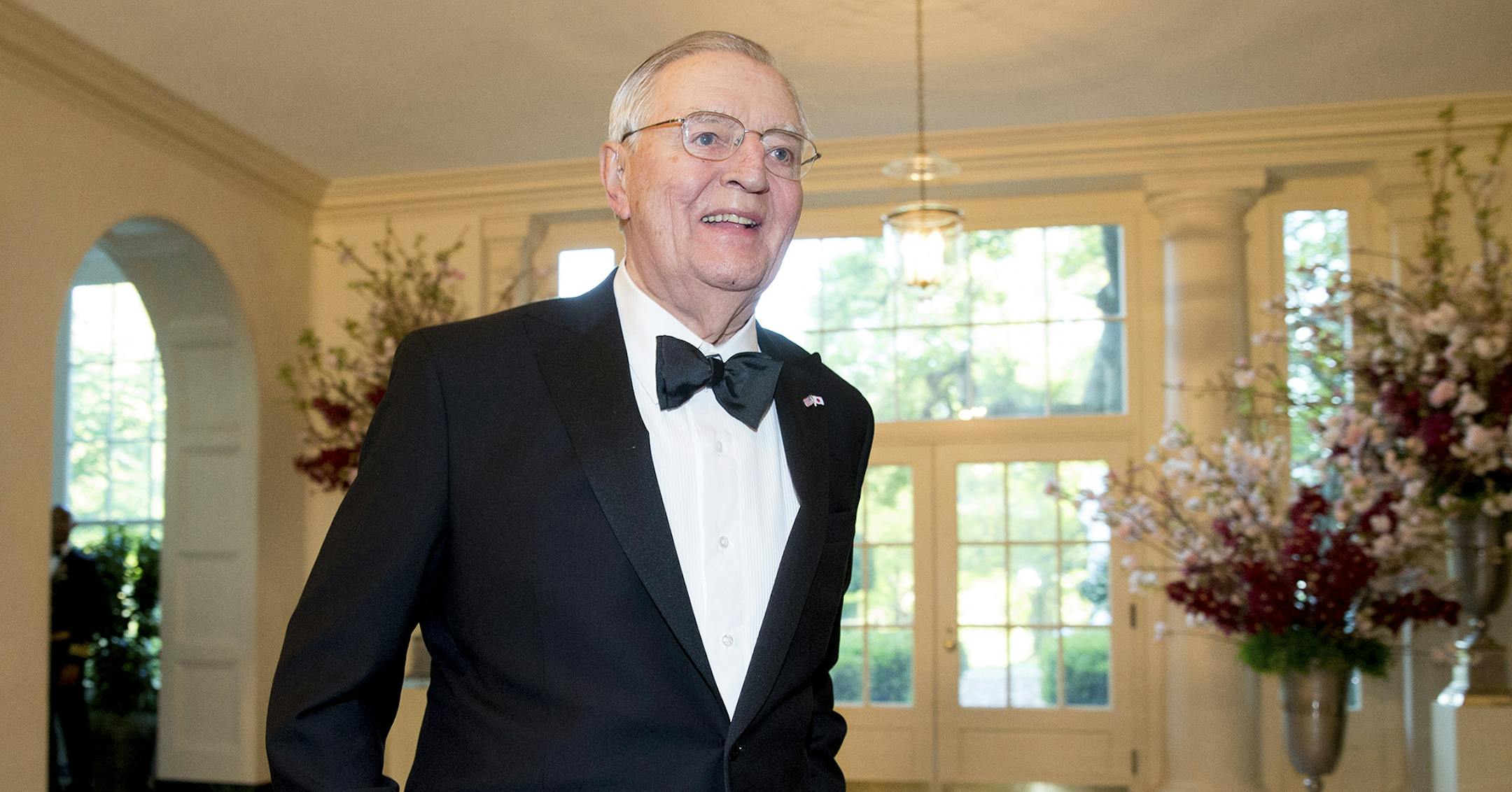
In the 31 years since Walter Mondale was the Democratic nominee for president, there have been seismic shifts in the media landscape. But it's enduring concerns like money in politics and the role of a vigorous press that matter most, the former vice president said in an interview.
"If you have a lot of money, you have access to the public. But the public does not have access to you," Mondale said a week before a series of Humphrey School of Public Affairs events honoring him, starting with a Public Leadership Awards dinner Tuesday.
Mondale described today's Citizens United campaign-finance era as "awful," and added, "Lincoln famously said ours is a government of the people, by the people and for the people. That's the basis of democracy — that it belongs to the public. It's not for sale. It's not deniable."
Mondale believes an antidote is a fair but aggressive press. "Even when you are in government — [President] Carter and I used to talk about this — how does a president know what's going on? Do you think they call and say, 'It was a bad day at the Ag Department?' No. Some reporter gets a whiff of it and writes it. And one of the best instruments of presidential management is the daily newspaper and what the cat drags in overnight."
Now, however, overnight is 24/7.
"This is a good-old-days argument, but we used to have what was called a news cycle, and so you'd have a few hours to think about it, a few hours to prepare your charge, and the press would have a few hours to write their story. Now, there is no news cycle. News is instantaneous. … I think there was more enforced thoughtfulness in the old system."
Of course, a key reason for instantaneous news is the Internet. "For people who try, it's probably easier to get information now because the Internet opens up a lot of material in a hurry that wasn't around when we were running, so I think that's good. But it still leaves me cold, because I don't think the final product allows the press to drill into candidates and the big issues. That's the test, so the positive parts of modern information availability tend to get dissipated as a result."
Debates, however, can still deliver important information, Mondale said. "I've always been a big supporter of debates, because although there is a lot of claptrap to them and the candidates are trying to do their best, as they should, there has always been a way that the truth sneaks out, some unprotected comment." Although that may be less possible in the upcoming 10-candidate GOP debates. "Is it just going to be a befuddling blur of people up there?" Mondale wondered.


