

The most curious subplot in the news right now is the admission, at the most senior levels of the U.S. government, that the military services have collected visuals, data and testimonials recording flying objects they cannot explain; that they are investigating these phenomena seriously; and that they will, in the coming months, report at least some of their findings to the public. It feels, at times, like the beginning of a film where everyone is going about their lives, even as the earthshaking events unfurl on a silenced television in the background.
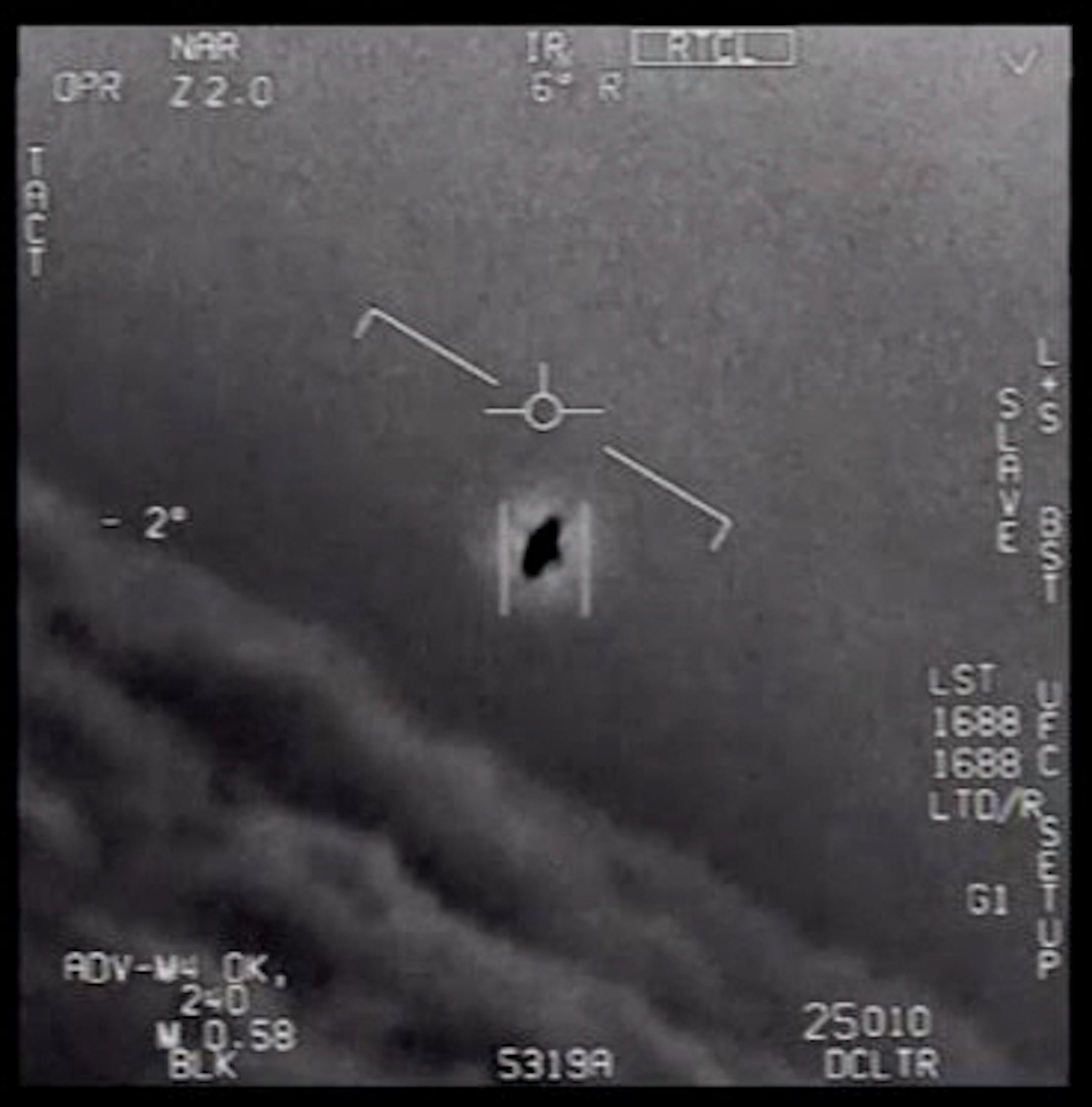
A series of stories in the New York Times over the past few years have confirmed the existence of a military program on "Advanced Aerospace Threat Identification" and revealed videos in which trained pilots marvel over unidentified craft apparently defying the limits of known technology.
On April 30, the New Yorker published a revelatory article by Gideon Lewis-Kraus tracking the rise of congressional, military and media interest in UFOs. Harry Reid, the former Senate majority leader from Nevada, emerges as the key actor. In the middle of his decades-long career in government, he pushed to fund these investigations, and, since retiring he's been relentless in voicing his conviction that the military has information on UFOs that the public deserves to know. He told Lewis-Kraus that he believed there was crash debris held by Lockheed Martin, but when he asked the Pentagon to see it, he was refused access. "I tried to get, as I recall, a classified approval by the Pentagon to have me go look at the stuff," he said. "They would not approve that."
Language inserted into the 2021 Intelligence Authorization Act gave the government 180 days to gather and analyze the data it has collected, and to release a report on the findings. On Fox News, John Ratcliffe, the former director of national intelligence, was given the opportunity to play down the report, which began under his tenure, and he declined. "When we talk about sightings, we are talking about objects that have been seen by Navy or Air Force pilots, or have been picked up by satellite imagery, that frankly engage in actions that are difficult to explain, movements that are hard to replicate, that we don't have the technology for, or traveling at speeds that exceed the sound barrier without a sonic boom." Nor are these just eyewitness accounts, made by fallible human observers. "Usually, we have multiple sensors that are picking up these things," he said.
Perhaps Ratcliffe, a former member of Congress whose sole stint in intelligence came at the tail end of the Trump administration, is simply hyping his work. But that doesn't explain why a former CIA director, John Brennan, said in an interview with economist Tyler Cowen that "some of the phenomena we're going to be seeing continues to be unexplained and might, in fact, be some type of phenomenon that is the result of something that we don't yet understand and that could involve some type of activity that some might say constitutes a different form of life." Well then.
To state the obvious: All this is a little weird. None of it is proof of extraterrestrial visitation, of course. And I am not just offering a pro forma disclaimer to cover my firm belief in aliens. I really don't know what's behind these videos and reports, and I relish that. In this case, that is my bias: I enjoy the spaciousness of mystery. Evidence that there is intelligent extraterrestrial life, and it has been here, would upend how humanity understands itself and our place in the cosmos. Even if you think all discussion of aliens is ridiculous, it's fun to let the mind roam over the implications.
The way I've framed the thought experiment in recent conversations is this: Imagine, tomorrow, an alien craft crashed down in Oregon. There are no life forms in it. It's effectively a drone. But it's undeniably extraterrestrial in origin. So we are faced with the knowledge that we're not alone, that we are perhaps being watched, and we have no way to make contact. How does that change human culture and society?
One immediate effect, I suspect, would be a collapse in public trust. Decades of UFO reports and conspiracies would take on a different cast. Governments would be seen as having withheld a profound truth from the public, whether or not they actually did. We already live in an age of conspiracy theories. Now the guardrails would truly shatter, because if UFOs were real, despite decades of dismissals, who would remain trusted to say anything else was false? Certainly not the academics who'd laughed them off as nonsense, or the governments who would now be seen as liars.


