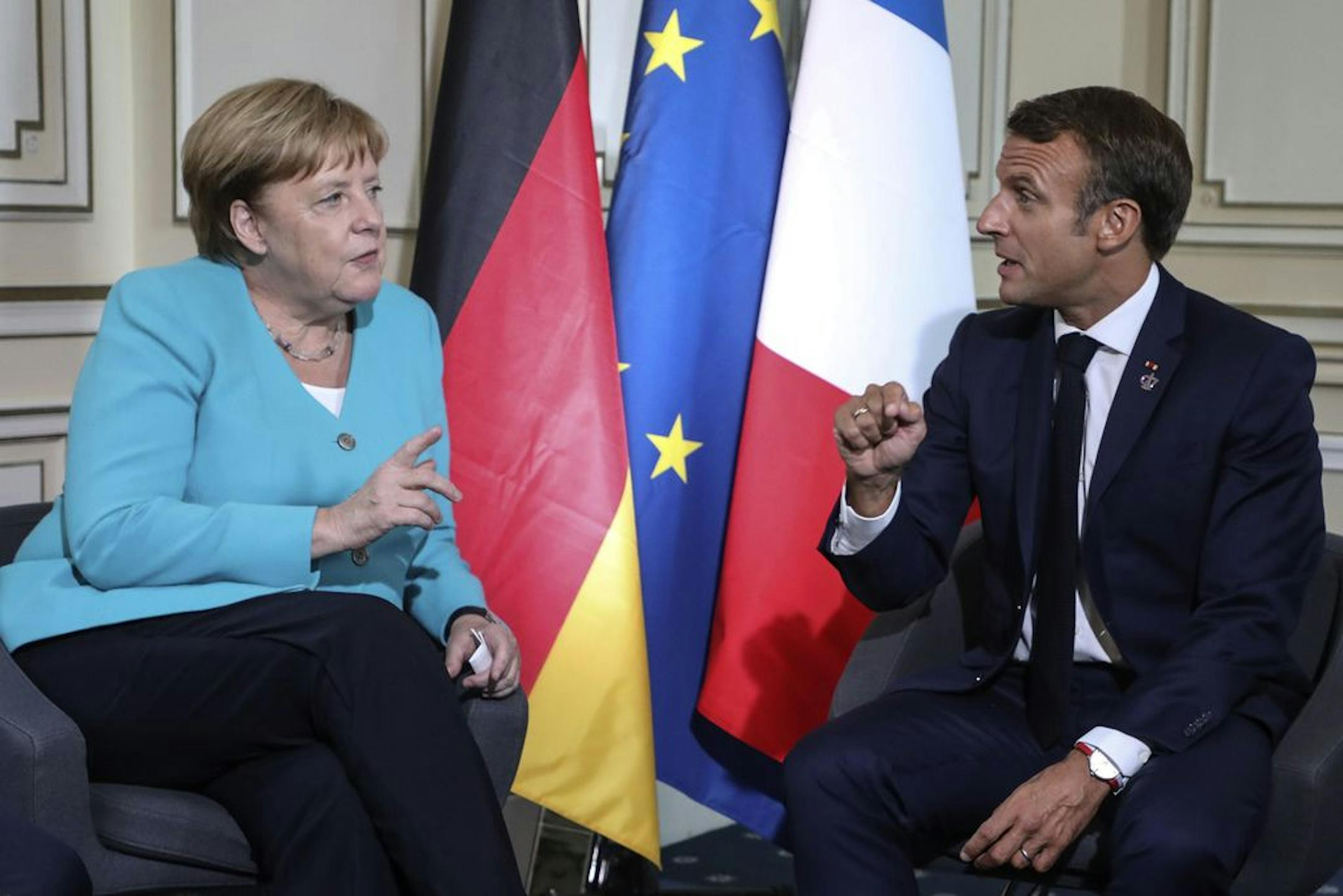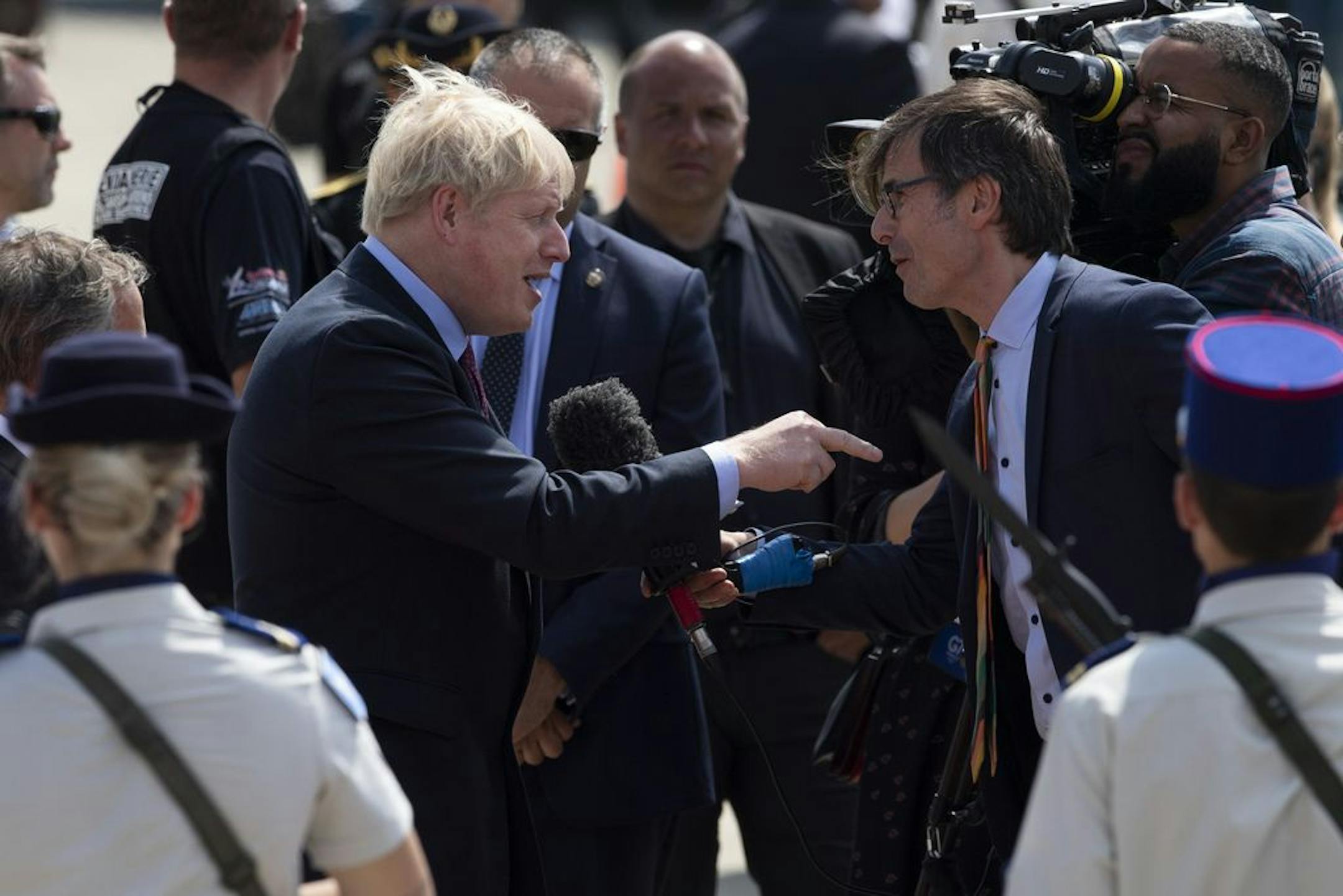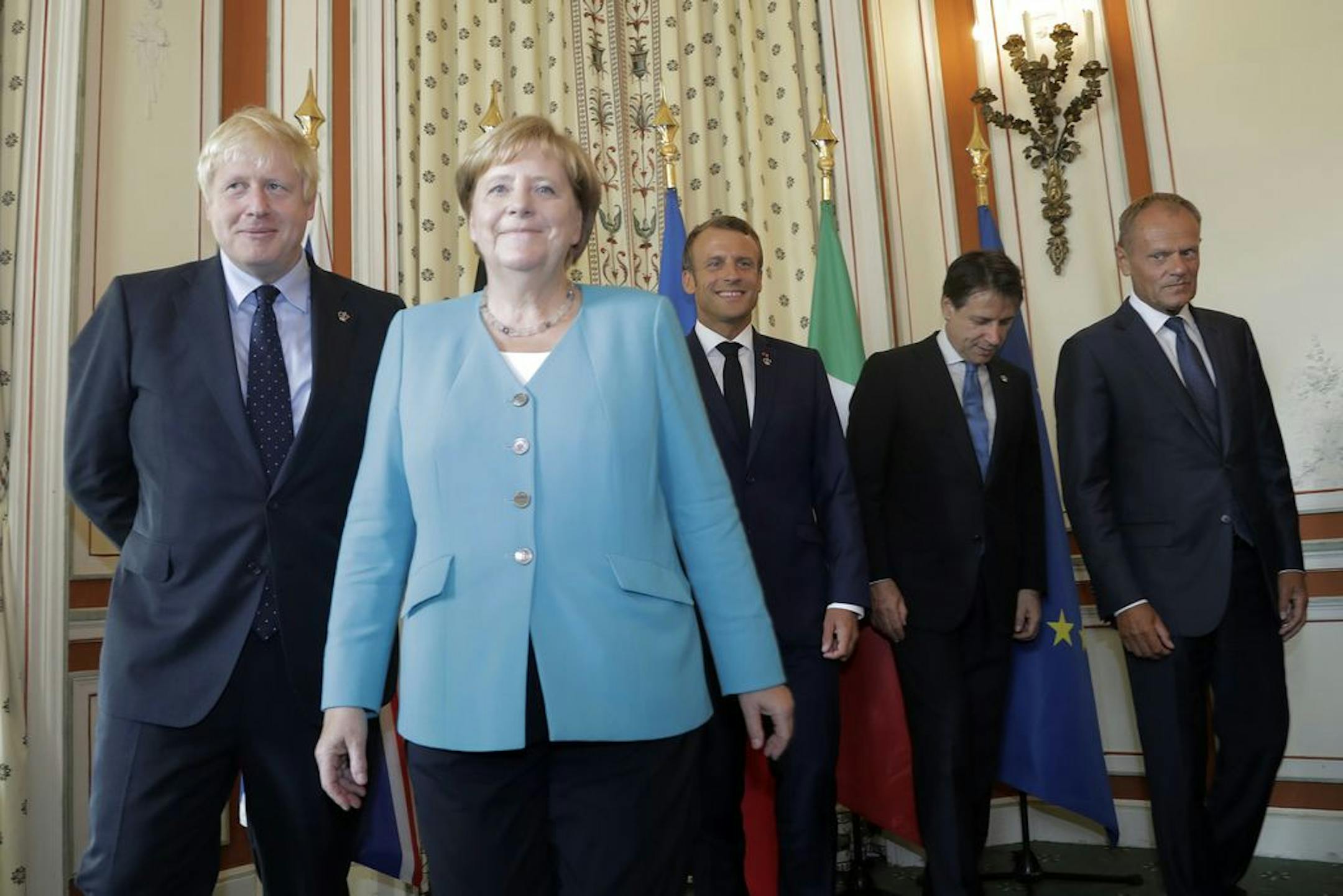
BIARRITZ, France — The posturing by leaders of the G-7 rich democracies began well before they stood together for a summit photo.
French President Emmanuel Macron, the host, cornered Donald Trump at the American leader's hotel with an impromptu lunch invitation. It was something of a power move by Macron, who pushed the Amazon wildfires to the top of the agenda at a summit Trump hoped to use to persuade allies they can avoid economic disaster by following his low-tax, low-regulation mantra.
European Council President Donald Tusk and British Prime Minister Boris Johnson traded barbs over who would go down in history as "Mr. No Deal" and take the blame for a Brexit departure from the European Union that threatens to go off the rails.
And nearly everyone kept a trade threat close at hand.
Just before boarding Air Force One for France, Trump tweeted yet another threat of new tariffs on French wine in retaliation for France's digital services tax. Macron greeted him warmly as a "very special guest," but had already called for an end to the trade disputes that he said threatened global growth.
Tusk said the three-day summit in the seaside resort of Biarritz would be "a difficult test of the unity and solidarity of the free world and its leaders." For a meeting where the disputes traditionally happen in private, the results were looking grim.
Even as Tusk, who presides over the council of leaders of the 28-member European Union, said the last thing the bloc wanted was a trade dispute with the United States and called for "an end to trade wars," he promised to retaliate against U.S. products if Trump carries through on the wine tariffs.
Macron has said the summit would not end with a final statement, as he had little expectation that Trump will agree to anything about fighting climate change even as the issue shot to the top of the agenda with the widespread fires in the Amazon . He already rejected Trump's request to let Russia rejoin the group five years after being expelled over its seizure of Crimea. And he is trying to hold together the European line on the Iran nuclear deal over U.S. objections.