He was ridiculed in the U.S. Now he’s a celebrity in China.

How Evan Kail, a St. Louis Park rare-coin dealer, became an unexpected public figure on the other side of the world.

The Minnesota Star Tribune
January 1, 2026 at 12:00PM
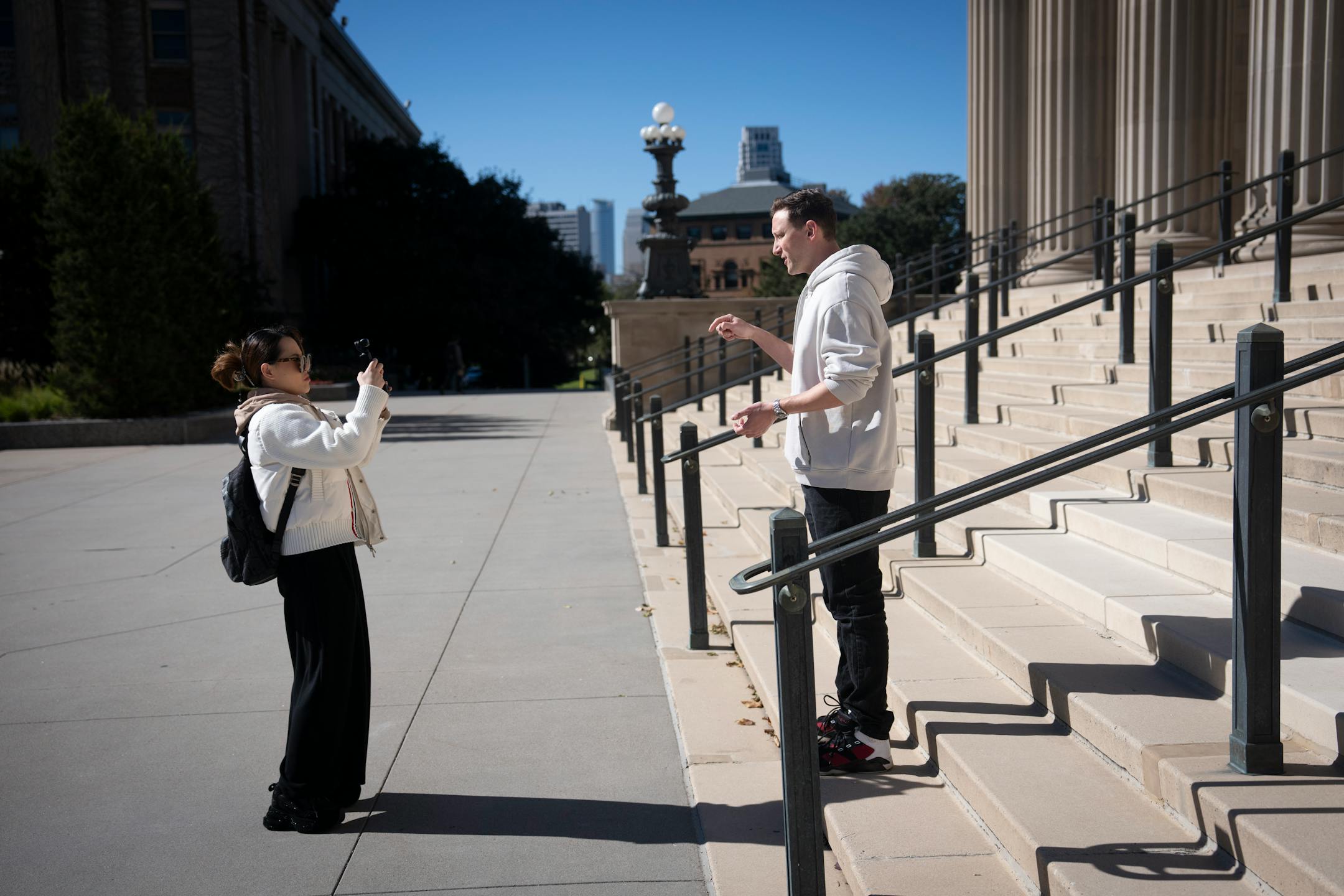
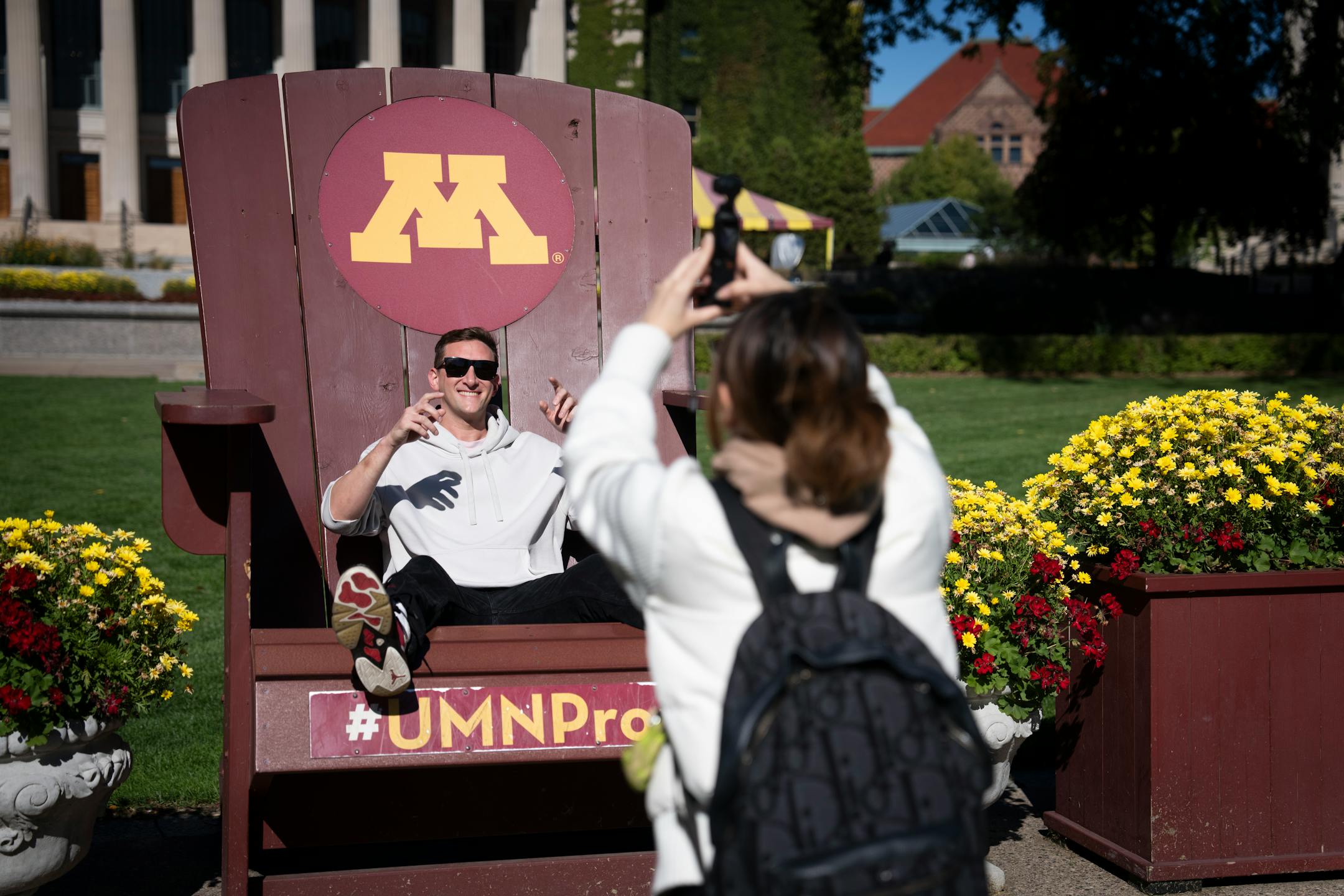
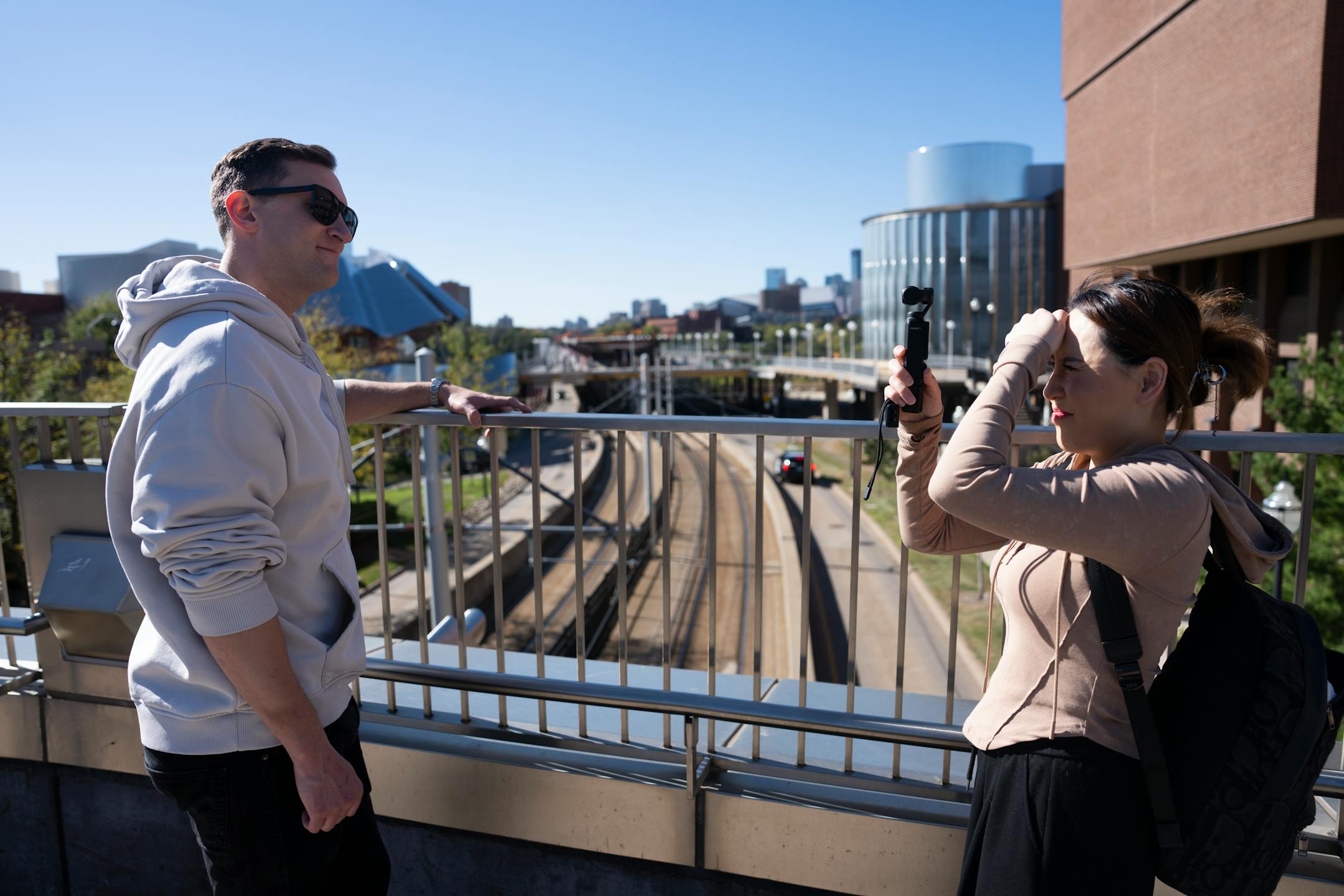
Evan Kail makes a video at his alma mater, the University of Minnesota in Minneapolis, with Max Xiong, who flew in from China to direct Kail's public relations and show what life in the United States is like. (Renée Jones Schneider/The Minnesota Star Tribune)

One year ago, Chinese state media invited Evan Kail, a 36-year-old coin shop owner from St. Louis Park, to attend its lunar New Year’s Gala as a special guest.

With hundreds of millions of people tuned in live, the variety show is the planet’s most watched television program, with viewership eclipsing that of the Super Bowl.

Dressed in a red Tang suit of silk brocade, Kail appeared on the program seated a table with an interviewer, who asked him what he thought of the gala. A sympathetic audience formed the backdrop. Kail greeted them with a few lines of rehearsed Mandarin, sharing that 2025 was special for him because he, too, was born in the Year of the Snake.

Kail, who was not well-traveled before he became an unlikely celebrity in China, spent much of the year touring the country, promoting his Chinese-language memoir and doing commercials for cars and phones. In the fall he played a minor role in the Chinese blockbuster “Evil Unbound,” which had a limited release in American theaters. People flag him down in the street for selfies.

Kail’s propulsion to Chinese stardom began three years ago, when he made a viral — albeit erroneous — TikTok video claiming to have found never-before-seen photographic evidence of the Nanjing Massacre. The Imperial Japanese Army’s brutal sacking of China’s then-capital in 1937 still resonates in tensions between China and Japan.

Ridiculed by American content creators, Kail ultimately donated the pictures to the Chinese government and was embraced by Chinese netizens.

The opportunity has allowed Kail to reinvent himself as a soft diplomat, trying to bridge cultural divides between China and the U.S.

But what seems like a social media fairytale is playing out amid the increasing nationalism of the two superpowers he straddles. As China tries to relay a global narrative of rising economic, technological and cultural power, Kail is catching criticism for playing messenger for an autocratic government.
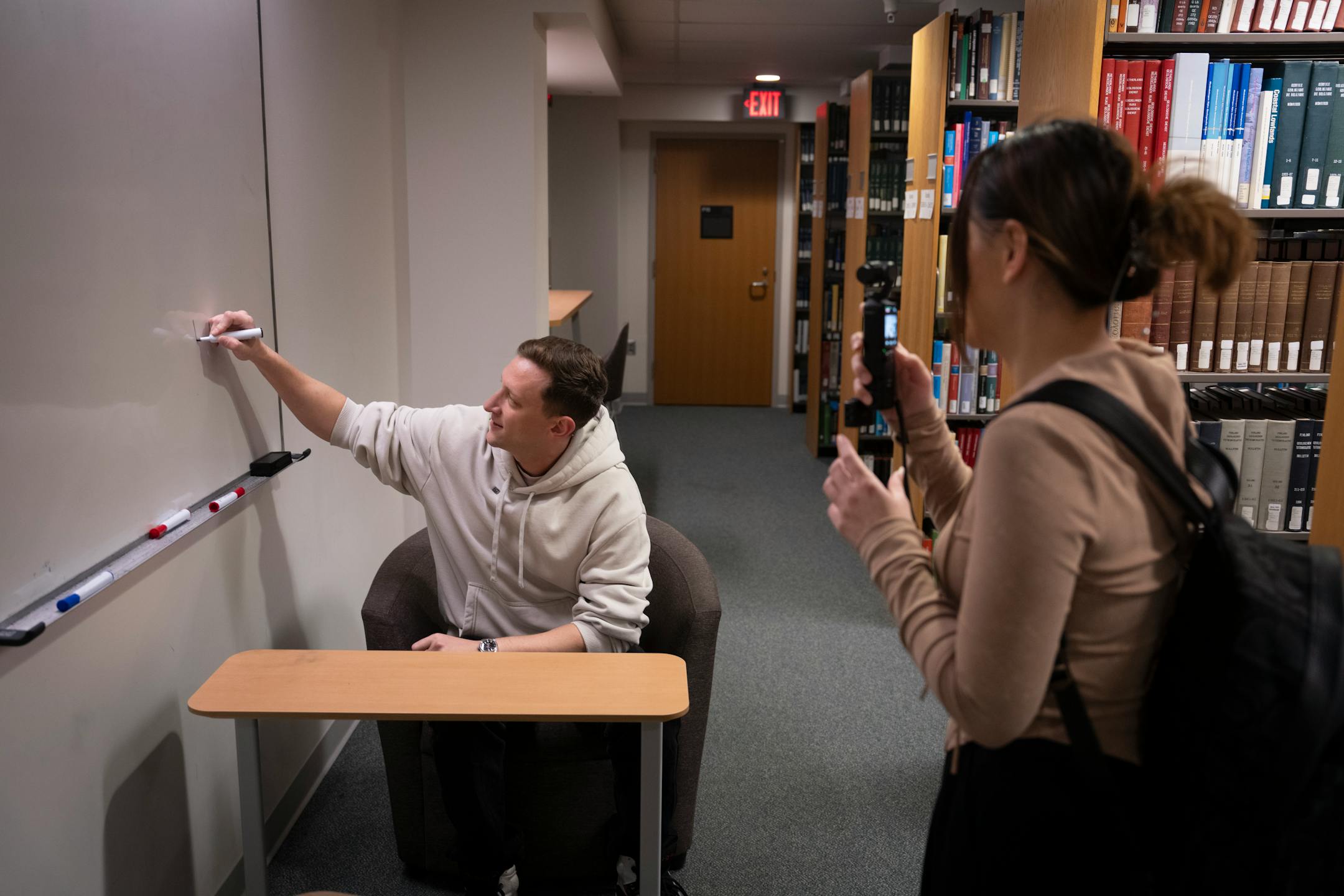
Evan Kail makes a video in the spot where he used to study at his alma mater, the University of Minnesota in Minneapolis. At right is Max Xiong, who flew in from China to direct Kail's public relations and show what life in the United States is like. (Renée Jones Schneider/The Minnesota Star Tribune)

The photo album

In 2022, Kail was an aspiring influencer building his TikTok brand, Pawn Man. À la the History Channel’s hit show “Pawn Stars,” he’d peel back the histories of old objects, evoking the possibility that the dusty corners of our modern lives contain buried treasure.

Kail encouraged viewers to send him heirlooms they wanted to sell. One day, a mysterious photo album came in the mail.

The book once belonged to a naval serviceman stationed in Asia, purportedly bartered away as payment for contracting work some time in the intervening decades. Dragons embossed its cracked leather cover. A cryptic title page cautioned: “Some people may not approve of the contents … peruse it of your own free will and at your own risk.”

The initial photos showed exotic farm country, temples and elephants. These transitioned abruptly to scenes of cratered city streets, charred corpses, screaming children, torture and beheadings. “Hell on NanKing Road,” captioned one snapshot.

Kail had retained just enough from Japanese studies at the University of Minnesota to take a guess at what he had: photographic evidence of the Nanjing Massacre, one of the worst atrocities of World War II, with a civilian death toll estimated to exceed 100,000, plus cases of mutilation and rape in the tens of thousands.

In a TikTok video, Kail asserted that the man who took the pictures had been present at the massacre, and he pleaded for help finding a museum that could study the album properly. “There‘s people that deny the Rape of Nanking, and part of their argument for that is, well, there’s such little evidence," Kail said in the video. “Guess who just found some?”

The video went instantly viral and has since been viewed 53 million times. But it contained a critical error: Nanjing Road is a street in Shanghai, another city in the south of China that the Imperial Japanese Army invaded months before Nanjing.

Other creators took aim, speculating the entire album was a hoax. Some found Kail’s style grandiose and cringey. He was accused of exploiting another nation’s war crimes to chase fame.

The firestorm caused him to suffer a “complete mental breakdown,” he said. Coin shop employee Rob Harstad recalled that his boss started wearing a bulletproof vest and packing a pistol. He became paranoid, longtime friend Stephanie Struzyk said.

Kail signed up for therapy. At the same time, he continued to search for a home for the album.

Briana Flandt, curator at the Richard I. Bong Veterans Historical Center in Superior, Wis., traveled to the Twin Cities to examine it at Kail’s request.

The album was a memorabilia book containing a mix of original photos and mass-produced ones, not uncommon among veterans of the Pacific Theater, she said in an interview. She recognized some license-free images in Kail’s album but lacked the expertise to authenticate others and suggested he find a specialist.

“When I met him, he seemed very well-intentioned and wanted to find a good home for this,” Flandt said.

But dogged by social media infamy, Kail said he couldn’t get other museums to call him back. One day the family law firm that had an office above Kail’s shop offered to help.

Lawyer Mike Friedberg said his late father, Joe, a renowned criminal defense attorney, suggested they bypass the State Department and offer the photo album as a sincere donation to the Chinese people, without political strings attached.

They contacted the Chinese consulate in Chicago, which sent representatives to St. Louis Park. They took Kail’s album and presented him with a porcelain tea jar.

They were very thankful, Friedberg recalled. “They wanted this back.”

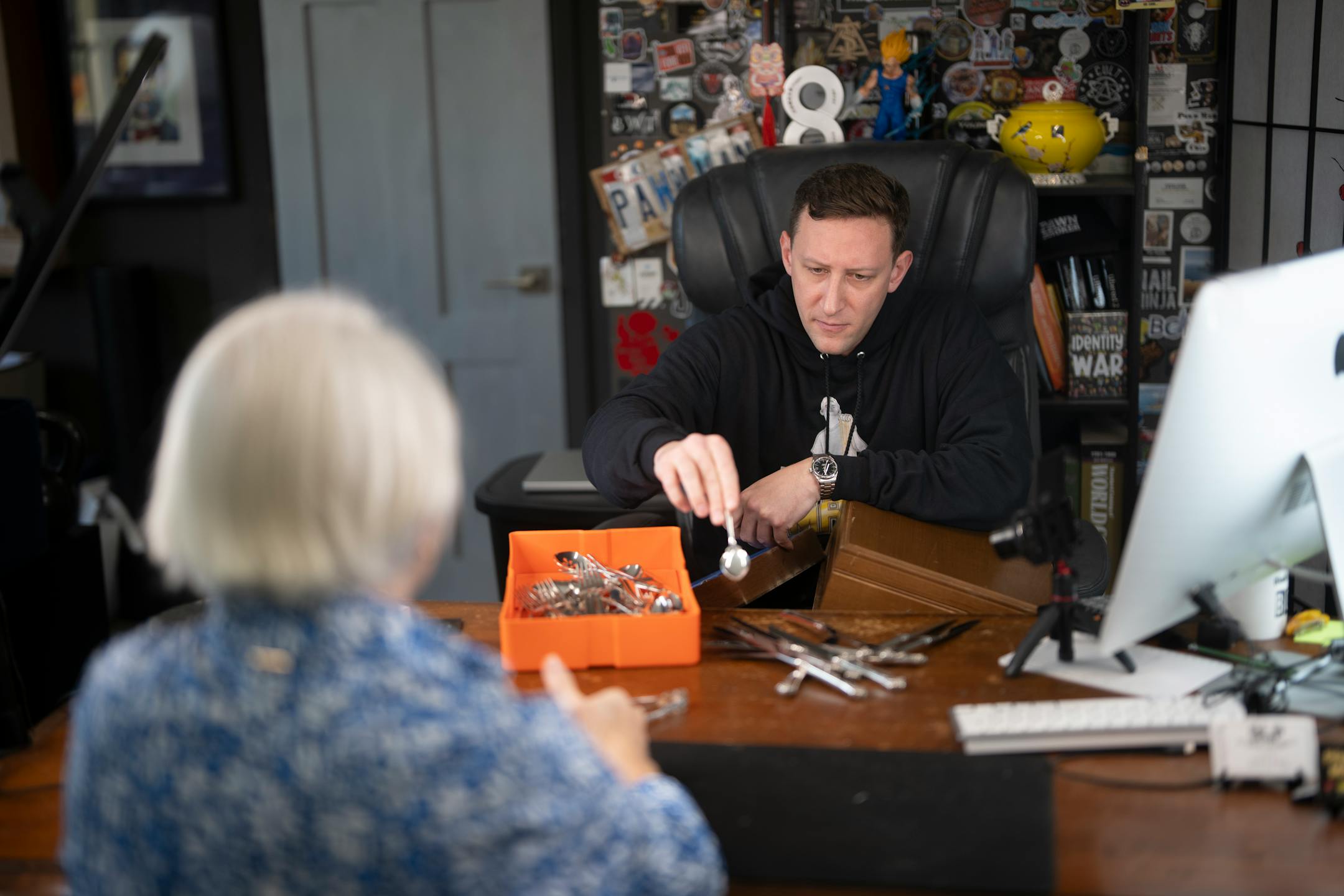
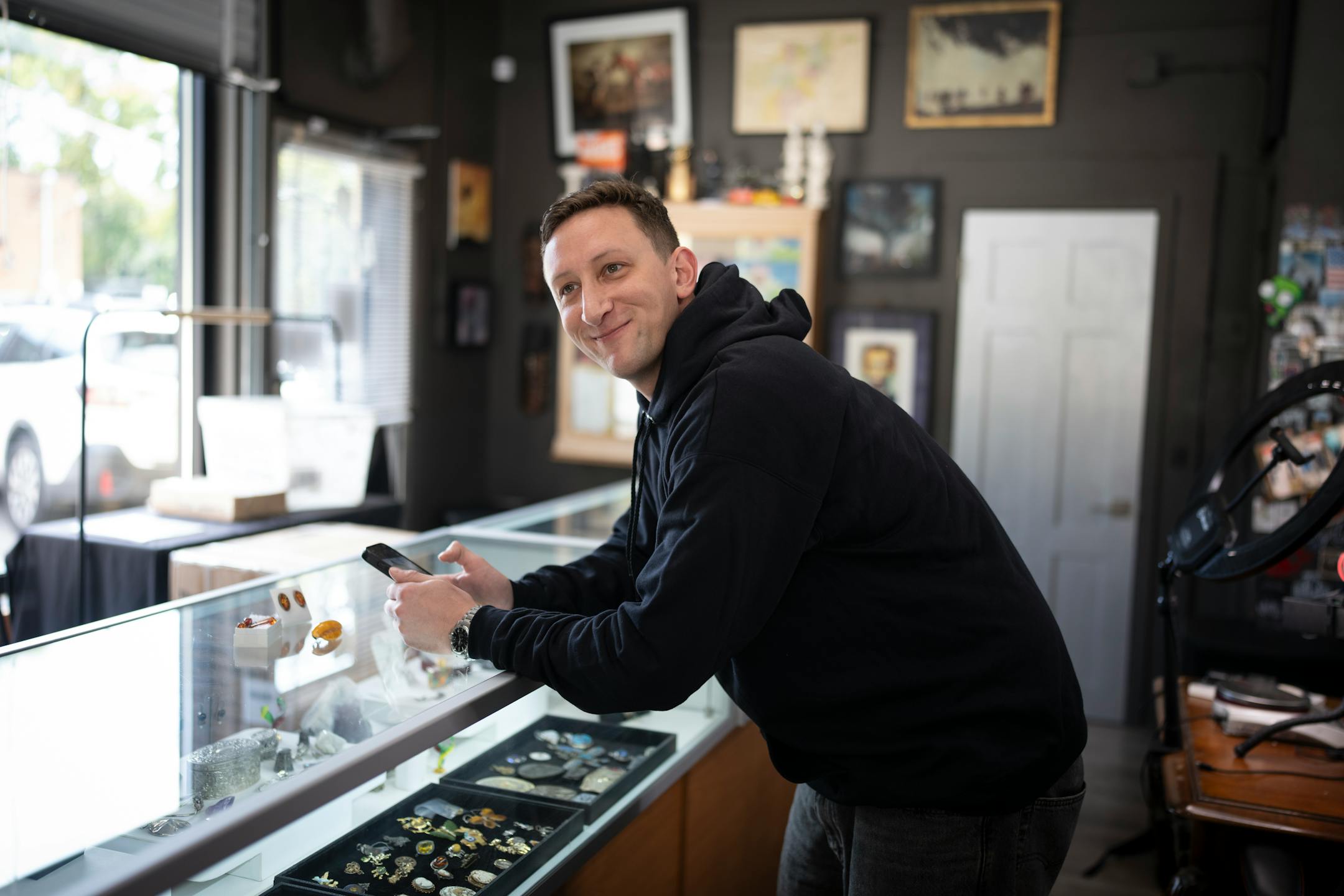
Evan Kail makes a TikTok video about amber for his Pawn Man account at his pawn shop, St. Louis Park Gold & Silver, in St. Louis Park in October. (Renée Jones Schneider/The Minnesota Star Tribune)

A hero’s reception

Kail flew to Beijing for the first time in 2024. Chinese netizens had been flooding his channels ever since he donated the album, saying they loved what he had done and what he represented about confronting history’s darkest chapters.

He hoped there would be something real to those online impressions, so he decided to visit the country in person. He hired a local marketing agency, expecting a little exposure. Reporters swarmed him on arrival.

From there he traveled around the country, paying his respects at China’s World War II memorials and giving speeches on protecting history, tied to the 80th anniversary of Japan’s surrender.

Kail manages Chinese and American social media platforms and posts content in both languages. He vlogged about trying new foods and collaborated with Ryan Chen, the viral Donald Trump impersonator. He talked about positive aspects of Chinese society missing from the right-wing media of the West and encouraged other Americans to visit China for themselves.

At the time, there was also conjecture in the Chinese media that Kail’s tea jar gift was historic and possibly priceless. When the Minnesota Star Tribune inquired about its diplomatic significance, the Chinese consulate’s response was nondescript, saying only that it was “a gift representing our sincere gratitude.”

Still, speculation that an American had come into a singular national gift — a narrative that Kail embraced — heightened his profile.

When Kail’s friend Struzyk visited this summer, she said she was touched to find Chinese parents nudging their kids to approach Kail in English many places they went.

“What was crazy was people just knew his name and knew what he did, and thanked him for it,” she said.

Evan Kail makes a video at his alma mater, the University of Minnesota in Minneapolis, with Max Xiong, who flew in from China to direct Kail's public relations. (Renée Jones Schneider/The Minnesota Star Tribune)

To the Chinese people, it didn’t matter much that he’d biffed the facts of his original video about the album and did not actually have evidence of the Nanjing Massacre. In broad strokes, he’d spoken to the anger that many in the country feel about the Japanese government’s denials of its past war crimes and the West’s general ignorance of the Pacific Theater, professor Suping Lu at the University of Nebraska-Lincoln, said in an email.

“The Nanjing Massacre triggers the nerves of every Chinese wherever and whenever it is mentioned,” Lu said. “A hypothetical analogy I can draw is that if the Japanese keep on denying they had ever bombed the Pearl Harbor, what might be the responses from the American public?”

Lu believes the answer to Kail’s popularity hangs in the burgeoning rivalry between the United States and China, with their ongoing trade war and negative media depictions of each other.

“No matter what is contained inside the album, his action is viewed as friendly behavior,” Lu said. “At least he cares about the pains and tragedies suffered by the Chinese during the Japanese invasion. He is not at all anti-China or anti-Chinese.”

The photo album is now in safe keeping with the “relevant Chinese department,” the Chinese consulate told the Star Tribune in a statement, calling it “a meaningful contribution to helping preserve the enduring bonds of friendship between Chinese and American people.”

The consulate cited other examples of Chinese and American allyship: the Flying Tigers unit of volunteer American fighter pilots who defended Chinese cities against Japanese bombardment, and Minnie Vautrin, who sheltered women and children from mass murder and rape at Ginling College in Nanjing.

Professor Todd Sandel, who researches Chinese social media at the University of Macau, was amazed to hear Kail discussed in the same breath as human rights heroes from World War II.

It was likewise somewhat absurd, Sandel said, that when the World War II movie “Dead to Rights” hit Chinese theaters earlier this year, CCTV interviewed Kail about how he felt watching it.

No serious American outlet would interview a foreigner about historic U.S. tragedies on which he has no real expertise, Sandel said. But the irony about China is that even as its state media promotes a narrative about the “Chinese Dream” overtaking the American one, the public still desires validation through western eyes.

Professor Parama Sinha Palit, author of books on soft power, said democratic countries tend to view China’s cultural exports with suspicion because of the illiberal conditions under which they’re produced. COVID-19 further crippled the country’s national brand by exposing the extent to which the government could control its citizens.

If China wants to rehabilitate its hardline image among Americans, a digital creator such as Kail presents new inroads precisely because he’s an unpretentious Midwesterner — in other words, real.

While Kail’s content is often dogged by commenters critical of how his claim to fame as a spokesman on Japanese war crimes has conveniently aligned with increasing anti-Japanese nationalism in China, Sinha Palit wouldn’t say Kail is being used by China.

He’s an influencer reaping love and attention for telling people to make global friends, and there’s no harm in that, she said.

But as Kail inserts himself as a cultural ambassador, the question remains whether he’s benefitting the U.S. and China equally as he purports to promote peace.

“The audience will have to be smart enough to understand what is propaganda and what is authentic,” Sinha Palit said.

Evan Kail makes a video at his alma mater, the University of Minnesota in Minneapolis, with Max Xiong, who flew in from China to direct Kail's public relations. (Renée Jones Schneider/The Minnesota Star Tribune)

Promoting the Midwest to China

Despite his popularity in China, Kail still feels misunderstood and unseen in America, where people continue to believe the photo album was a stunt, he told the Star Tribune.

“It is solidified into people’s minds that that was my intention, despite the fact that I’ve done everything to wash my hands of it and show people I was just trying to do a good thing here,” he said.

He denies that the Chinese government sponsors anything he does, saying that’s a line he won’t cross.

Kail returned to Minnesota in October, accompanied by Max Xiong, his brand manager.

Xiong has translated for Kail since his first trip to China, getting to see how he deals with the scrutiny that follows exposure and the isolation that comes with being a foreigner in a strange land.

“I think Evan changed, too,” she said. “Before, he might seem a little bit all about himself. Right now, his heart’s so big, he really cares. … He’s thinking he has responsibility for people to have peace, to really love each other.”

Xiong is aware that if Kail wants to be a true bridge between cultures and beat the criticism that he’s primarily helping China burnish its global image, they need to inject more American content into his brand.

The next step in their strategy is to show Chinese viewers what he loves about the Midwest, Xiong said. Particularly American football, which hasn’t penetrated the Chinese market the way the NBA has. And Minnesota’s rap scene, which Kail loves.

On a recent morning back at his coin shop in St. Louis Park, Kail donned purple sneakers and a Pawn Man sweatshirt, featuring a graphic of himself brandishing a fistful of gold chains and an Uzi machine gun, as he filmed a quick video about an amber brooch.

The script was AI-generated, the delivery a fast and furious formula.

“It’s a science,” he explained as he went. “You slam an item down, you say something catchy, because social media moves fast and you have one to three seconds to capture somebody’s attention.”

He still searches for war memorabilia with the goal of moving them out of private collections. One of his mantras now is borrowed from Hollywood: “It belongs in a museum,” he gruffed, in his best Indiana Jones impersonation.

In early December, Kail and Xiong jetted back to China. As a gesture of his sincerity, he promised the Chinese people to return every year for the rest of his life by Dec. 13, a national remembrance day for the victims of the Nanjing Massacre.

They planned to film an educational video about the history but mainly focus on showcasing Nanjing’s modern attributes.

Kail said he’s trying to be careful not to fuel the heightened hostility between China and Japan after the Japanese prime minister’s recent suggestion that Japan may intervene in any action China takes toward Taiwan.

Evan Kail assesses a woman’s silver at his pawn shop in St. Louis Park in October. (Renée Jones Schneider/The Minnesota Star Tribune)
about the writer

about the writer

Susan Du

Reporter

Susan Du covers the city of Minneapolis for the Star Tribune.

See Moreicon

More from News & Politics

See More
card image
Renée Jones Schneider/The Minnesota Star Tribune

How Evan Kail, a St. Louis Park rare-coin dealer, became an unexpected public figure on the other side of the world.

card image