
European turmoil threatens the U.S., too

May, Macron and Merkel face political pushback just when the West needs them the most.

December 11, 2018 at 11:49PM
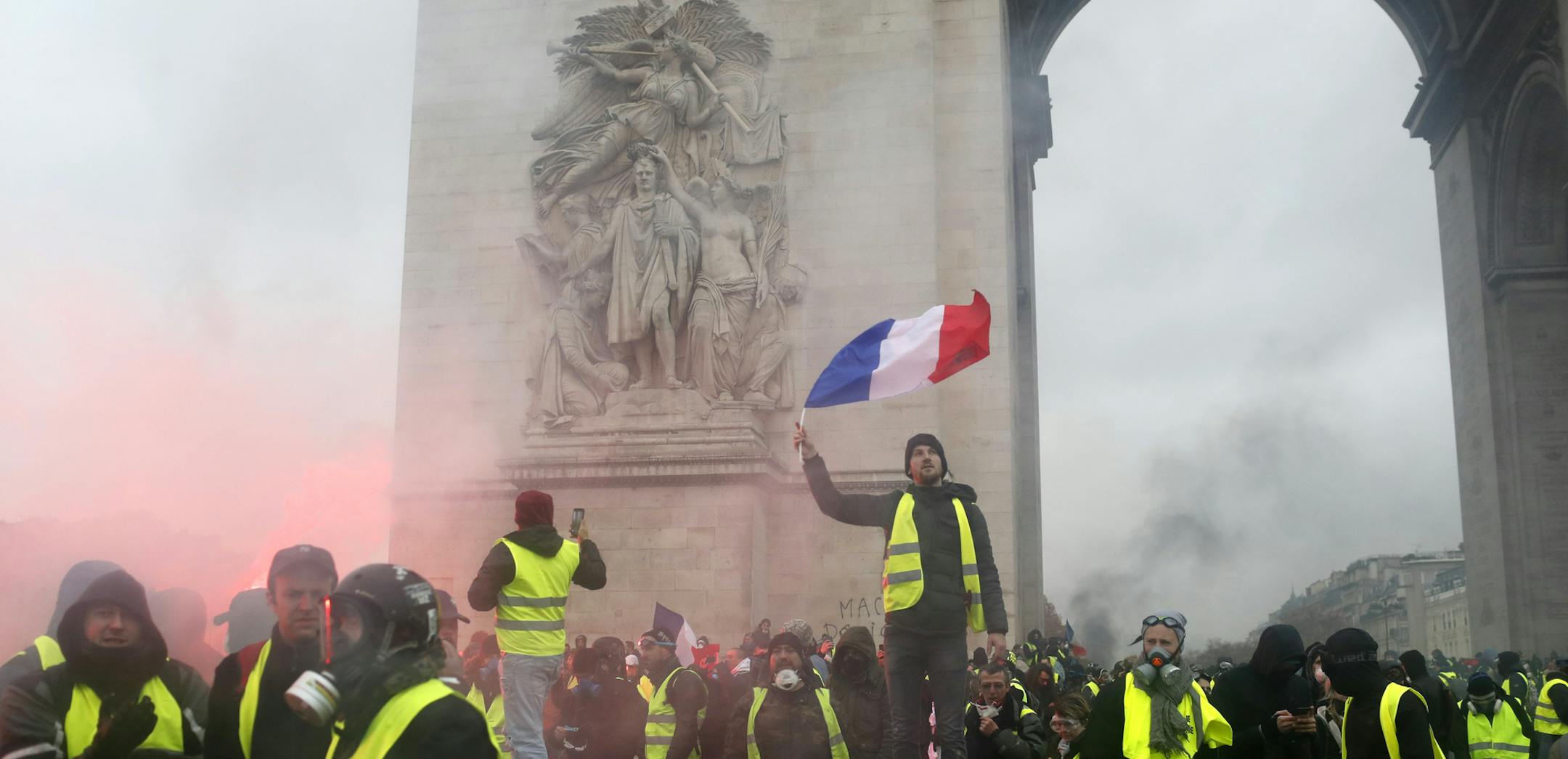
A demonstrator wearing a yellow jacket waves a French flag at the Arc de Triomphe during a demonstration Saturday, Dec.1, 2018 in Paris. Protesters angry about rising taxes clashed with French police for a third straight weekend and over 100 were arrested after pockets of demonstrators built barricades in the middle of streets in central Paris, lit fires and threw rocks at officers Saturday. (AP Photo/Thibault Camus)
A demonstrator wearing a yellow jacket waved a French flag at the Arc de Triomphe during a demonstration on Dec. 1 in Paris. (The Minnesota Star Tribune)

In London, a postponed parliamentary vote on Brexit might mean a "no-deal" exit from the European Union, which could be a bad deal for the United Kingdom's economy and for beleaguered British Prime Minister Theresa May.

In Paris, a similarly reeling French President Emmanuel Macron can't contain, let alone counter, "yellow-vest" protests that have rocked his nation.

And in Berlin, Angela Merkel is now a lame-duck chancellor after she announced she would not stand for party leadership. The narrow intraparty victory of her chosen successor, Annegret Kramp-Karrenbauer, as well as the rise of the extremist Alternative for Germany political party, reflect enduring divisions that have opened in the wake of Merkel's humane leadership on the Mediterranean refugee crisis.

The disunity in these three capitals and throughout Europe pose a threat to the European Union, which was established to encourage political cohesion after two world wars.

But the European turbulence won't just impact the E.U. — the U.S. will face a direct effect, too. Economically, the transnational political uncertainty has already rattled global equity markets. Geopolitically, it reflects an ongoing challenge to transatlantic ties that are already frayed, in no small part due to President Donald Trump's neglect of alliances and hostility to international institutions, like NATO, that sustain them.

There are no easy routes out of each nation's political morass.

The referendum on Britain's E.U. membership was demagogued by irresponsible leaders like Boris Johnson, the undisciplined but ambitious Tory member of Parliament who may inherit the nation's stalemate should May lose a no-confidence vote. Johnson and fellow Brexit hard-liners, as well as the opposition Labour Party, reject May's Brexit plan that she claims is the best deal possible with the E.U. If no accord can be reached, there could be immediate economic chaos and longer-term challenges to Northern Ireland's fragile peace, since a no-deal Brexit could harden the border between Northern Ireland and the Republic of Ireland. Such a move could risk resurfacing "the Troubles" that bedeviled the region for decades.

On Monday, the European Court of Justice ruled that Britain could, in effect, change its mind and decide to stick with the E.U. While this would require a new and no doubt highly divisive referendum, it is the wisest course of action for both Britain, Europe — and the U.S.

Macron's election, which stood in stark contrast to the populist tides washing over multiple European countries, was seen as a vote of confidence in the E.U. and positioned Macron to lead on key issues like climate change. This was the impetus behind a planned gas-tax increase Macron had to hastily scrap to placate protesters. He went further on Monday, pledging to raise social spending and lower immigration.

Macron's retreat might mean he has to put much more focus on French domestic politics. If so, he's less likely to emulate Merkel's role as European leader, which is especially needed now due to Trump's abrogation.

The global push toward populism may only amplify the problems propagating it. In particular, unchecked climate change is likely to produce more global instability, which would exacerbate the migration crisis that has roiled European politics. Punishing centrist internationalists like May, Macron and Merkel in favor of electing ever more extremist leaders is a recipe for economic stagnation, if not a true governing crisis across the continent.

Now more than ever, leadership is needed to push through the paralysis. But unfortunately, Europe's big-three leaders are politically hobbled, and the U.S. president represents a uniquely destabilizing force.

about the writer

about the writer

Editorial Board

See Moreicon

More from No Section

See More
FILE -- A rent deposit slot at an apartment complex in Tucker, Ga., on July 21, 2020. As an eviction crisis has seemed increasingly likely this summer, everyone in the housing market has made the same plea to Washington: Send money — lots of it — that would keep renters in their homes and landlords afloat. (Melissa Golden/The New York Times) ORG XMIT: XNYT58
Melissa Golden/The New York Times

It’s too soon to tell how much the immigration crackdown is to blame.