


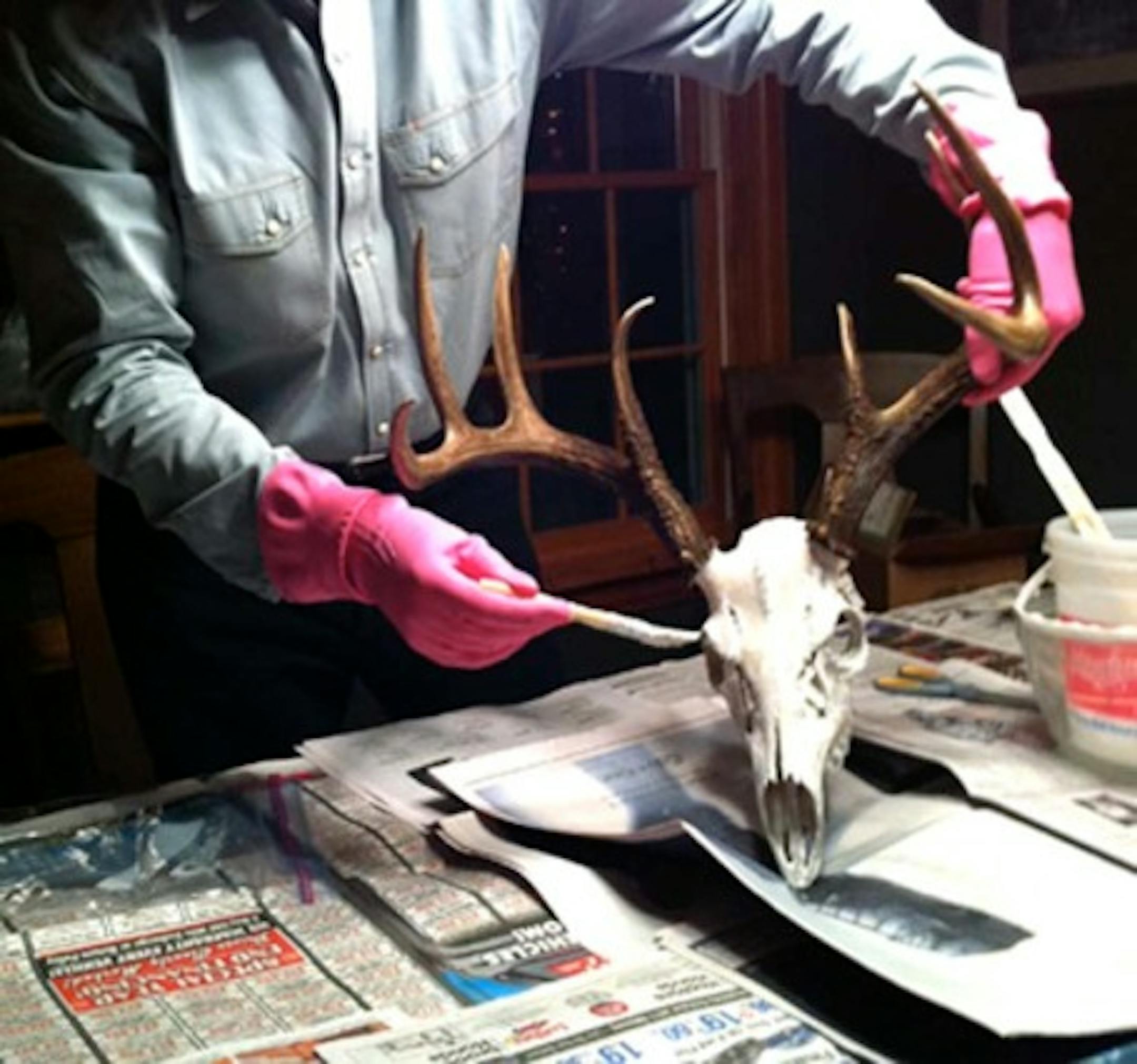
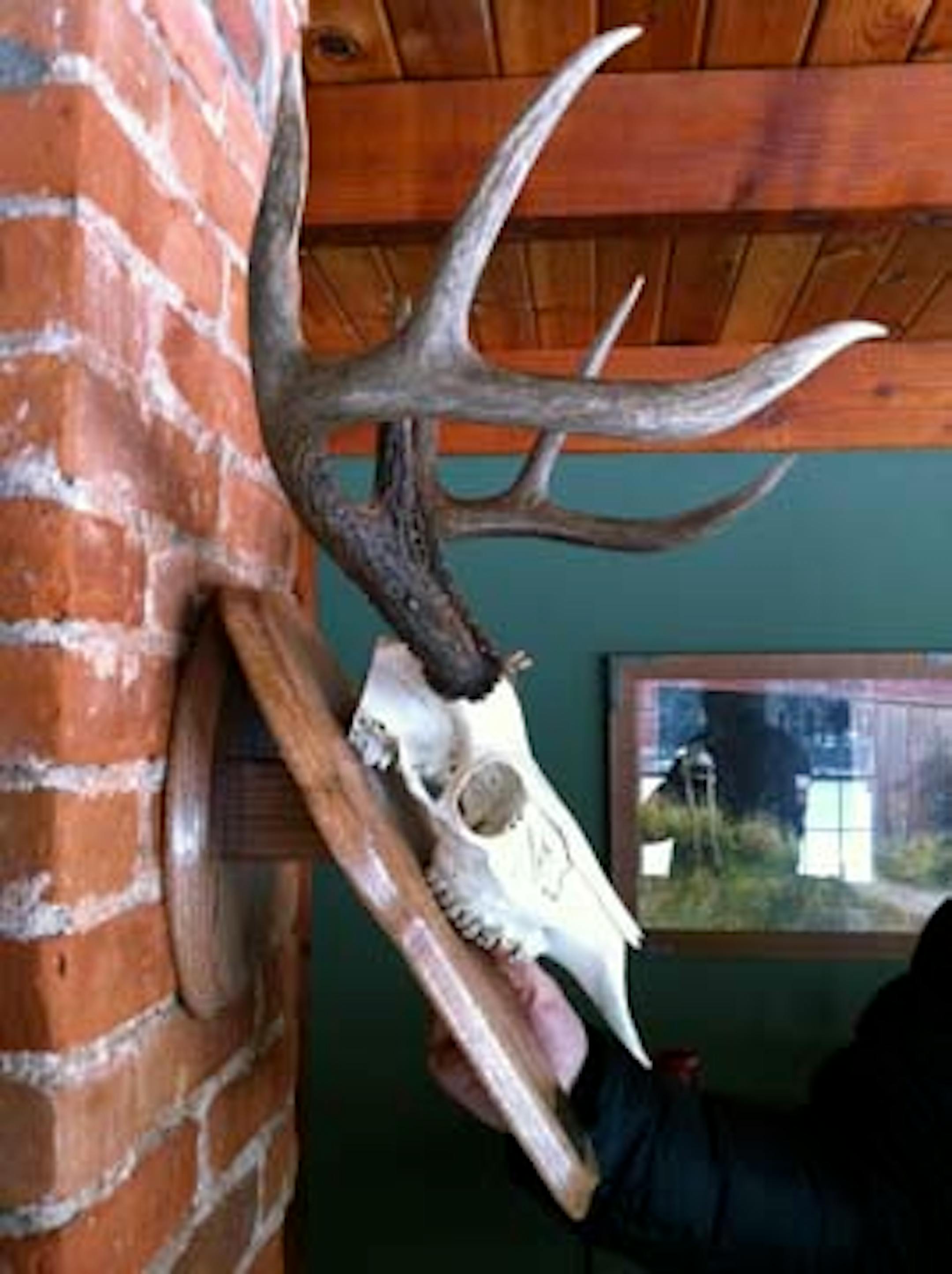
Following directions on the Quick White to make the paste, I brushed the entire skull with the mixture, wearing rubber gloves as I did. I was a little unsure of the outcome during the process, because the skull wasn't turning as white as I anticipated. But after letting the skull dry little more than a day, the paste broke off — or brushed off — easily, revealing a white skull.
The guy at Van Dyke's who I talked to actually suggested I leave the paste on for three days, and also that I enclose the entire skull and antlers in a black plastic bag during that time. Next time I might try this. But the boys and I were satisfied with the way it turned out, leaving the paste on for about 48 hours.
A detail here: Even after bleaching, there was a small amount of dark matter deep inside the nasal cavity that I wanted to remove. In retrospect, if I had used some sodium carbonate, as Van Dyke's bleaching guide suggests, this wouldn't have happened.
To resolve the issue, I mixed about a 10 percent bleach solution of water and, holding the skull nose-up, poured the bleach into the nose twice, washing the area with fresh water after each time. This gave it a final cleaning I was satisfied with.
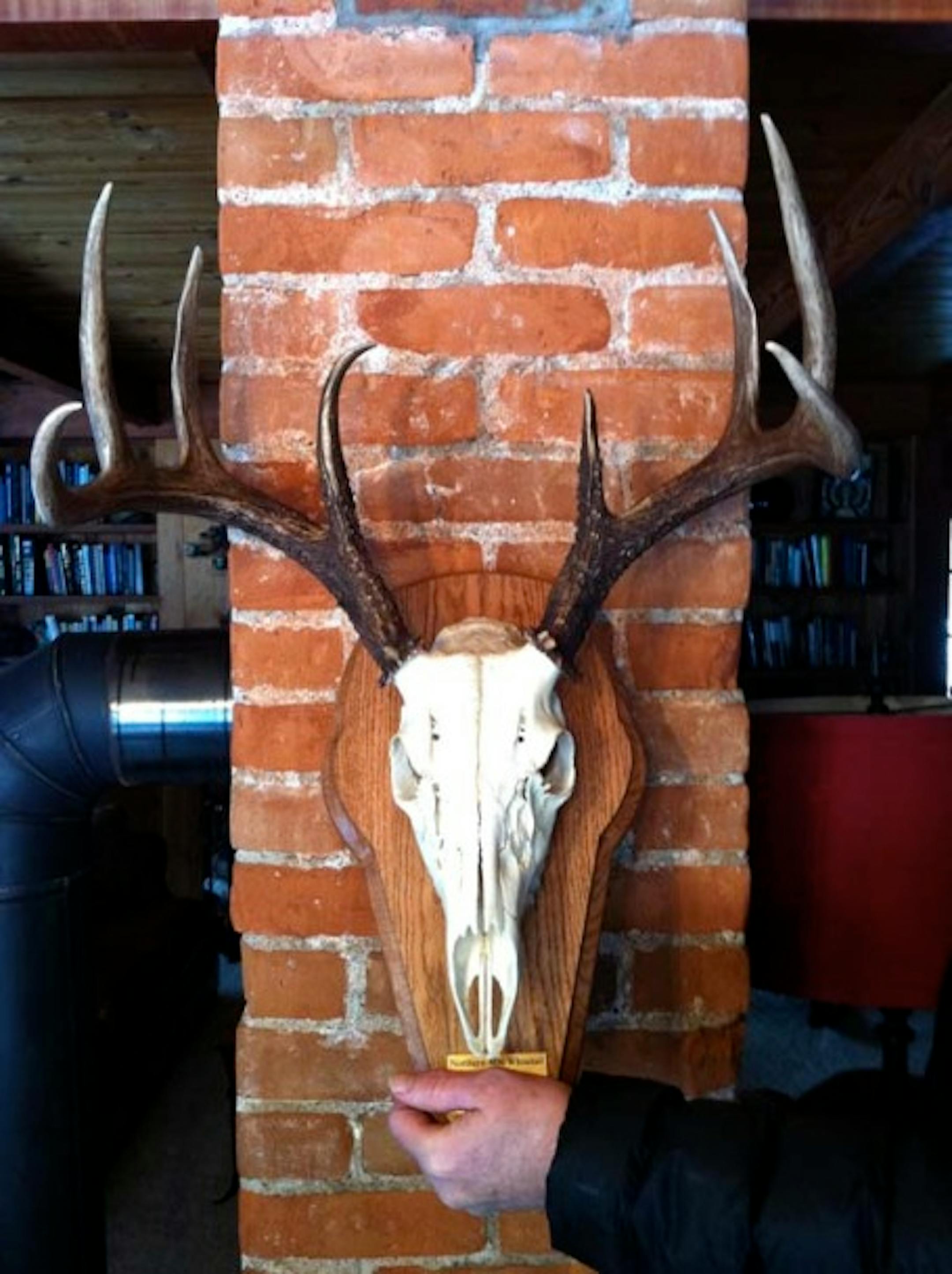
The finished mount shown from the front.
Finally, before mounting the skull onto the plaque, we sprayed it lightly twice with a coat of polyurethane. This shined the skull a bit, giving it a polished look (some people prefer the duller, more natural look). Importantly, the coating will allow it to be dusted more easily than might otherwise be the case.
We thought we were pretty close to being done at this time. But mounting the skull to the plaque turned out to be more problematic than advertised.
Van Dyke's sends mounting screws with their plaques, and suggests that, if properly aligned, the screws will hold the skull firmly to the plaque. They didn't in our case, either because there wasn't enough bone for the screws to bite, because the bone was too brittle to hold the screws — or both.


