

Opinion editor's note: Star Tribune Opinion publishes a mix of national and local commentaries online and in print each day. To contribute, click here.
•••
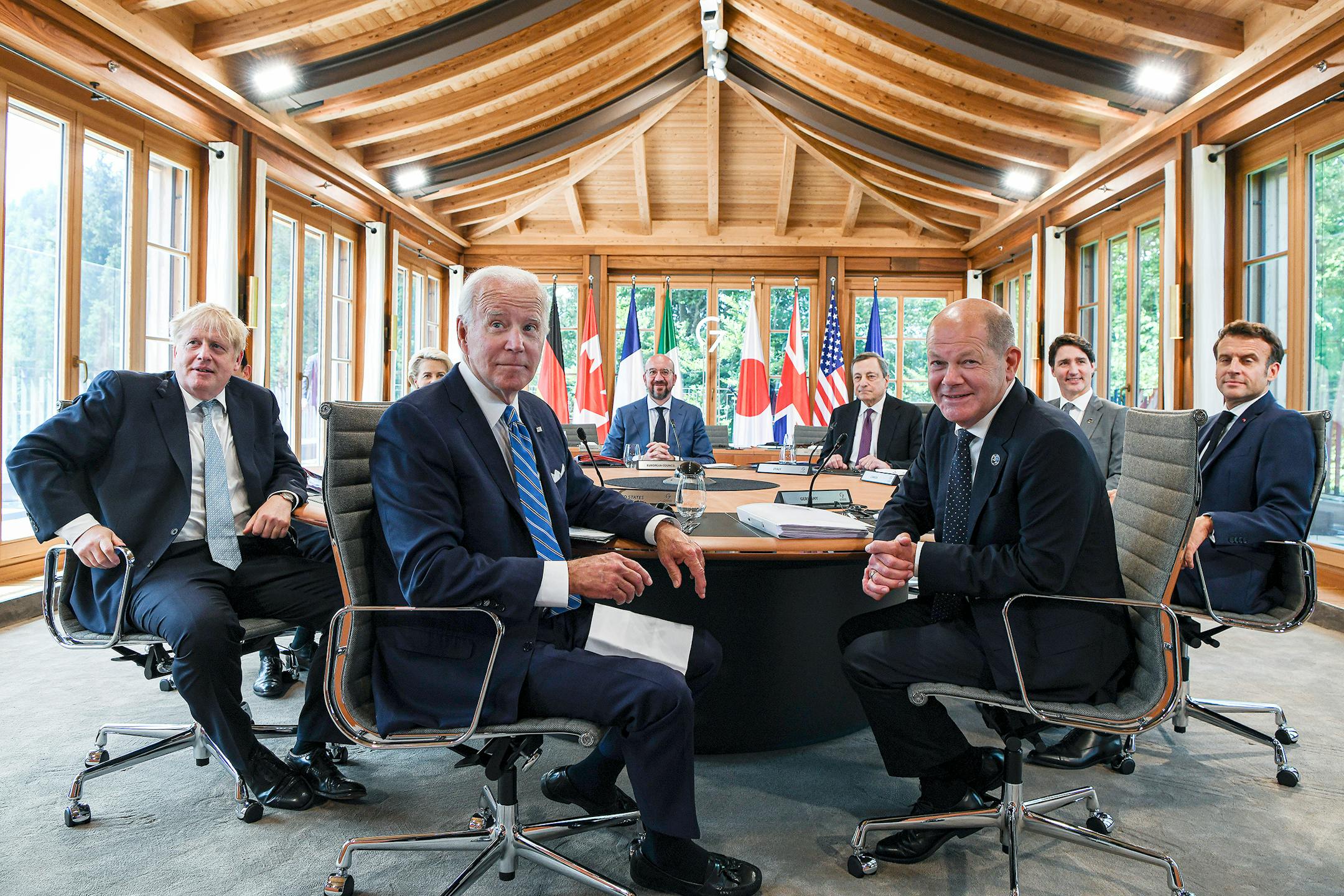
President Joe Biden has been in Europe this week — for meetings of the Group of 7 in Bavaria, Germany, and for the NATO summit in Madrid — and talk of unity filled the air. At the G-7 meeting, leaders congratulated themselves for their decisions over the past few months and restated their support for Ukraine. They even took time for a "family picture," the often awkward group shot of world leaders.
The self-congratulatory atmosphere is quite new. Just three years ago, NATO — frayed by failed interventions in Libya and Iraq, internally divided over its future and buffeted by Donald Trump's derision — was declared "brain-dead" by President Emmanuel Macron of France. Now the picture is completely different. Four months after Russia's invasion of Ukraine, NATO stands as a re-energized bulwark against Russian aggression. European leaders across the continent, determined to come together, speak confidently of common purpose.
Yet for all the talk of European resolve, the past few months have in fact underlined something else: the continent's dependence on the United States to resolve its security problems. That's nothing new, of course. In many ways it's the role America has played since the end of World War II, ensuring — even after the collapse of the Soviet Union in 1991 — that Europe operated under America's military umbrella.
But while this approach might save leaders from politically difficult choices in the short term, it's ultimately a losing proposition. America, embroiled in domestic problems and ever more focused on the challenge from China, can't oversee Europe forever. And Europe, facing a hostile and revisionist Russia, needs to look after itself.
These criticisms might sound counterintuitive. After all, Europe has made some major strides on defense in recent months. This is most visible in Germany, where the government has pledged to spend 100 billion euros, or $106 billion, more on defense over the next few years — a change so profound that the German press has adopted Chancellor Olaf Scholz's description of it as a "Zeitenwende," or turning point. Other countries, including Italy, Romania and Norway, have also pledged to substantially increase spending. These shifts strike at the common complaint that European states, pusillanimous and miserly, are "free riders" relying on America's military largess for protection.
Yet if European states are reducing their free-rider problem, they have something perhaps more intractable: a collective-action problem. Simply put, the individual interests and inclinations of the European Union's 27 members, whose countries encompass several thousand miles of territory, make it difficult to forge a common course of action. That's true for many issues, among them economic reform and the role of the judiciary, but it's perhaps especially acute for military and defense policy.


