

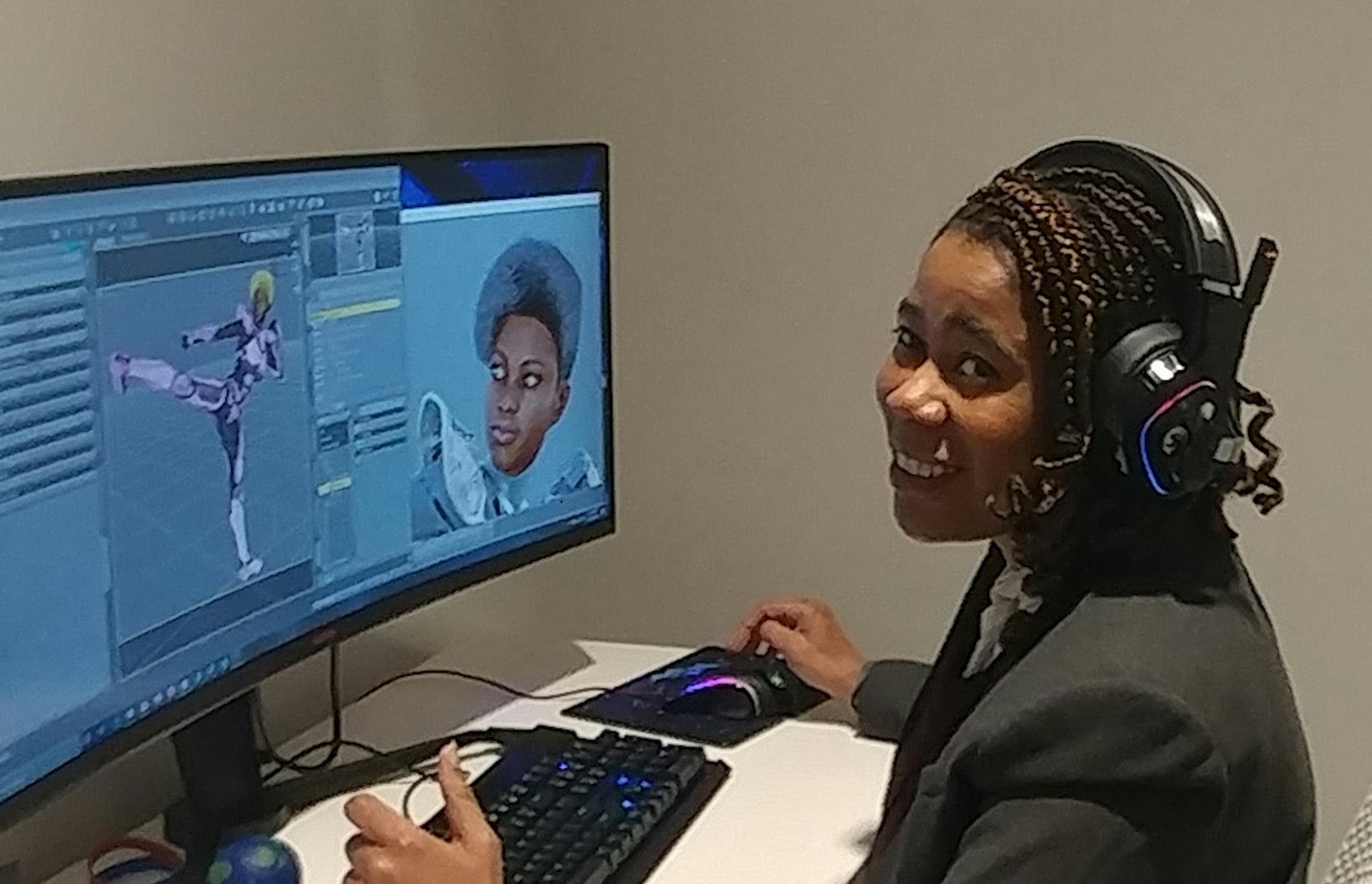
Using video games as her medium, Minnesota entrepreneur Jules Porter is continuing her mission to transform the video game industry from within. Porter is currently working on "Ultimate Elder Battle Royale," a quirky game that envisions a world in which superheroes grow old and have to fight bad guys with canes and walkers. In this game most of the characters are Black, Indigenous and people of color.
By creating video games that center on BIPOC, Porter is hoping to empower young Black people, as well as cultivate empathy in those who don't experience racism.
In 2019 Porter founded Seraph 7 Studios and became the first and only Black woman in the world to own a console video game development company.
"The goal is to put out positive images of Black people," Porter said.
Porter, who has played video games for most of her life, understands well the simplistic depictions of Black people in video games, either as drug dealers or criminals.
"Assassins Creed" is a video game that puts players into different historical places in each rendition. It was praised for its diversity in 2013 when "Assassins Creed: Liberation" was released and featured a Black female protagonist. The game takes place in colonial New Orleans sometime after the French and Indian War, and the protagonist is the daughter of an enslaved woman and her captor. At certain points, players have to dress up as people who are enslaved to complete missions.
"I don't want to dress up as a slave in my fantasy," she said.
That's just one example of the simplistic — and negative — tropes that plague representation of Black people in video games, Porter said: portrayals that fail to acknowledge the full humanity of Black people and perpetuate the view that they are dangerous — a view that has real-world implications, especially in terms of policing.

