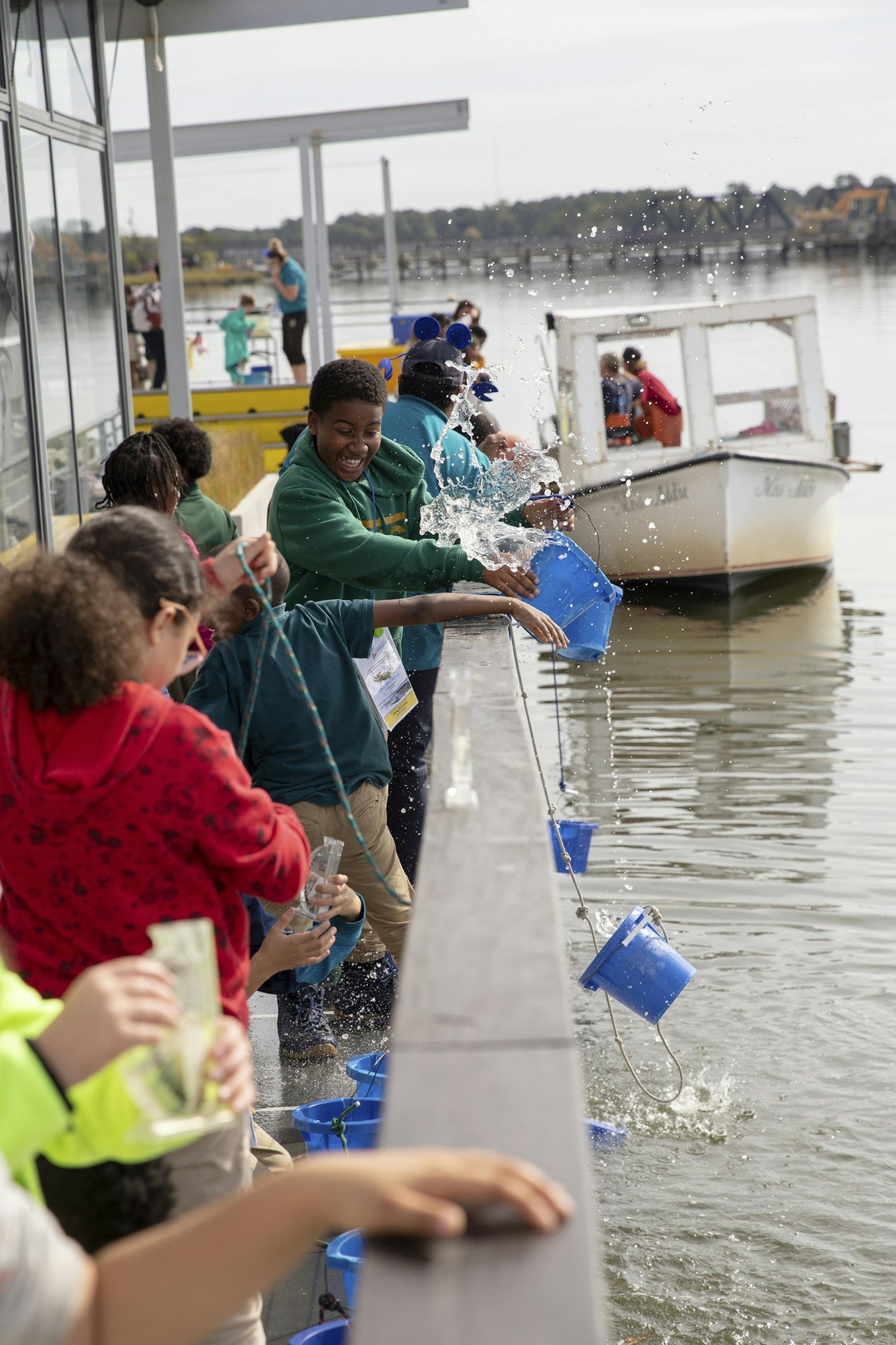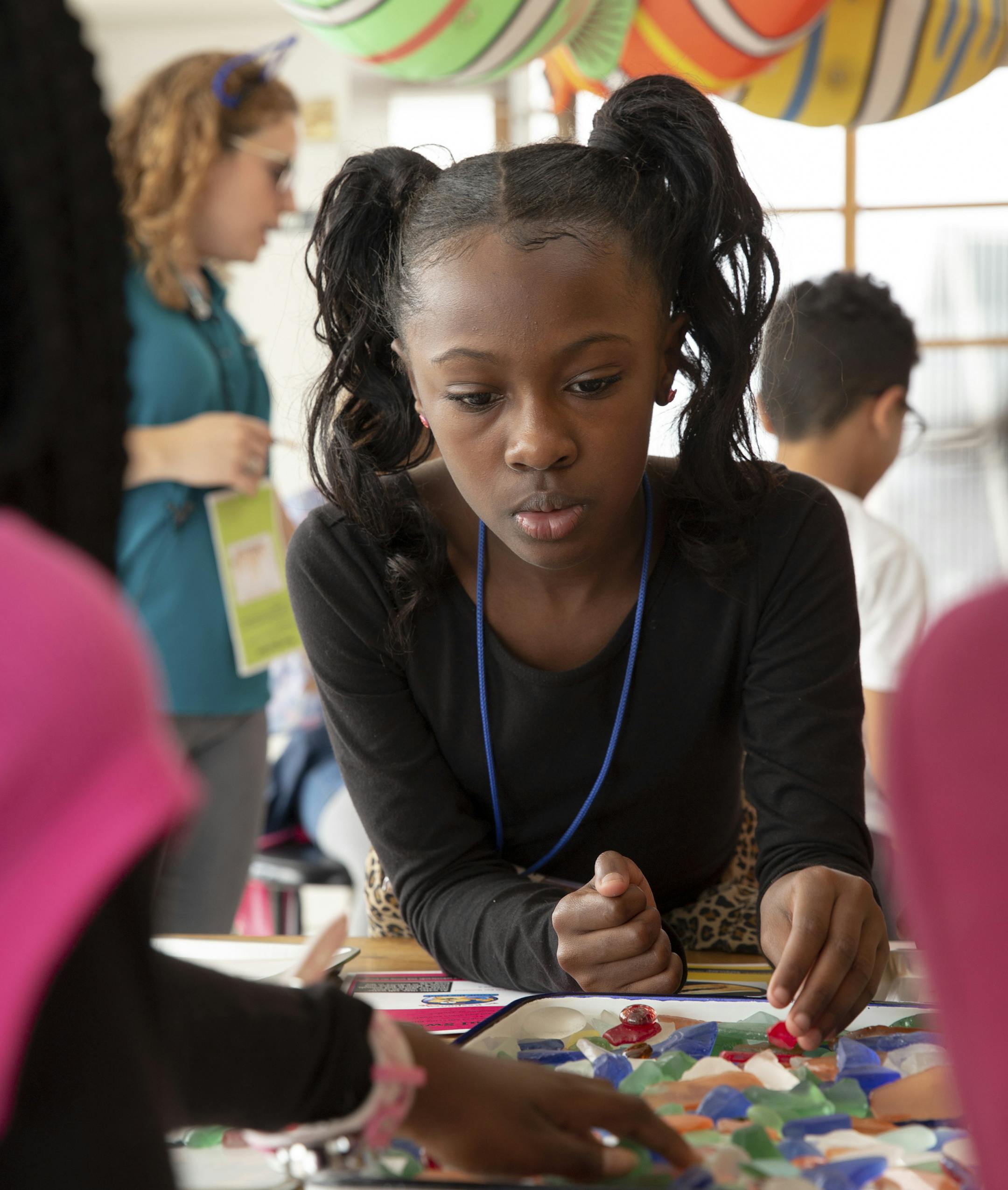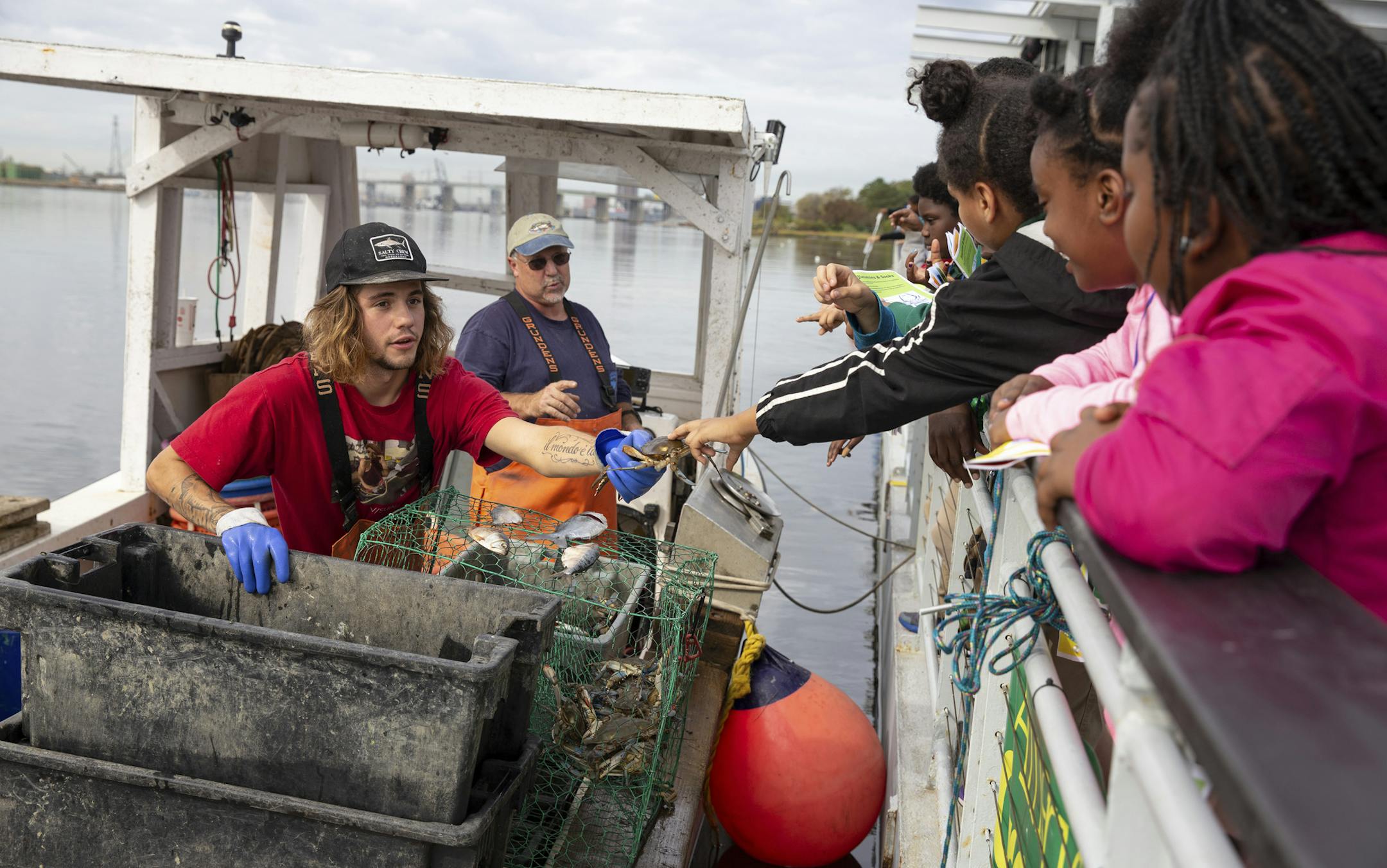
Damariya Carlisle, 9, jumped as an instructor hauled a crab pot onto the steel deck of the barge docked on the Elizabeth River, a Chesapeake tributary in Norfolk, Va.
"They get to see and feel real crabs," said Janet Goldbach Ehmer of the Elizabeth River Project. "It helps to create a personal connection and investment in the river."
The group received about $500,000 for youth resiliency education as part of a National Oceanic and Atmospheric Administration program. The grants are intended to teach people to better respond to threats like sea-level rise, severe storms, flooding, drought and extreme heat.
It encourages students to answer: "What can I do to make myself" — as well as my family and my community — "more resilient?" said Sarah Schoedinger, a senior program manager in NOAA's education office.
The Elizabeth River Project welcomes as many as 200 students a day on field trips to its 120-by-32-foot learning barge. It enlists the Atlantic blue crab as a means to teach students about increased flooding and sea-level rise, nudging students toward actions they can take to reduce climate impacts. "You don't have to grow up to do these actions," Goldbach Ehmer tells students.
After attending with her fourth-grade class, Damariya vowed to turn off lights and computers more often.
Since 2015, NOAA's Environmental Literacy Program has awarded nearly $10 million to 22 resiliency programs across the country. The programs provide education, and projects include building rain barrels, planting trees, hosting resiliency expos and collecting environmental data.
The approach is intended to help stave off the paralysis or anxiety that may occur when confronted with climate data that may feel overwhelming. Robin Dunbar, Elizabeth River's deputy director of education, said their message has not been all "gloom and doom." But, she added, "We do include real science for all ages."