

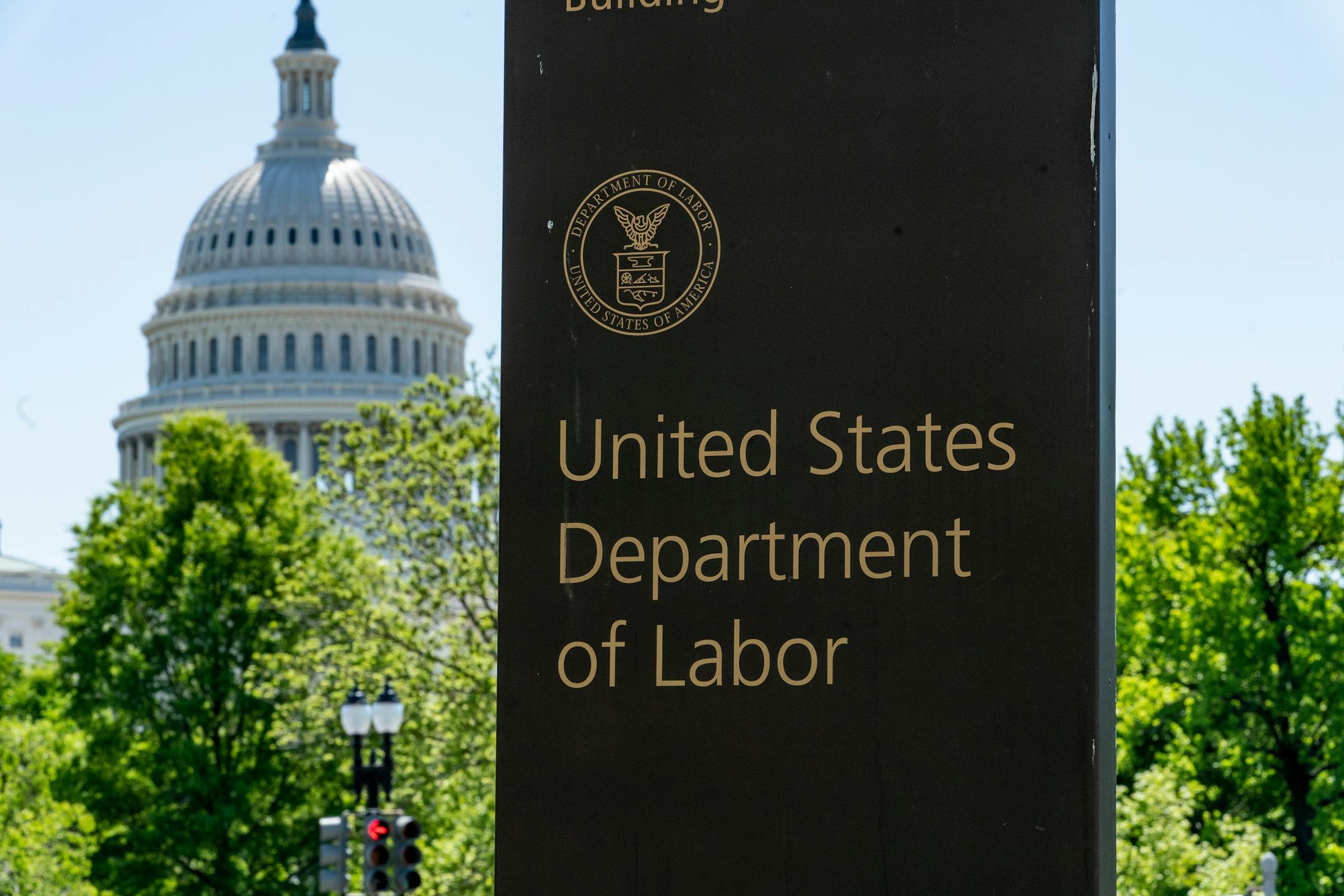
WASHINGTON — The United States gained a decent 64,000 jobs in November but lost 105,000 in October as federal workers departed after cutbacks by the Trump administration, the government said in delayed reports.
The unemployment rate rose to 4.6% last month, highest since 2021.
The November job gains were higher than the 40,000 economists had forecast. The October job losses were caused by a 162,000 drop in federal workers, many of whom resigned at the end of fiscal year 2025 on Sept. 30 under pressure from billionaire Elon Musk's purge of U.S. government payrolls.
Labor Department revisions also knocked 33,000 jobs off August and September payrolls.
Hiring has clearly lost momentum, hobbled by uncertainty over President Donald Trump's tariffs and the lingering effects of the high interest rates the Fed engineered in 2022 and 2023 to rein in an outburst of inflation. Since March, job creation has fallen to an average 35,000 a month, compared to 71,000 in the year ended in March.
Both the October and November job creation numbers, released Tuesday by the Labor Department, came in late because of the 43-day federal government shutdown. Those delays have made deliberations more difficult at the Federal Reserve, where policymakers are divided over whether the labor market needs more help from lower interest rates.
Worries about the job market were enough to nudge the Fed into cutting its benchmark interest rate by a quarter of a percentage point last week for the third time this year. But three Fed officials refused to go along with the move, the most dissents in six years. Two voted to keep the rate unchanged while inflation remains above the central bank's 2% target. Stephen Miran, appointed by Trump to the Fed's governing board in September, voted for a bigger cut – in line with what the president demands.
Tuesday's report shows that ''the labor market remains weak, but the pace of deterioration probably is too slow to spur the (Fed) to ease again in January,″ Samuel Tombs, chief U.S. economist at Pantheon Macroeconimics, wrote in a commentary. The Fed holds its next policy meeting Jan. 27-28.
