

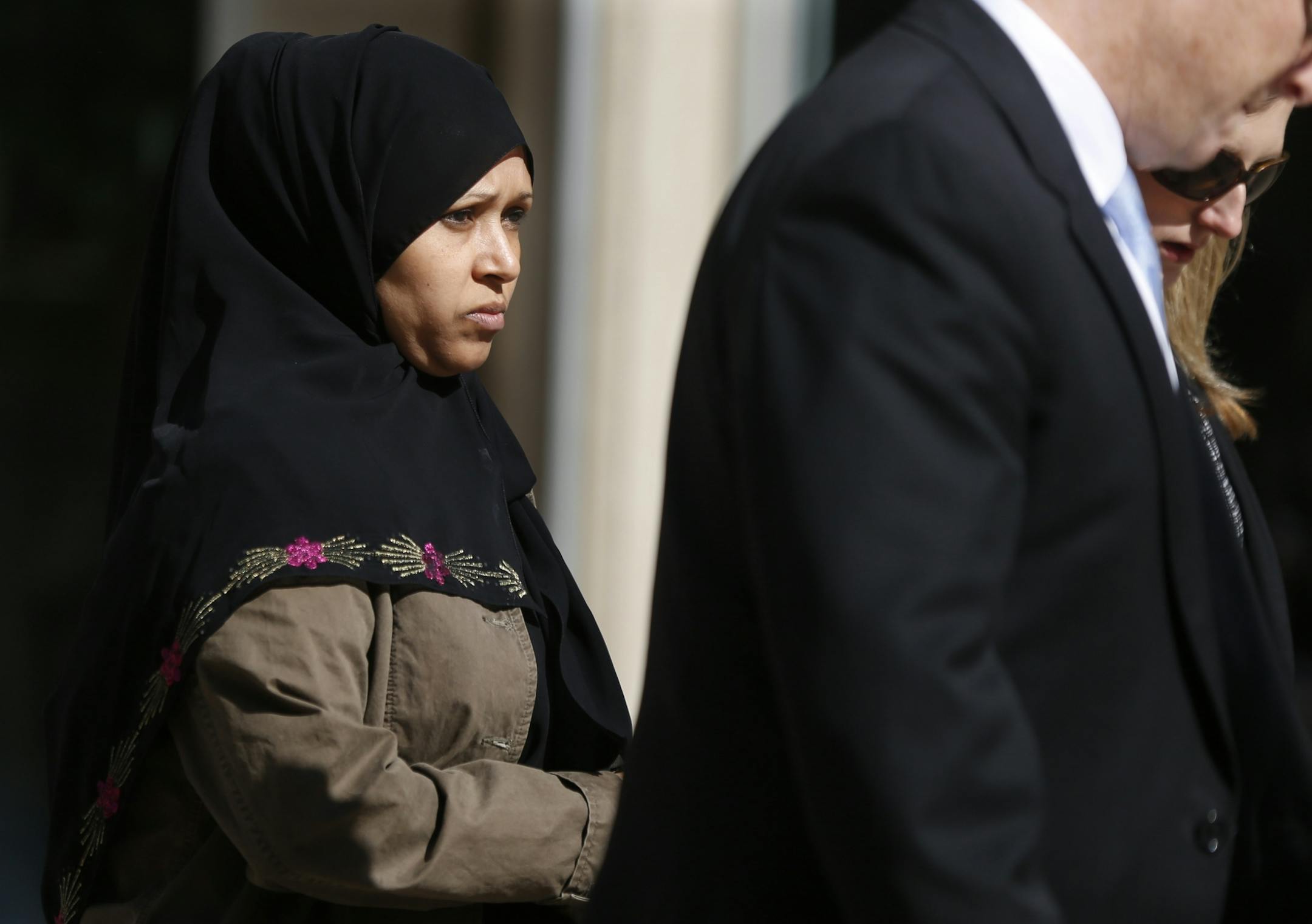
Abayte Ahmed's head jerked as prosecutors showed her a photo of her son with a bullet hole in his temple.
Testifying Wednesday in the federal trial of a Minneapolis man accused of helping her son and other men travel to their native Somalia to fight for a terrorist group, she wept as she remembered the last time she saw her 19-year-old son.
Jamal Aweys Sheikh Bana left the family home for morning prayers on Nov. 3, 2008, Ahmed said. "So he just disappeared, is that right?" Assistant U.S. Attorney LeAnn Bell asked.
"Yeah," Ahmed answered softly, dabbing her eyes with a tissue.
Mahamud Said Omar, 46, the man accused of helping Sheikh Bana travel to Somalia, faces five charges related to helping a terrorist organization and conspiring to kill and maim people overseas. Prosecutors say he was part of a secret pipeline to send money and men from Minnesota to Somalia to train and fight with Al-Shabab, an insurgent group in Somalia that was designated a terrorist group in February 2008 by the U.S. government. Omar's lawyers say he lacked the money and skills to help organize such a terrorist pipeline.
More than 20 Twin Cities men, including Ahmed's son, left to fight with the group over a two-year span, and 18 people have been charged as part of the years-long FBI counterterrorism investigation.
Speaking through an interpreter, Abayte Ahmed told jurors that her son left Somalia when he was a baby, emigrating to the United States with his family in 1996, and had not returned until he went missing. His primary language was English, she said, and he spoke "a little bit" of Somali.
At the time that he left, she said, he was going to Minneapolis Community and Technical College and Normandale College and working part-time as a security officer in public housing. He would not have had the $1,000 needed to purchase a ticket to Somalia, she said.


