

 1:13
1:13Lynn Rogers, Minnesota's embattled bear researcher, said Tuesday that his internationally popular den-cam video and the bear socialization studies he conducts might come to a halt as a result of a judge's ruling in his long-running battle with the state Department of Natural Resources (DNR).
Chief Administrative Law Judge Tammy Pust recommended Tuesday that the DNR stick to its decision to deny the renewal of Rogers' state research permit.
Pust sided with the agency's concerns that Rogers' practice of food-conditioning and habituating about 50 bears in the Ely area has created a public danger. "The vast majority of wildlife management professionals agree that the presence of habituated bears increases the risk of harm to the public," Pust wrote.
The judge cited testimony from a two-week hearing in March, when witnesses described collared and uncollared bears in the Ely area engaging in unnatural behaviors, such as failing to startle when confronted by loud noises or nipping and slapping at people unable to provide them with food.
Rogers, who has built an international following for his $1 million-plus research center, said he will appeal. He said that the loss of his research permit would strip him of the ability to track bears with radio collars and that would undercut other aspects of his work.
Rogers said in an interview that the judge had many positive things to say about his research, including special praise for the streaming live shots of the animals in their winter homes. The "den cams," which included last year's YouTube sensation of a black bear named Lily giving birth, have been beneficial to the scientific community as well as the public, the judge wrote.
But Rogers said he needs radio collars to find the bears in the summer and "den cams" to view them during hibernation without disruption — two core techniques that he won't be allowed to resume without a permit.
"This is not good for bears, people or the state," Rogers said. "This decision was not in the public interest."
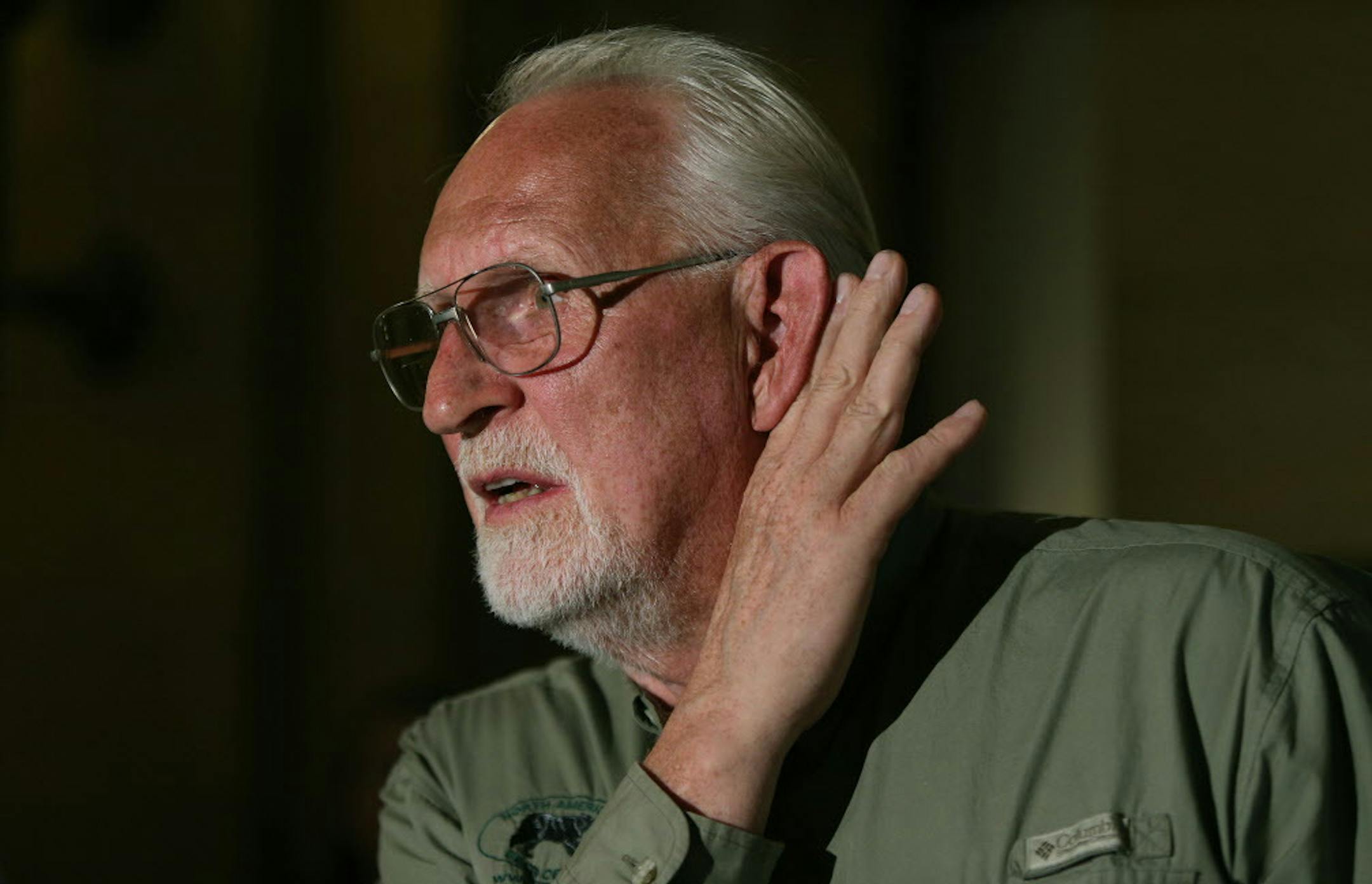
![BRIAN PETERSON • brianp@startribune.com ELY, MN - 10/04/2010 ] After a long search through a dense spruce bog, Lynn Rogers, founder and Executive Director of the North American Bear Center in Ely, was able to approach Brave Heart, one of the collared black bears in his study. Brave Heart who weighs 400 pounds allowed Rogers to change the batteries in the bears GPS collar and record it's heart rate without the use of a tranquilizer. ORG XMIT: MIN2013062816514262](https://arc.stimg.co/startribunemedia/UFQ3OXHYJVW6N6GWTTYQT7QPEU.jpg?&w=1080)


